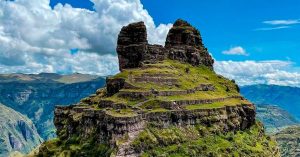
High above the Apurímac canyon, on a ridge that seems almost too narrow to hold anything human-made, lies Choquequirao. An Inca citadel built deliberately far from the world. Its name, “Cradle of Gold”, doesn’t refer to metal but to position: a place that catches light on its terraces at dawn and disappears into cloud at dusk. Unlike Machu Picchu, which sits at a crossroads of trade and symbolism, Choquequirao was tucked deep into the hinge point between the Andean highlands and the edge of the Amazon, a transitional zone where the empire managed resources, people, and ideas moving in and out of the jungle.
Its isolation is not accidental. The Incas chose this perch for strategy and for ceremony. Surrounded by towering Apus, connected by a complex network of trails, and commanding sweeping views of the canyon, Choquequirao served as an administrative, agricultural, and possibly even religious center, yet one reserved for very specific groups. This is partly why it remains mysterious: much of its story still lies under the forest, waiting for future excavation.
Choquequirao Nowadays
Today, reaching Choquequirao requires effort that filters out casual tourism. It sits days away from any road, accessible only by a demanding trail that descends thousands of meters before climbing just as much on the other side. And that difficulty is exactly what gives it its character. By the time you stand on its terraces, you understand immediately why the Incas placed it here and why so much of its essence has survived untouched.
This is where our journey begins: at the threshold of a site that feels both monumental and strangely intimate, suspended between history and the unknown.
Who re-discovered Choquequirao and how?
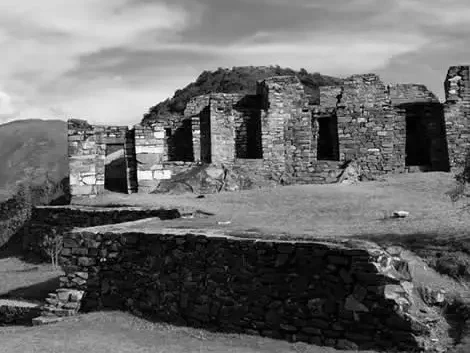
Choquequirao didn’t “appear” to modern eyes all at once. It came back slowly, like a story whispered from beneath centuries of vines. Although local communities always knew of its presence, the first documented mention came from Juan Arias Díaz, a Spanish explorer in 1710, who described vast ruins hidden in the folds of the Apurímac canyon. But it wasn’t until the late 20th century with systematic studies beginning around the 1970s and 1980s when archaeologist finally committed to clearing, mapping and excavating the site.
Hidden resistance
Progress has been slow by necessity. Everything about Choquequirao resists haste: its remoteness, its steep geography, the dense vegetation, the fragile terraces clinging to slopes that plunge into the Apurímac River. Even today, only a portion of the complex has been uncovered. What remains hidden is not due to neglect, but because the mountain still guards its secrets under layers of cloud forest, waiting for patient hands.
Journeying into the Golden Cradle
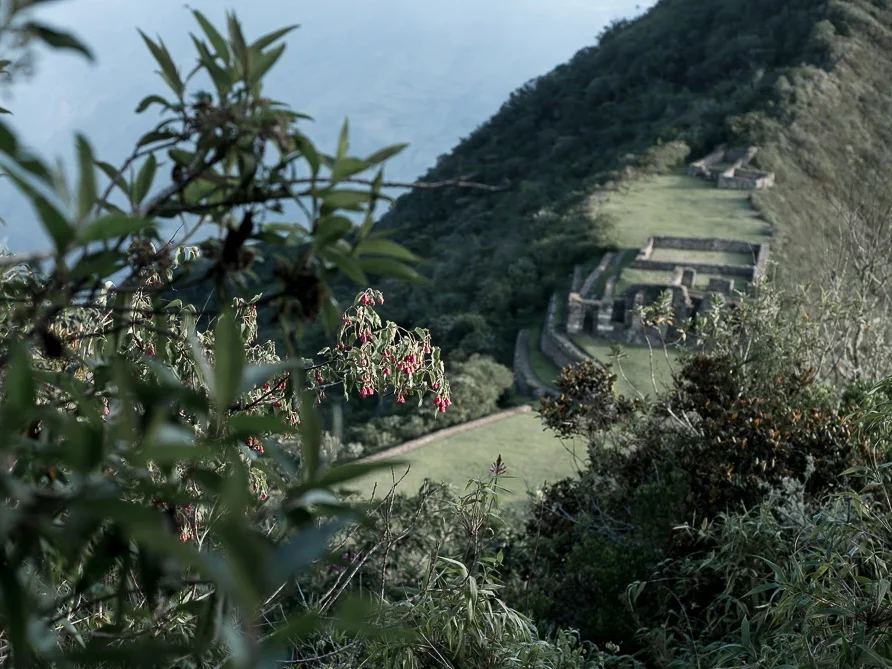
And then there is the present: you, a hiker on the trail. Four days on foot, crossing a canyon that feels like a world carved in half. The descent from Capuliyoc is long and punishing; switchbacks pull you down thousands of meters until the heat rises and the air thickens. The climb back up to Marampata the next morning feels eternal, the kind of ascent you negotiate one breath at a time. But the rewards always come quickly: condors circling on thermal currents, cliffs painted gold at sunset, the sound of the river far below turning into nothing more than a distant hum.
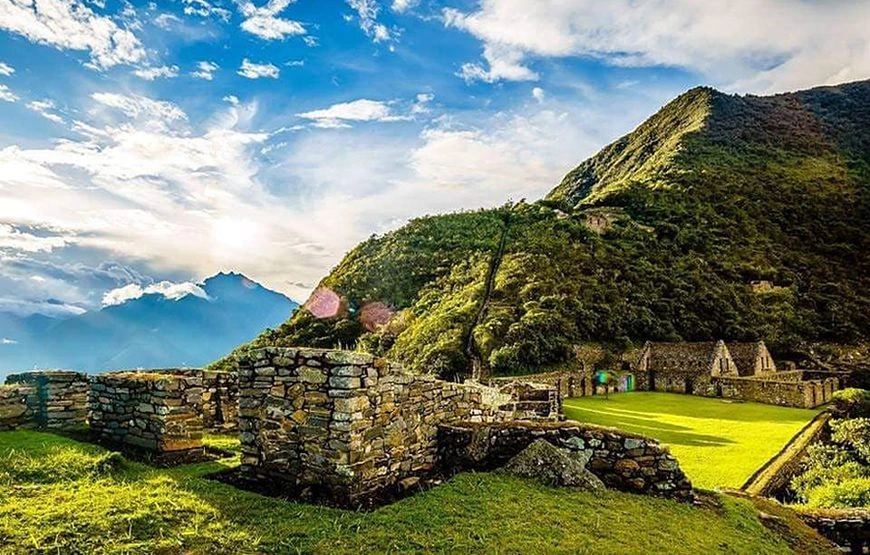
By the time you approach the final ridge, something shifts. The trail flattens, the air cools, and suddenly the canopy opens. The first Inca terraces appear silently, as if they had been waiting for you.
Time travelling in the archeological site
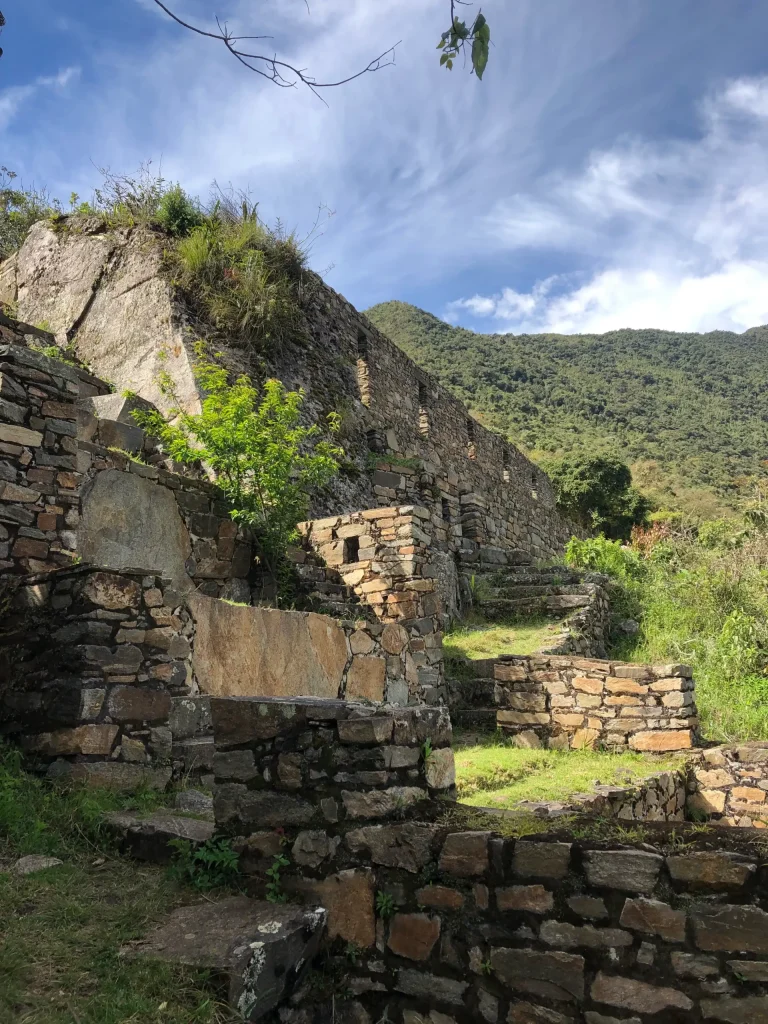
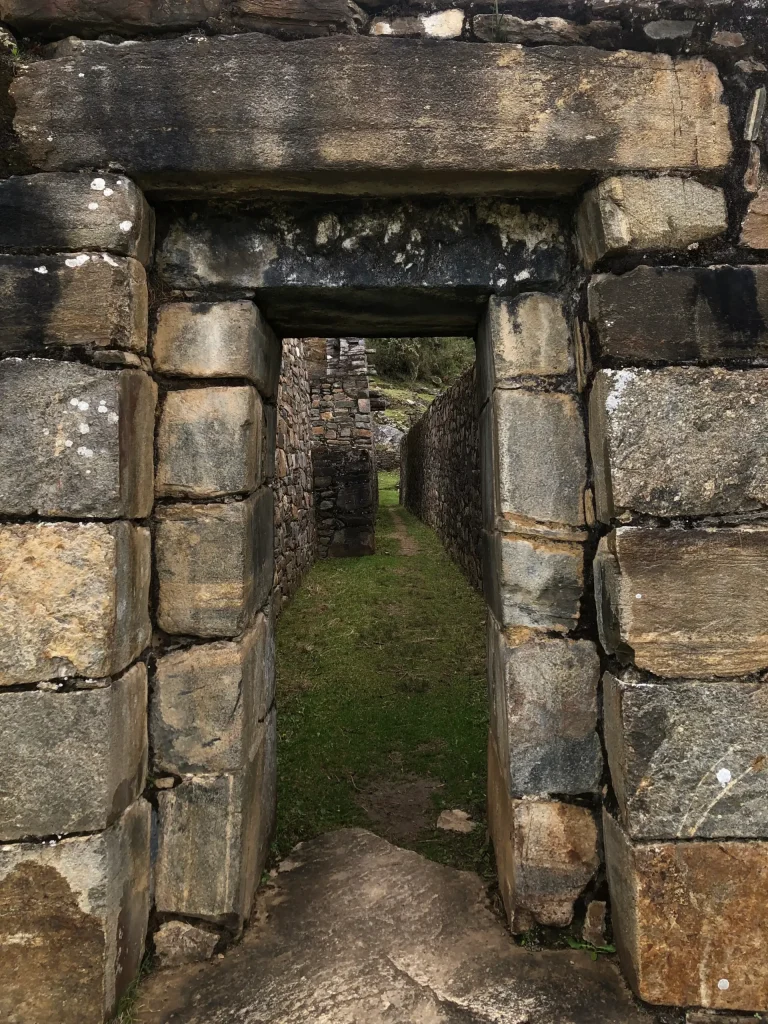
And this is where the tone changes, because stepping into Choquequirao is not like arriving at a viewpoint. It feels like crossing a threshold in time. You walk along Pikiwasi, the “House of the Fleas”, its rooms arranged around open patios where you imagine artisans or attendants moving about with the rhythm of daily tasks. The Casa Sacerdotal, the Priest’s House, sits with its commanding view of the canyon. It is a natural observatory, still a place where rituals must have unfolded with precision and reverence.
The Ushnu, the ceremonial platform, is silent now, but it retains the geometry of importance. You stand there and picture offerings placed carefully, smoke drifting into the sky, the Apus invoked at sunrise. The Main Plaza stretches wide and open, the social heart of the citadel, where communal life pulsed with markets, meetings, messages arriving from Cusco or Vilcabamba.
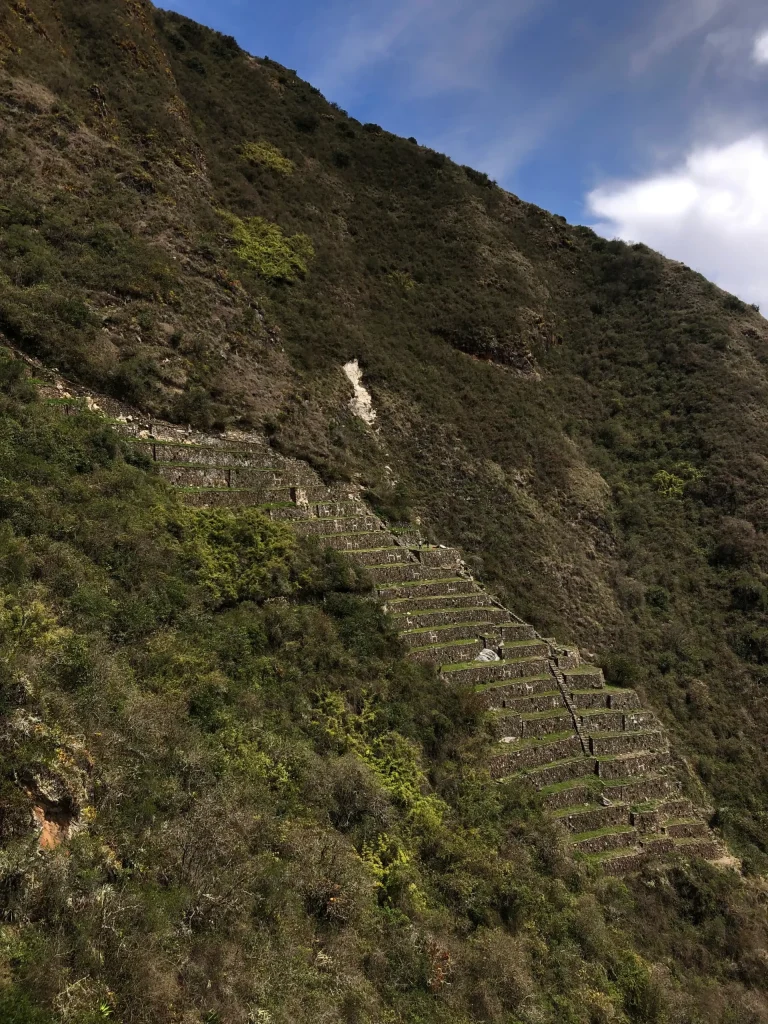
Farther down, the House of Waterfalls continues to channel glacial water with a mastery that feels almost modern. Terraces cascade below you in impossible vertical lines, agricultural laboratories where crops were adapted to altitude and climate. On the far flank of the mountain, the famous Llama Terraces come into view, stone figures in full profile stitched into the walls, a coded message of identity, power, and myth. Imagine builders chipping those silhouettes under the sun, while farmer families tended the crops just above them.
Children, in your mind’s eye, run through the high Hanan sector, where upper-class residences once stood. Porters and administrators enter or exit the Qolqas, the storehouses, carrying grains, tools, medicinal plants coming from the jungle routes. Everything is movement, order, ritual and at the same time, wonderfully ordinary.
Walking here, the imagination doesn’t require effort. The place provides the scenes. The mountains provide the soundtrack. You are both visitor and witness, slipping in and out of centuries as you step through each sector.
And then, gradually, you return to yourself. The spell breaks softly. The sound of your trekking poles reappears, the weight of your backpack reminds you where you stand, and the citadel becomes once again what it is today: a remote archaeological marvel suspended between worlds. But the sensation lingers, that feeling of novel discovery, as if you were among the first to arrive after centuries of silence. At Choquequirao, that illusion is not just possible; it is natural. It’s built into the stones themselves.
Wrap-Up
Leaving Choquequirao is its own kind of reflection. The trail back feels familiar yet changed, like walking out of a story you weren’t fully ready to finish. You descend from the terraces with the quiet understanding that few places today allow this kind of encounter: raw, unfiltered, and almost private. No crowds, no noise, no rush. Just the long silence of a citadel built to be remote, still fulfilling that purpose centuries after the Incas left it behind.
And this is why visiting Choquequirao isn’t just another “trek.” It’s a rare chance to stand inside a chapter of Andean history that remains largely untouched. The isolation that once protected it for the Inca elite now protects its authenticity for modern travelers. You feel connected not only to the past, but to the entire chain of people who have crossed the canyon before you: messengers, farmers, priests, explorers, archaeologists, and the handful of hikers who make the journey each day.
How should you travel there?
For a place like this, going with a knowledgeable, experienced team makes all the difference. A guided expedition gives context to the sectors, meaning to the architecture, and safety along one of the most demanding trails in the region. It strips away the logistics so you can focus on the experience itself, the climb, the views, the citadel slowly revealing its secrets.
If you’re ready to step into that story, Apple Travel Peru offers a 5-day Choquequirao Trek itinerary that follows the classic route across the canyon, reaching the citadel at the ideal pace: not rushed, not diluted, just enough time to let the place settle into you.
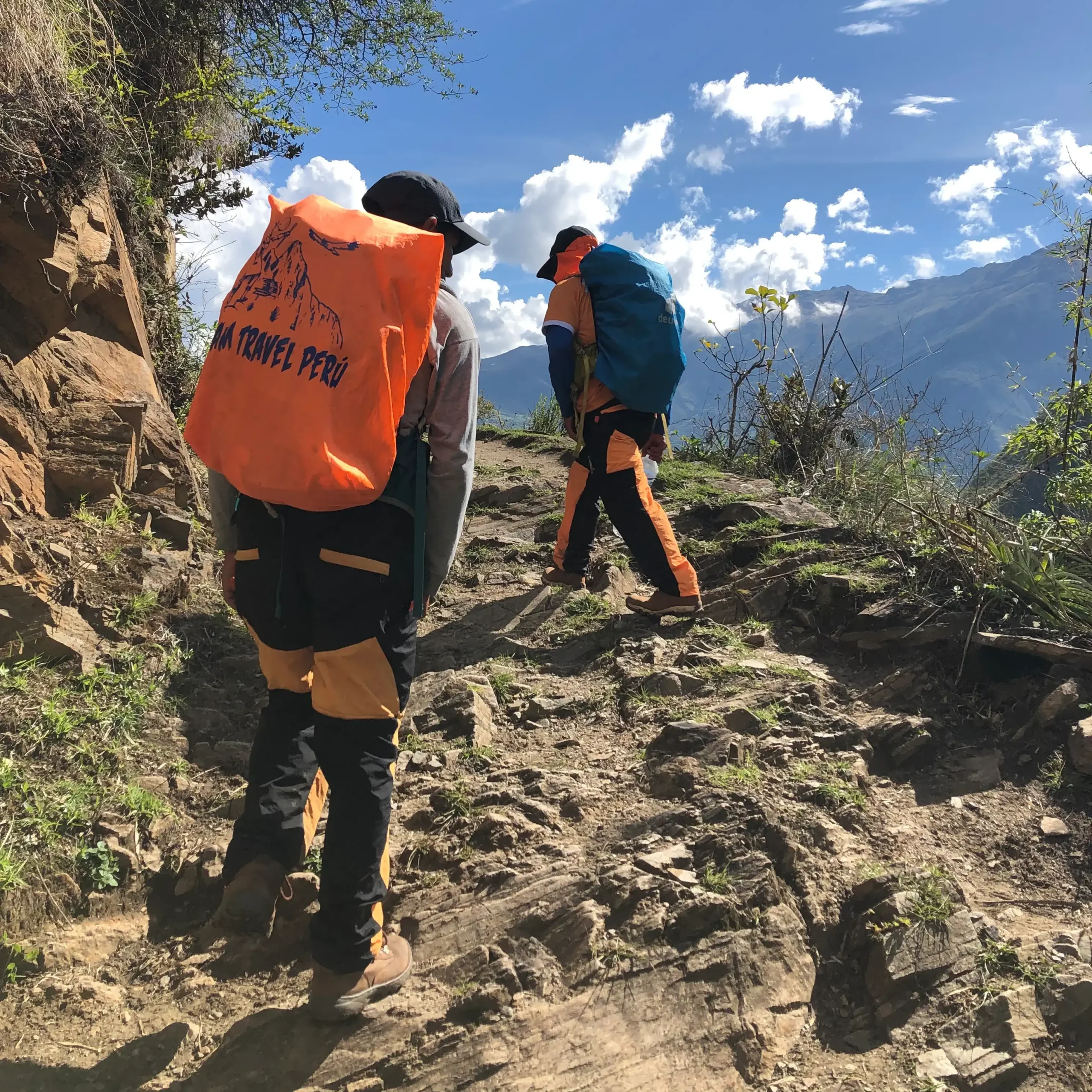
Choquequirao rewards those who take the journey seriously. If you go, go with intention. Go prepared. And go knowing that experiences like this, where effort meets meaning, and ruins still carry the weight of mystery are becoming increasingly rare in the world.