ITINERARY
Day 1: Cusco – Pukutuni School – Pucacocha
Your Ausangate adventure begins with a 4:00 AM pickup from your hotel. Departing Cusco early, we drive approximately three hours to the trailhead at Pukutuni School. Here, you will enjoy a freshly prepared breakfast while meeting your Apple Travel Peru crew, including your expert guide, mountain chef, and horsemen.
Trek Begins: Toward Ausangate
We start hiking with a 3-hour walk to our lunch spot in Upis village, located on the lower slopes of Ausangate Mountain. After enjoying a freshly prepared lunch, the trail climbs for 1.5 hours uphill to Vicuña Pass (4,850 m / 15,912 ft). We take time at the pass to rest, hydrate, and take in the sweeping mountain views.
Afternoon Hike to Pucaccocha
From the pass, continue hiking for another 3 hours toward our campsite at Pucaccocha. This stretch offers some of the most striking scenery of the day, wide valleys, cascading waterfalls, and glacial peaks surrounding turquoise lakes.
Camp at Pucaccocha
Upon arrival, your chef and porters will already have camp set up. Relax, enjoy hot food, and take in the dramatic high-altitude landscape as night falls.
Day Statistics
- Trailhead Elevation: 4,200 m
- Campsite Elevation: 4,600 m
- Distance: 16 km
- Weather: Cold
- Difficulty: Challenging
Day 2: Pucacocha – Condor Pass – Alpaca Pass – Sorayni Lake
After an early, nutritious breakfast prepared by your Apple Travel Peru chef, the trek continues deeper into the Rainbow Mountain region.
Climb to Condor Pass
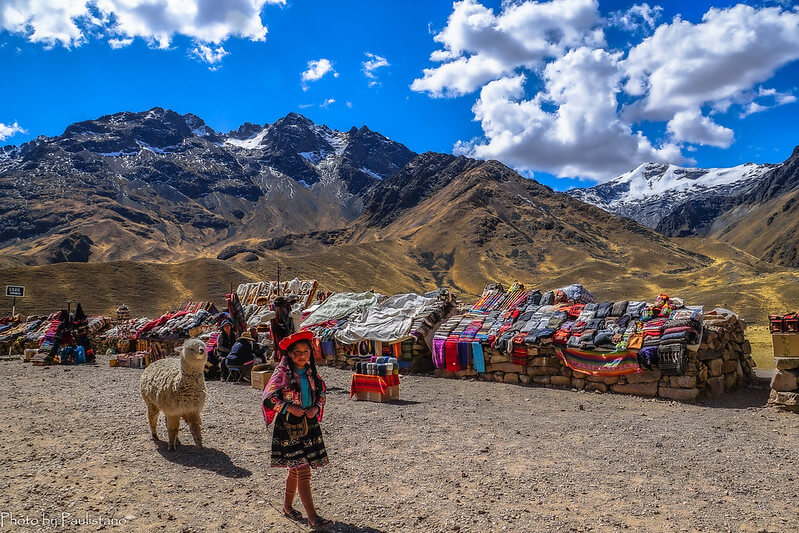
We begin with a 2-hour ascent to Condor Pass (4,900 m / 16,076 ft). Along the way, the landscape opens to wide views of Ausangate Mountain, shimmering high-altitude lagoons, and herds of llamas and alpacas grazing freely across the plateau.
Descent & Lunch
From the pass, the trail eases into a gradual 2-hour descent to our lunch spot. Enjoy a freshly prepared meal surrounded by vast Andean silence, this is one of the most peaceful sections of the trek.
Alpaca Pass & Rainbow Mountain Viewpoint
Following lunch, a short uphill climb leads to Alpaca Pass (4,950 m / 16,240 ft), where you can catch a stunning preview of Rainbow Mountain in the distance.
Camp Beneath the Stars
A final one-hour descent brings us to our campsite. The camp crew will have all tents set up upon arrival, allowing you to settle in, enjoy hot tea, and admire the Andean night sky
Day Statistics
- Distance: 8 km
- Campsite Elevation: 4,700 m
- Weather: Cold
- Difficulty: Challenging
Day 3: Sorayni Lake – Rainbow Mountain – Kayrawiri – Ollantaytambo – Aguas Calientes
Spending the night high in the Andes gives you a rare advantage, early arrival at Rainbow Mountain, before the crowds appear.
Sunrise Approach to Rainbow Mountain
Your morning begins with a warm breakfast and hot drinks prepared by the Apple Travel Peru team. From camp, we set out on a gradual 2-hour uphill hike toward Rainbow Mountain (Vinicunca).
Along the way, keep an eye out for vicuñas, the wild camelids of the high Andes, often seen grazing in this region.
Rainbow Mountain Experience
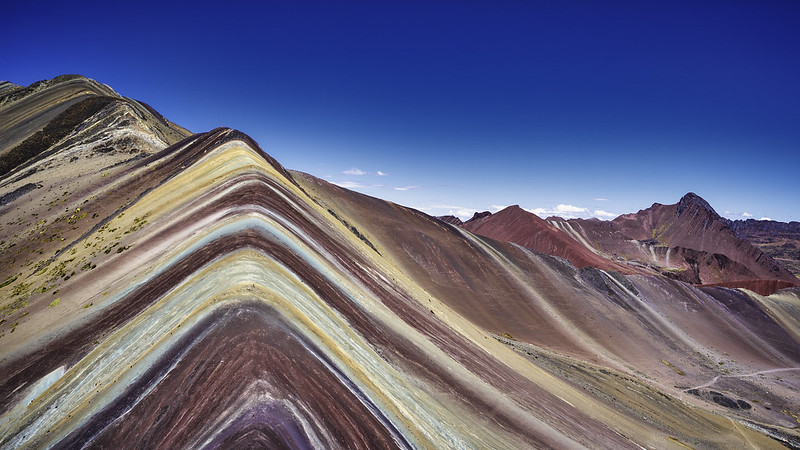
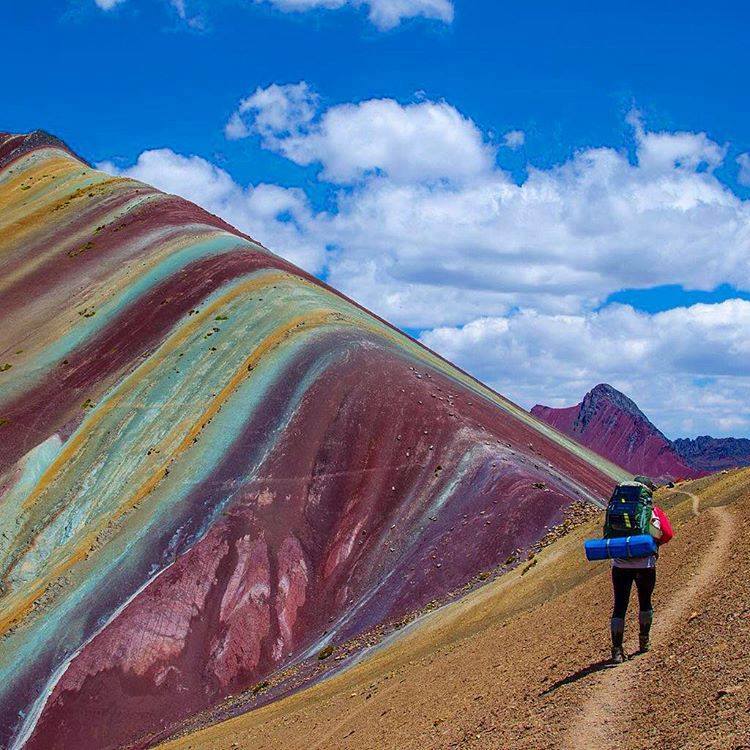
Arriving at the main viewpoint (5,030 m / 16,502 ft) early in the morning allows you to admire the vibrant mineral strata of Vinicunca and capture photo-perfect shots without afternoon crowds.
Your Apple Travel Peru guide will explain the natural minerals responsible for the mountain’s striking color bands before we begin our descent.
End of Trek & Transition
After approximately 1 hour of walking, we reach the end of the trail. Here, you’ll say goodbye to your trekking team and continue the journey with your Rainbow Mountain route guide.
Transfer to the Sacred Valley & Train to Machu Picchu
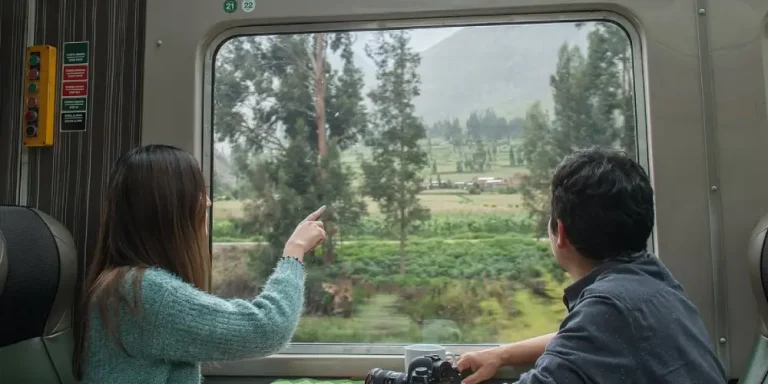
From the trailhead, we begin a 4-hour drive to Ollantaytambo, where you’ll enjoy dinner before boarding the 7:00 p.m. train to Aguas Calientes.
Upon reaching Aguas Calientes, check into your hotel to relax and enjoy a warm shower before your visit to Machu Picchu the following morning.
Day Statistics
- Walking Distance: 6 km
- Highest Elevation: 5,030 m / 16,502 ft (Rainbow Mountain Viewpoint)
- Weather: Cold
- Difficulty: Challenging
Day 4: Aguas Calientes – Machu Picchu – Cusco
Today is the moment everything has been building toward, your visit to Machu Picchu.
To make the most of this experience, Apple Travel Peru starts the day early. After breakfast, you’ll leave your main luggage safely stored at the hotel and head out with just a day pack. We’ll board one of the first buses departing at 5:30 a.m., beginning the 30-minute ascent to the citadel.
Sunrise at Machu Picchu
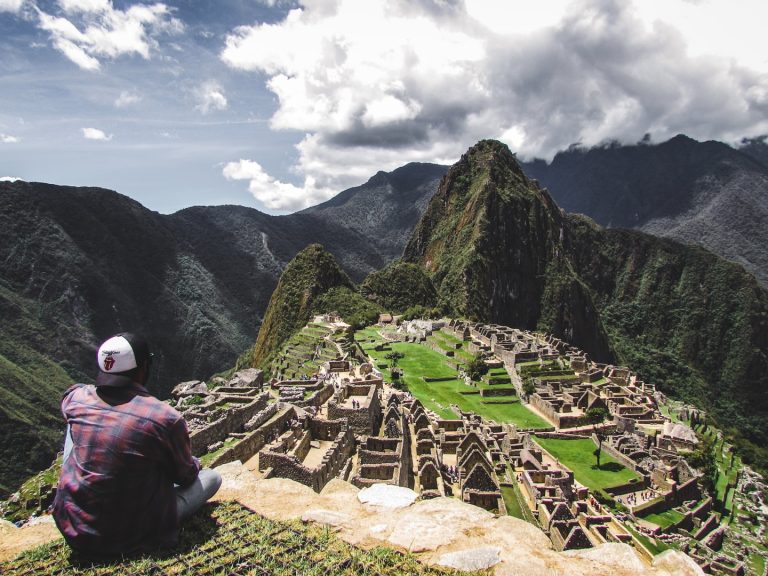
Upon arrival, your guide will lead you to one of the best sunrise viewpoints inside Machu Picchu, perfect for photographs and a quiet moment as the light reveals the stone city.
Once the sun rises, your guide will take you on a 2.5-hour guided walking tour, covering Machu Picchu’s most important sectors and explaining the history, engineering, and cultural meaning behind this extraordinary site.
After the guided visit, you will have free time to explore Machu Picchu independently. Additionally, travelers who reserved Huayna Picchu in advance may begin the 2-hour round-trip hike at this time (USD 75). Alternatively, you may choose Machu Picchu Mountain, which takes a minimum of 3 hours round-trip (USD 75). Consequently, your guide will clearly point out trail access points and timing recommendations.
Return to Cusco
We recommend returning to Aguas Calientes at least 2 hours before your scheduled train departure. Your guide will confirm exact train times in advance.
The journey back follows this route:
- 2-hour train ride from Aguas Calientes to Ollantaytambo
- Private transfer from Ollantaytambo to Cusco (approx. 2 hours)
Upon arrival, you’ll be dropped off directly at your hotel, marking the end of an unforgettable journey through the Andes.
Included
Tour Staff & Guidance
- Professional Guides: All Apple Travel All Apple Travel Peru guides studied English and tourism at Cusco National University. Local to the Cusco region, they share their cultural heritage while ensuring your safety, comfort, and enjoyment.
- Porter & Pack Support: Apple Travel Peru includes porter and horsemen support to carry your duffel bags between campsites at no additional fee.
- Pre-Trek Briefing: Attend a mandatory briefing at the Apple Travel Peru office at 6:30 p.m. the evening before your trek. You will receive a duffel bag for up to 7 kg (15.4 lbs) of personal gear. Because our crew carries these bags directly to camp, please keep your daily essentials inside your daypack.
Camping Equipment & Meals
- High-Quality Equipment: We provide spacious 4-person Eureka Timberline tents (assigned to only 2 trekkers for extra comfort), a dedicated dining tent, tables, chairs, and full kitchen setups.
- Fresh Meals: Our mountain chefs prepare fresh breakfasts, lunches, dinners, morning hiking snacks, and daily afternoon tea. Special dietary requirements are gladly accommodated with advance notice. (Note: Final-day lunch in Aguas Calientes is not included).
- Safe Hydration: We provide clean, boiled, and filtered drinking water at every meal starting from Day 1 lunch through Day 4 breakfast. Please bring reusable bottles or a hydration bladder (2–3L capacity).
- Trekking Extras: We include a camping pillow, insulating foam mattress, rain poncho, and rain cover for your daypack.
Logistics & Safety Protocol
- Full Transportation: Includes hotel pickup around 4:30 a.m. on Day 1, all transfers to the trailhead, train and bus passes, and drop-off back at your Cusco hotel at the end of the tour.
- Emergency Riding Horse: All alternative treks include an emergency riding horse with a helmet, available if a trekker needs a break or feels fatigued.
- First Aid & Oxygen: Guides complete annual medical and first-aid training certified by physicians each February. Every group carries a complete medical kit and an emergency oxygen tank.
- Satellite Phone Support: Every guide carries a satellite phone to maintain communication and ensure rapid emergency response from anywhere on the mountain.
Not Included
- Equipment Rentals: Four-season sleeping bag ($20 USD), inflatable air mattress ($15 USD), pair of trekking poles ($15 USD).
- Upgrades & Additional Permits: Vistadome train upgrade, Huayna Picchu or Machu Picchu Mountain permits ($75 USD each, must be reserved at booking).
- Unincluded Meals: Lunch on Day 4 in Aguas Calientes after visiting Machu Picchu.
- Personal Expenses: Tips for guides, cooks, and horsemen; travel insurance.
Price
- Price: $650 USD per person
Optional Rentals
- Four-Season Sleeping Bag: $20 USD per person (rated for low temperatures; fits up to 1.95 m / 6’4″)
- Trekking Poles: $15 USD per pair (professional Black Diamond adjustable poles)
- Inflatable Air Mattress: $15 USD per person (Therm-a-Rest lightweight air mattress for extra insulation and comfort)
- Single Tent Supplement: $30 USD (for solo travelers requesting a private 4-person tent)
Optional Upgrades & Permits
- Vistadome Return Train Upgrade: $67 USD per person (Aguas Calientes to Ollantaytambo panoramic train experience)
- Huayna Picchu Mountain Permit: $75 USD per person (must be reserved at the time of booking, subject to availability)
- Machu Picchu Mountain Permit: $75 USD per person (must be reserved at the time of booking, subject to availability)
Important Information
Please read carefully the following information as it will help with your questions about our services and the Lares trek & Short Inca Trail to Machu Picchu!
THE BRIEFING
Your pre-trek briefing will take place the night before your trek at 6:00 p.m. or 6:30 p.m. at our Cusco office, located at Calle Garcilaso 2010, Office 2012. You will meet your guide, review the itinerary details, and receive your complimentary duffel bag for your personal trekking gear.
CAN I STORE MY LUGGAGE AT YOUR OFFICE?
Yes! You can safely store your main luggage at our Cusco office or at your hotel during the trek free of charge.
HOW TO BOOK THE AUSANGATE TREK & MACHU PICCHU WITH RAINBOW MOUNTAIN
FIRST, fill out our online booking form by clicking the BOOK NOW button on our homepage. Please have the following information ready for each participant:
- Full legal name (exactly as it appears on your passport)
- Gender
- Passport number
- Date of Birth (DD/MM/YYYY)
- Nationality
SECOND, a non-refundable deposit of $211.00 USD per person is required to secure your permits and entrance tickets. Payments can be made via VISA or PayPal directly on our booking page.
WHAT ABOUT THE BALANCE?
Your remaining balance can be paid in cash (US Dollars or Peruvian Soles) at our office in Cusco’s historical center. Nearby ATMs are also available for cash withdrawals.
If you prefer to pay online, we accept VISA and PayPal (subject to a 5.5% processing fee). PayPal payments should be sent directly to appletravelperu@gmail.com.
MAY I CHANGE THE DEPARTURE DATE AFTER THE TICKETS HAVE BEEN BOUGHT?
Unfortunately, no. Government regulations mandate that permits and Machu Picchu entry tickets are non-refundable and non-transferable. Once booked, departure dates cannot be changed.
DO I NEED MY ORIGINAL PASSPORT?
Yes, you must bring your physical, original passport on the trek. Passport details are verified at trail checkpoints, train stations, and the Machu Picchu entrance. The passport you bring must match the details provided during booking.
If you renew your passport before the trip, please send us copies of both your old and new passports so we can update your reservation for a $25 USD administrative fee. Alternatively, you can bring both your original old passport and your new valid passport with you to Peru to present at checkpoints.
WHAT IS THE WEATHER LIKE ON THE LARES TREK & SHORT INCA TRAIL TO MACHU PICCHU?
Mountain weather in the high Andes is variable and can shift quickly. Daytime temperatures are generally cool and pleasant, while high-altitude nights (especially at campsites above 4,400 m) can drop below freezing. Dressing in breathable layers, including thermal base layers, a fleece, and a waterproof windbreaker, is essential.
WHAT ABOUT ALTITUDE SICKNESS?
This high-altitude expedition reaches elevations above 5,000 meters (16,400 ft). Spending at least 2 to 3 days acclimating in Cusco (3,350 m / 11,047 ft) before the trek is vital. Stay hydrated, sip coca tea, avoid heavy meals early on, and take a steady pace. Our guides are trained in altitude management and carry emergency oxygen tanks on all treks. Consult your doctor prior to travel for personal altitude medication advice.
DUFFEL BAG & DAYPACK POLICY
At your briefing, you will receive a duffel bag for up to 7 kg / 15.4 lbs of personal items (including your sleeping bag and pad). Pack horses transport your duffel bag directly between campsites. Because you will not have access to your duffel bag during the daytime hike, you must carry a 30L to 40L daypack for daily essentials such as rain gear, warm layers, water, sunscreen, and snacks.
IS THE TREK DIFFICULT, DO I NEED TO BE FIT?
Yes, this trek is rated as Challenging due to high altitudes and steep mountain passes. Good physical conditioning and cardiovascular preparation (such as hiking or regular cardio training in the months prior) are strongly recommended to ensure an enjoyable trip.
ARE THERE TOILETS ON THE TREK?
Yes. Apple Travel Peru provides a private, eco-friendly toilet tent equipped with a clean, comfortable seat. Our team sets up the toilet tent at a safe distance from camp every evening for your privacy and comfort.
WHAT HAPPENS IF I AM UNABLE TO FINISH THE TREK?
If you experience severe fatigue or health complications, our guides will evaluate your condition and provide medical support or emergency horse transport. If you are unable to continue, our team will safely assist you to the nearest road access to transfer to Ollantaytambo or Cusco (transportation and extra hotel costs are the responsibility of the trekker). We strongly advise purchasing comprehensive travel insurance covering high-altitude trekking and medical evacuation.
ARE WE DROPPED OFF AT OUR HOTEL AFTER THE TOUR?
Yes! Private group drop-off back to your hotel in Cusco or the Sacred Valley (such as Ollantaytambo or Urubamba) is included at the conclusion of your 4-day tour.
TIPPING
Tipping is voluntary but deeply appreciated by our field staff. Gratuities reflect your satisfaction with the hard work of your guide, trekking chef, and horsemen team.
ARE WE SUSTAINABLE?
Absolutely. Apple Travel Peru adheres to strict Leave No Trace principles, pays fair wages to all local mountain crews, supports high-altitude indigenous communities, and works continuously to minimize environmental impact across all Andean routes.
Getting to Cusco for the Ausangate Trek to Machu Picchu 4 days
The airport in Cusco currently is only for domestic flights. Therefore, all international travelers by plane must disembark in Lima and go through Customs. Even if your flight to Cusco is the same day by the same airline carrier, you must grab your bags in Lima and then check them back in.
The best way to get to Cusco is by air and there are several options on airlines. LAN tends to be the most expensive but has the most options and flights. Expect delays or flight cancellations. Due to the high altitude of Cusco, it tends to be difficult to land and any acclimate weather will stop air traffic. Bus travel is always available and while the trip can be long, especially from Lima the buses in Peru are very well-maintained and comfortable. This option is strongly encouraged if coming from a city closer to Cusco like Puno. Lima buses will take about 20 hours to arrive.
Luggage Storage:
Any extra luggage you have with you can be left safely in Cusco at either your hotel or with us at the APPLE TRAVEL PERU office while you trek. We’ll store your luggage on the morning of your trek and return it once you’re back in Cusco. Make sure your bags have tags on them so they are easy to locate.
Altitude
Altitude As soon as people book their trip to Peru, specifically Cusco they start wondering about altitude sickness. The air at high altitudes contains less oxygen than at sea level and forces your body to work harder to get the oxygen it needs. Over several days at high altitudes, your body adjusts to the lower amount of oxygen in the air. For this reason, we always recommend spending at least two days in Cusco before beginning any trek in the Andes. Cusco is a marvelous city with lots to do so if you have more time to acclimate you won´t be bored.
Symptoms of Altitude Sickness With altitude sickness, you may first feel like you have the flu or a hangover. You may have a headache, tiredness, loss of appetite, nausea, vomiting, dizziness, trouble sleeping, or trouble breathing during exercise. If any of these effects become severe please contact our office and we’ll help you get to a doctor.
Preventing Altitude Sickness: Tips for Easing Into High Altitude Activities
Most of the time these symptoms will be mild. However, we always recommend easing into the activity slowly to allow your body time to adjust.
- Stay Hydrated: Drink plenty of fluids such as water or coca tea. Coca tea leaves contain alkaloids that help bring oxygen into your blood, helping your body avoid high-altitude effects.
- Avoid Dehydrating Drinks: Avoid drinking a lot of alcohol and coffee since they cause you to urinate more often and become dehydrated.
- Avoid Smoking & Sleeping Pills: Smoking makes it more difficult for your body to get oxygen. Additionally, avoid sleeping pills because they cause shallow breathing at night.
Remember, trekking to Machu Picchu is not a race. Even those in peak physical shape can suffer from altitude sickness if they climb too quickly. Consequently, going slow gives your body time to adjust properly to the elevation.
Your healthcare provider may also prescribe medications like Acetazolamide to help prevent symptoms. Therefore, start taking it two days before reaching high elevation and continue while on the trail. If you feel sick, let your guide know immediately so they can assist you.
Here are the three exact edits needed to resolve all three WordPress errors based on the exact text you pasted.
Weather
Of course, the weather is unpredictable. The Cusco dry season is from April to October. Although this does not stop rain from falling in June or the sun from coming out in December so just be prepared. No matter what month you are doing the trek make sure that you have rain gear that includes a waterproof jacket, pants, poncho, and waterproof gloves. Many people forget about gloves but being cold and wet makes hiking unpleasant.
Also, be ready for four seasons. Treks in the Andes involve various microclimates and you will need to be prepared for each one. Layers are always vital since they easily adjust to different temperature changes. Be prepared with a warm packable down jacket since the evening will be cold.
First Aid
Every APPLE TRAVEL PERU guide has received training in first aid from a physician. We conduct mandatory training every February and every APPLE guide attends. When guiding you they’ll have with them a first aid kit for basic medical situations (traveler’s diarrhea, cuts, scrapes, etc.) and oxygen. In case something unexpected happens and you feel you can no longer complete the trek they’ll figure out the safest and quickest way off the trail and to a clinic. You’ll never be left alone, you’ll have a member of the team escort you every step of the way until you are safe with a doctor. When you’re feeling up to it, we’ll make sure that you still have the chance to visit Machu Picchu and reconnect with your group. This way you can finish your trip traveling by train comfortably
.
Travel Insurance
To protect your travel investment, we highly recommend the purchase of travel insurance. Getting travel insurance before you leave home is strongly encouraged and very easy. We work with a great agency in the United States that has helped to make it easy and affordable. It’s an excellent way to protect yourself while you are visiting Peru.
Environmental Impact
APPLE TRAVEL PERU uses biodegradable soap and transports all our garbage back to Cusco. Our porters are trained to look after the trail and pick up any waste from other groups, as well. We also use environmentally-friendly chemical portable toilets that allow us to pack waste out. We strongly believe in leaving no footprint behind.
Community
APPLE TRAVEL PERU is proud of the work we do for our community as this is the main focus of our company. We’ve worked with villages directly to help supply them with the needs their families were missing. We’ve supported local schools by giving them computers and books. Apple Travel Peru also sponsors a teacher in the village. This is where most of our porters come from and ensures their children have the best opportunity for education.
We buy all our food from local farmers and markets and serve the freshest ingredients. We provide English classes for all our team including guides, porters, chefs, and drivers. We’re also building a house for our porters. By giving them a safe and comfortable place to stay before and after our treks.
Twice every year we bring our porters and their families to Machu Picchu. The men and women who work tirelessly have never visited the Lost Citadel of the Incas. So that makes this trip our favorite to do. It’s an honor to show them this place.
Personal Porter Included
All APPLE TRAVEL PERU camping treks include porters who’re responsible for carrying and setting up all equipment. They’ll additionally carry the duffel bag you receive at your briefing the night before your trek. Each duffel bag cannot exceed 7kg/14lbs and must include your sleeping bag and air mat. APPLE TRAVEL PERU gives each porter a proper uniform, salary, and insurance. They’re the backbone of our company.
Packing list for Ausangate Trek to Machu Picchu 4 days
- Day pack
- Copy of your passport
- Good hiking gear: hiking boots, warm jackets, gloves, hat, warm fleece, and socks
- Sleeping bag
- Walking boots
- Waterproof jacket/rain poncho
- Hat and gloves
- Warm clothes: Layers for variable temperatures, especially at night
- T-shirts
- Comfortable trousers
- Sun hat
- Sunscreen
- Insect repellent
- Reusable plastic/metal water bottles, or camel bags
- Water for the first four hours of the trek, then we’ll provide you with drinking water
- Toiletries
- Personal medication
- Camera and films
- Flashlight with spare batteries
- Walking stick
- Bathing suit for the hot springs
- Extra money for souvenirs, drinks, and tips