Two Quiet Ways Into the Inca World
Most travelers meet the Inca’s heritage at their most iconic moments: Machu Picchu at sunrise, stone walls perfectly framed, history condensed into a single arrival. But the Inca world was not built for spectacle. It was built to function.
Away from the famous paths, there are routes that don’t lead you to a grand reveal. Instead, they lead you into the logic of an empire. How it was built, how it worked, and how people lived within it.
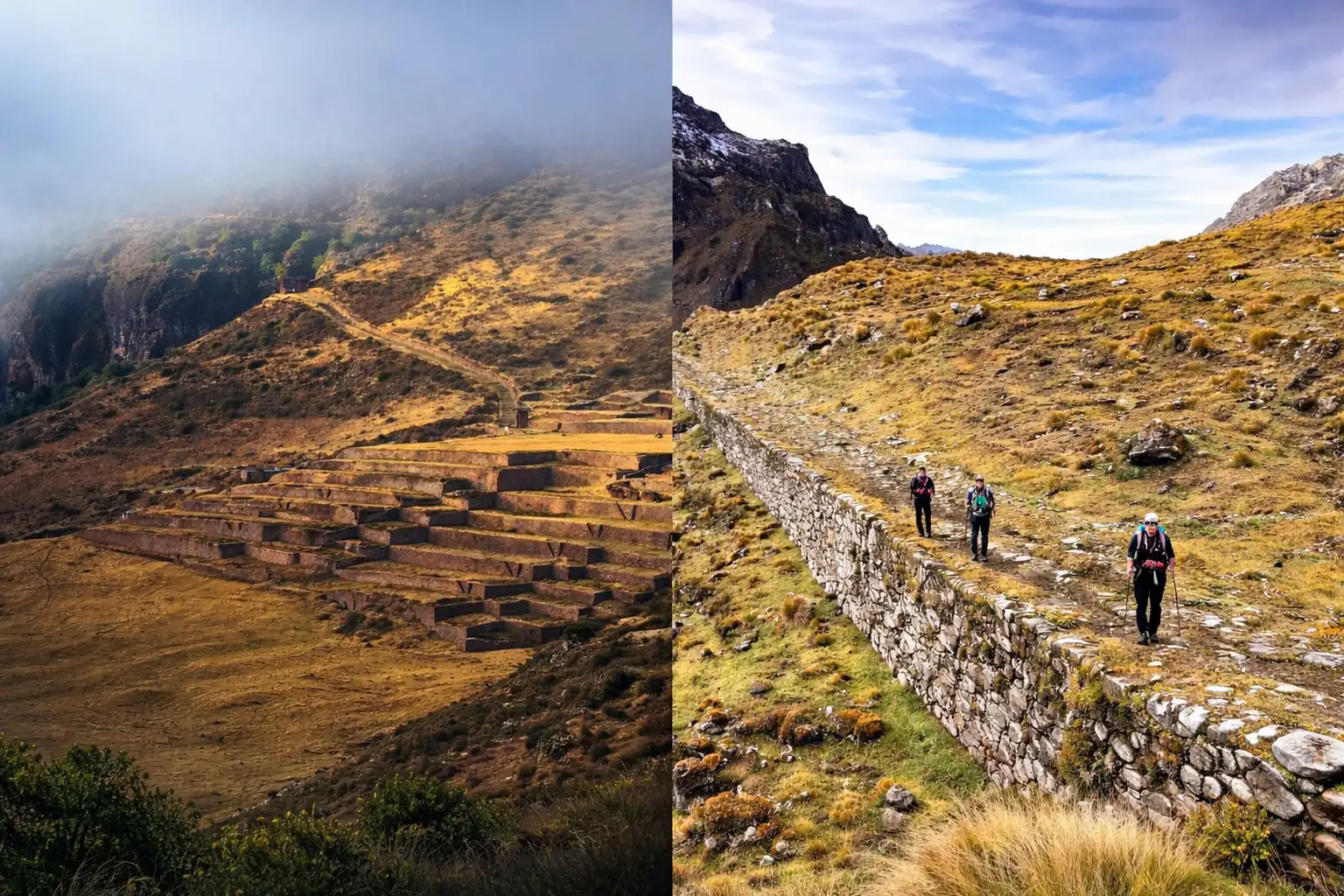
The Inca Quarry Trek and the Huchuy Qosqo Trek are two of those routes. Quiet, uncrowded, and deeply revealing. They don’t compete with Machu Picchu, but they explain it.
What Makes a “Quiet” Inca Trek?
A quiet Inca trek isn’t defined by distance or difficulty. It’s defined by attention.
These are routes where:
- Walking slows the pace of interpretation
- Stonework is examined, not passed
- Landscapes are read as systems, not scenery
- Guides become translators of place, not narrators of highlights
There’s no permit race, no fixed finale, no crowd momentum. What you gain instead is context and time to absorb it.
Inca Quarry Trek: Entering the World of Inca Engineering
The Inca Quarry Trek reveals the empire in mid-process.
Rather than showing what the Incas completed, this route focuses on how they built. Along the trail, you encounter quarries, partially carved stones, and unfinished works. Tangible evidence of planning, logistics, and scale.
What this trail reveals
- Stone extraction, shaping, and transportation
- The organization required to build across mountain terrain
- The relationship between construction sites and surrounding landscapes
Landscape & walking experience
The terrain feels open and expansive, with changing environments and higher passes that reinforce the sense of movement through a working landscape. Days feel immersive rather than scenic-driven.
Who this trek resonates with
The Inca Quarry Trek appeals to travelers who:
- Are curious about process, not just outcomes
- Have already visited Machu Picchu
- Enjoy archaeological depth and longer immersion
- Prefer routes that feel earned rather than presented
Huchuy Qosqo Trek: Understanding How the Incas Lived
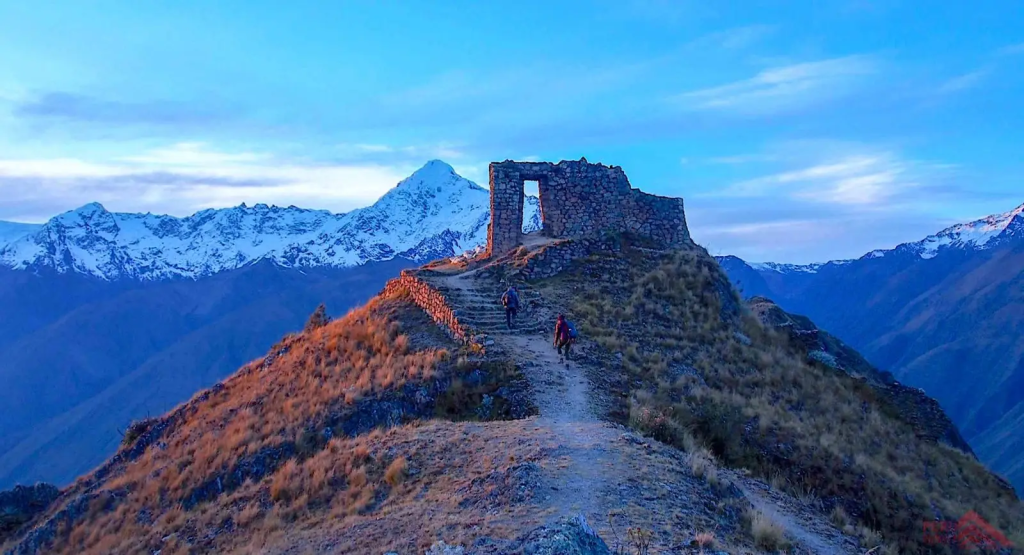
If Inca Quarry is about building an empire, Huchuy Qosqo is about living inside one.
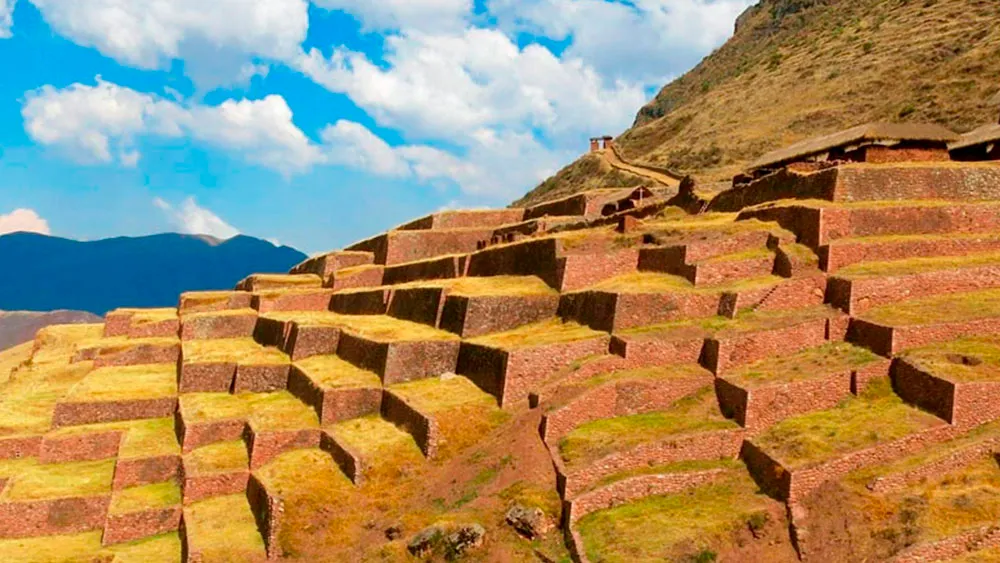
Located above the Sacred Valley, the Huchuy Qosqo site reveals how the Incas organized daily life. Food production, storage, and settlement placement, all tied closely to the valley below.
What this trail reveals
- Agricultural terraces and food systems
- Strategic positioning above the Sacred Valley
- The balance between isolation and connection
Rather than monumental architecture, the focus here is on sustainability and planning. How communities functioned within a demanding environment.
Landscape & walking experience
The hike is shorter and more compact, with gradual ascents and wide views across the Sacred Valley. The setting provides constant geographic context, making it easy to understand how this settlement related to trade routes and nearby towns.
Who this trek resonates with
The Huchuy Qosqo Trek suits travelers who:
- Want cultural insight without a long expedition
- Are short on time but long on curiosity
- Enjoy photography and landscape perspective
- Prefer a softer entry into trekking
Two Paths, Two Perspectives
Rather than choosing between better or worse, these treks offer different lenses:
- Inca Quarry focuses on how the Incas built
- Huchuy Qosqo focuses on how they lived
- One emphasizes process and effort
- The other emphasizes place and daily life
- One unfolds over longer immersion
- The other delivers insight efficiently
Both lead into the Inca world, through different doors.
Which One Fits Your Way of Traveling?
You don’t choose between these treks based on fitness alone. You choose based on what you want to understand.
- If you’re looking to learn about stonework, logistics, and the mechanics of empire → Inca Quarry
- If you’re more interested in settlements, agriculture, and landscape integration → Huchuy Qosqo
Comparison chart:
| Feature | Inca Quarry Trek | Huchuy Qosqo Trek |
|---|---|---|
| Focus | Engineering & process | Settlement & agriculture |
| Terrain | Open, “working landscape” | Pcuna-above Sacred Valley views |
| Duration/Intensity | Moderate (multi-day) | Shorter & compact |
| Best for | Detail, immersion | Cultural snapshot |
| Crowds | Low | Very low |
Where These Treks Fit in a Peru Journey
These routes work particularly well:
- As a deeper follow-up after Machu Picchu
- As a Sacred Valley alternative for travelers avoiding crowds
- As a cultural trek for those not seeking a multi-day expedition
They’re often the missing link between sightseeing and understanding.
Choosing the Right Way to Experience Them
Because these are interpretive treks, how you experience them matters. Travelers usually look for:
- Smaller groups
- Strong, knowledge-driven guides
- Flexible pacing
- A balance between effort and comfort
Companies like 69 Explorer specialize in deeper trekking routes with a strong emphasis on guiding and immersion, while Apple Travel focuses on blending insight with thoughtful comfort and logistics. For travelers pairing these hikes with broader Sacred Valley experiences, SAM Travel Peru offers flexible options that integrate culture and activity smoothly.
How You Enter a Civilization Matters
Iconic sites impress. Quiet trails explain.
The Inca world wasn’t designed to be consumed quickly. It was designed to be navigated, understood, and lived within. Routes like Inca Quarry and Huchuy Qosqo remind us that sometimes, the most meaningful encounters happen before the destination, when the path itself becomes the lesson.