A first-hand journey through the citadel, step by step
The day started early, before Cusco had fully woken up. After breakfast at the hotel, I packed a small day pack, with water, sunscreen, a hat, and an extra layer. Even in the dry season, mornings in the Andes can be cold, and Machu Picchu sits right where mountains meet cloud forest.
Shortly after, our guide picked us up and drove us to the bus station. From there, a winding 25-minute bus ride carried us up the mountain toward the entrance of the citadel. As the road climbed, the landscape changed quickly. Steep green slopes, dense vegetation, and clouds drifting through the valleys below. The anticipation built with every turn.
Arrival at the Citadel Entrance
At the entrance, we joined the line for control and ticket verification. Our tickets were for Circuit 2B, one of the most complete routes through Machu Picchu, allowing access to the lower terraces and the core ceremonial and residential areas.
Once inside, the path immediately began to climb. The first structures we encountered were colcas, Inca storehouses used to preserve food such as maize, potatoes, and dried meat. Our guide explained that these storage buildings were strategically placed in elevated, well-ventilated areas to regulate humidity and temperature. A practical example of Inca engineering adapting to the environment.
As we climbed higher, more of the citadel came into view. Stone walls emerged from the terraces, and suddenly the scale of Machu Picchu revealed itself. The way the city fits into the mountain felt intentional, precise, and almost effortless.
The Inferior Platform: First Full View
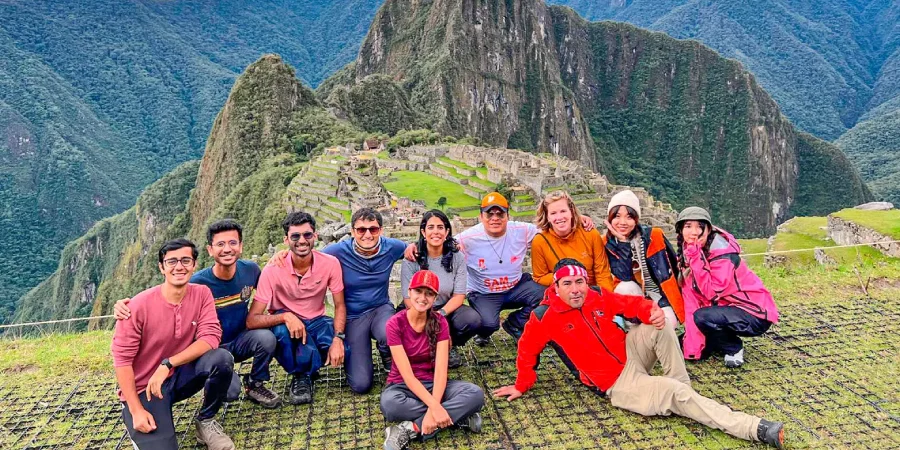
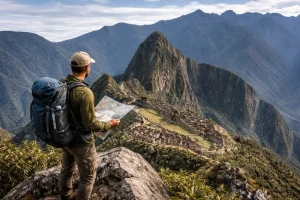
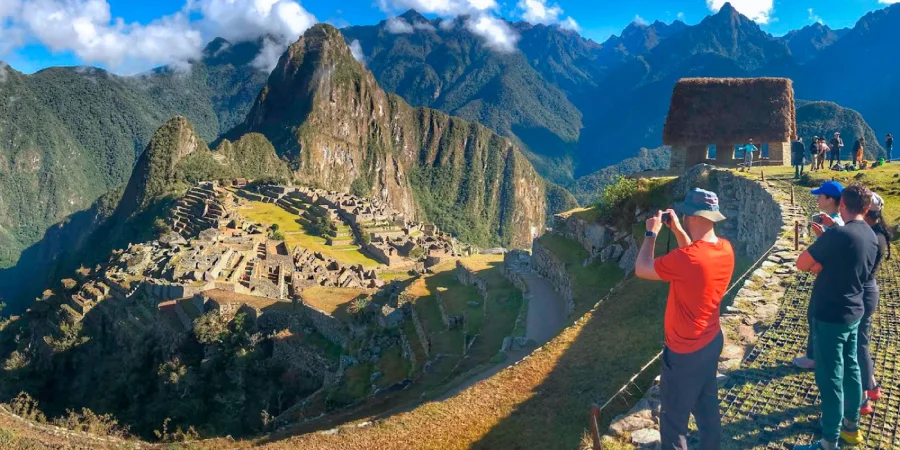
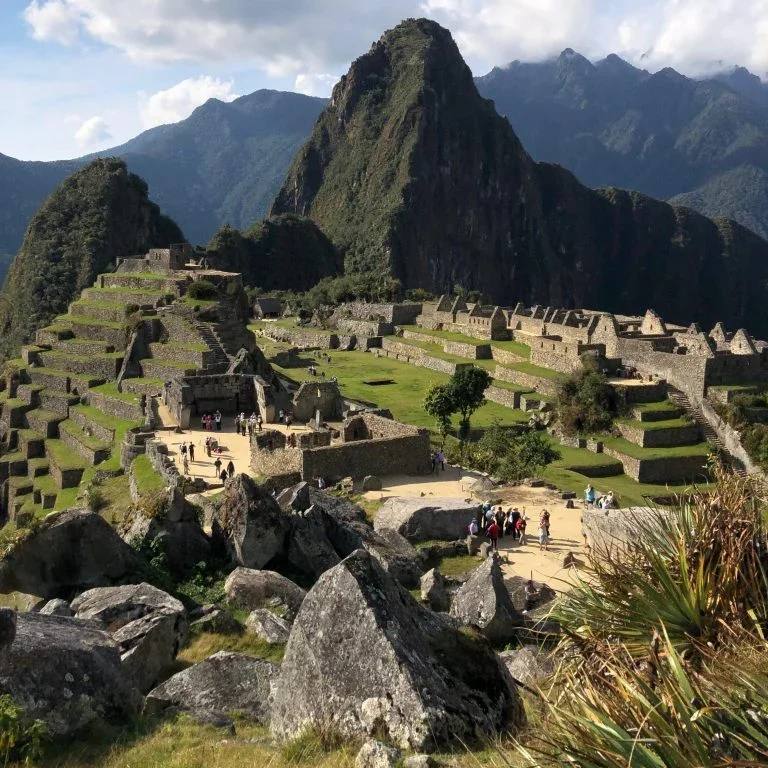
We reached the inferior platform, one of the classic viewpoints of Machu Picchu. From here, the entire urban sector spreads out below, framed by Huayna Picchu in the background.
Our guide paused here to explain the overall layout of the site: how Machu Picchu is divided into agricultural areas, residential sectors, and ceremonial spaces, all connected by a network of staircases, terraces, and drainage channels. This viewpoint wasn’t just for photos, it was a place to understand how the city functioned as a whole.
After giving us time for pictures, the guide outlined the route we would follow through the citadel, preparing us for the sequence of spaces and meanings we were about to encounter.
Entering the Citadel: Terraces and Residential Areas
We descended along a series of agricultural terraces, which served both to grow crops and to stabilize the steep slopes of the mountain. From there, we entered the first group of residential buildings.
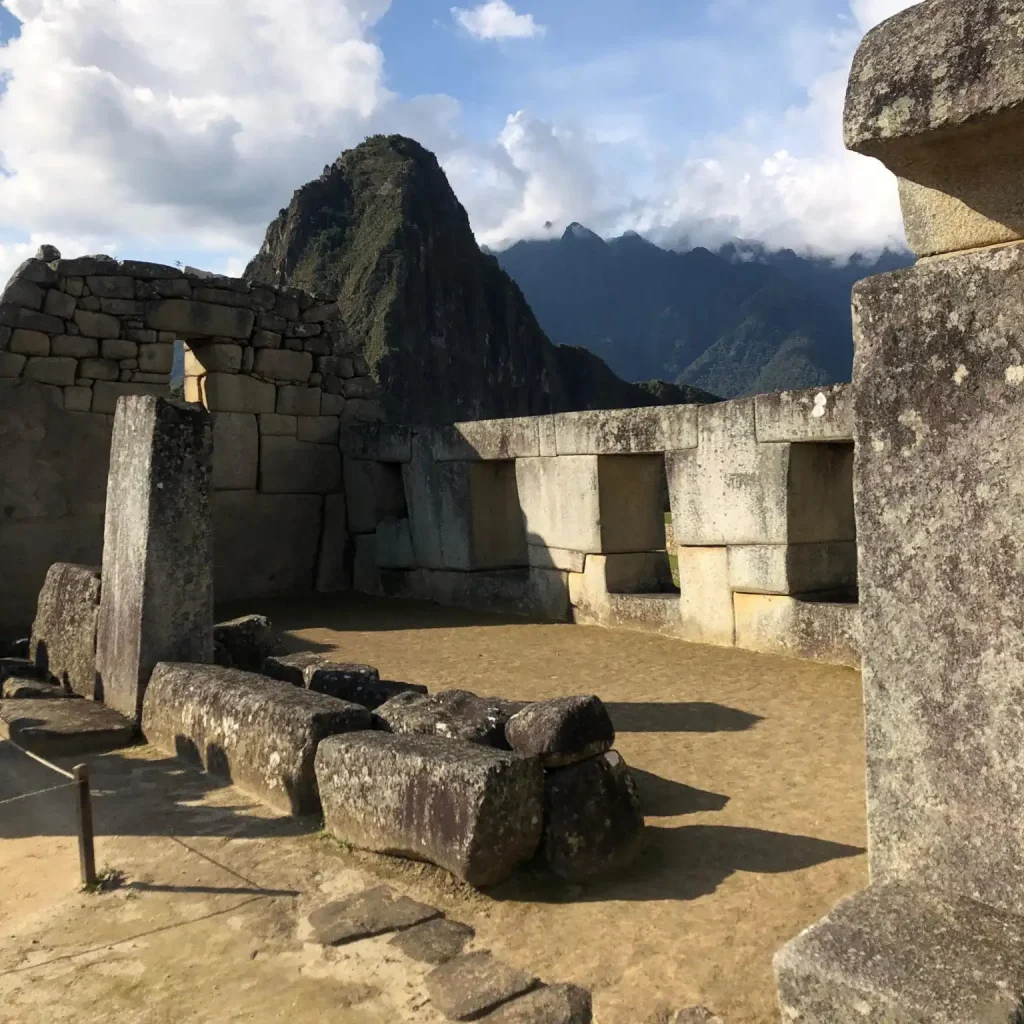
These structures were not random. The guide explained how the quality of stonework reflected social hierarchy. Finely cut stones for elite or ceremonial use, and more rustic masonry for common residential areas. Doorways, niches, and window placements manage light, airflow, and seismic stability.
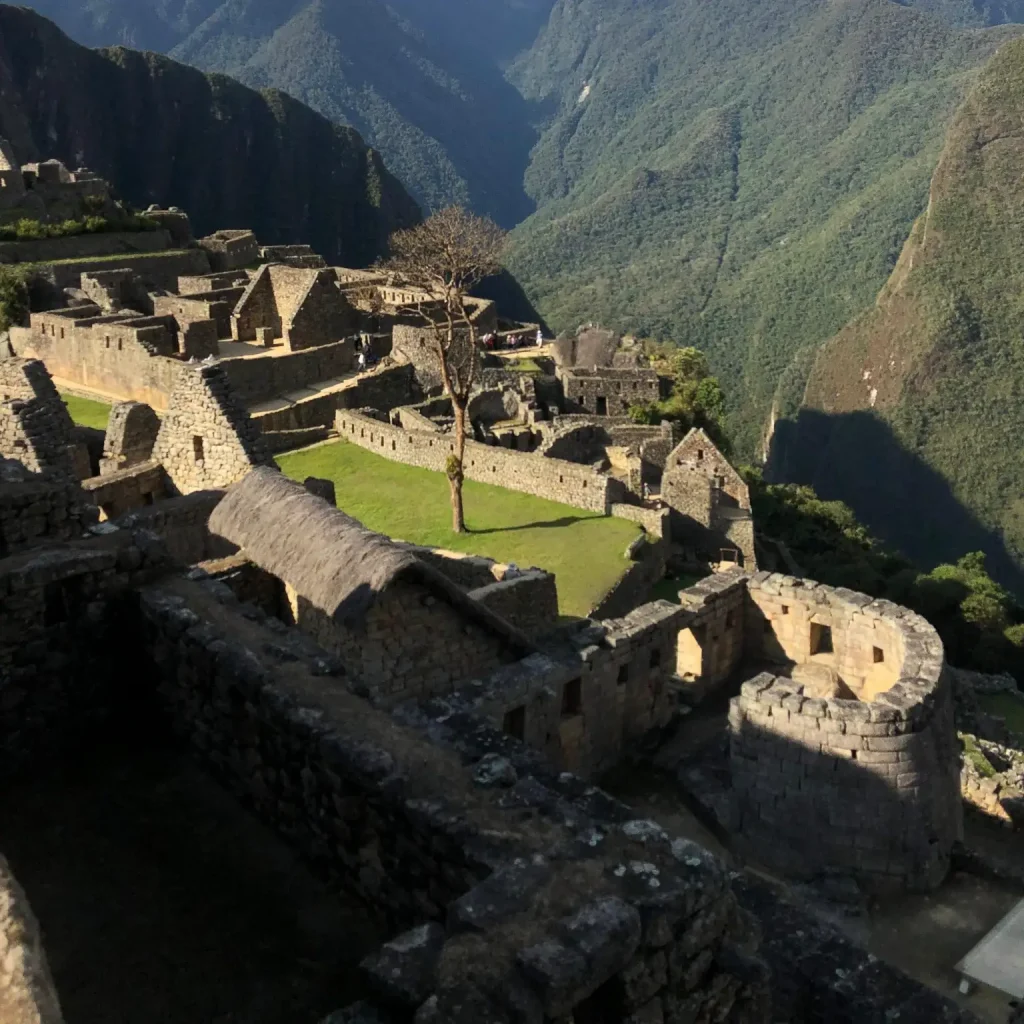
We then reached a viewpoint above the Temple of the Sun, one of the most important religious structures in Machu Picchu. Below us, the curved wall of the temple followed the natural rock beneath it. The guide explained that this temple was associated with solar worship and astronomical observation, with windows aligned to significant solar events.
The Quarry and the Temples Plaza
Next came the quarry area, where many of the stones used to build Machu Picchu were extracted. Here, unfinished blocks and carved rock surfaces show the techniques the Incas used. Which include stone hammers, wedges, and an intimate understanding of the rock itself.
From there, we arrived at the Temples Plaza, a ceremonial core of the city. The guide explained the role of each structure, emphasizing how ritual, governance, and daily life were deeply intertwined. What stood out most was the state of conservation. The walls still standing true, joints so precise that no mortar was needed.
Just behind this area, we visited a garden zone, where the Incas cultivated plants for food, medicine, and ritual use. The guide pointed out how this space reflected their deep botanical knowledge and their relationship with the surrounding ecosystem.
The Main Plaza and the Intihuatana
We continued toward the main plaza, a large open space that likely served as a gathering area for ceremonies and social events. Before entering, the guide stopped to point out the Intihuatana pyramid.
The Intihuatana is one of the most symbolic features of Machu Picchu. The guide explained that it functioned as a ritual stone associated with astronomical observation, often described as a “hitching post of the sun.” Its angles align with key solar moments, reinforcing the Inca connection between architecture, astronomy, and religion.
Crossing the main plaza, we encountered llamas and alpacas calmly grazing among the ruins, a reminder that these animals have been part of Andean life for centuries.
Sacred Rock and Symbolism
We then reached the Sacred Rock, a carefully shaped monolith positioned to mirror the mountain behind it. The guide explained that this alignment was intentional, reinforcing the Inca belief that mountains, or apus, were sacred beings.
This area likely held ritual significance, connecting the built environment of Machu Picchu with the surrounding natural landscape.
Returning Route: Doce Vanos and Colcas
Our return route took us past the Doce Vanos (Twelve Doorways), an architectural complex that demonstrates the repetition and rhythm typical of Inca design. Nearby, we revisited another group of oriental colcas, where the guide once again explained storage systems and how food security was essential to sustaining a remote city like Machu Picchu.
Water Mirrors and Astronomical Observation
One of the most fascinating stops was the water mirrors. These carved stone basins were filled with water and used as reflective surfaces to observe the sky. The guide explained how they likely served for astronomical study, allowing priests to track celestial movements with precision.
Temple of the Condor
At the Temple of the Condor, the guide took time to explain how natural rock formations and carved stone combine to form the shape of a condor. This is a sacred animal representing the upper world in Andean cosmology. The integration of symbolism and architecture here was deliberate and powerful.
Pisonay Plaza and Final Reflections
We continued to Pisonay Plaza, a quiet area defined by a solitary pisonay tree. This became my personal favorite spot, because is open, calm, and less crowded. The guide explained how plazas like this may have served social or ceremonial purposes, offering space within the dense urban layout.
Before leaving the citadel, we stopped at a viewpoint overlooking the archaeological reserve area. From here, the guide summarized the site as a whole: its purpose, its mystery, and its enduring relevance.
Return to Aguas Calientes
Back in Aguas Calientes, we had time before the return train, so I visited the hot springs. The pools were relaxing, but the highlight for me was the nearby waterfall, where cool mountain water cascades down the rocks.
Around 4:00 pm, we boarded the train back to Ollantaytambo. I spent the ride looking out the window, watching the cloud forest pass by once again.
It was, without question, the best day of my Peru vacation. It you want to join this experience check it in the following link.