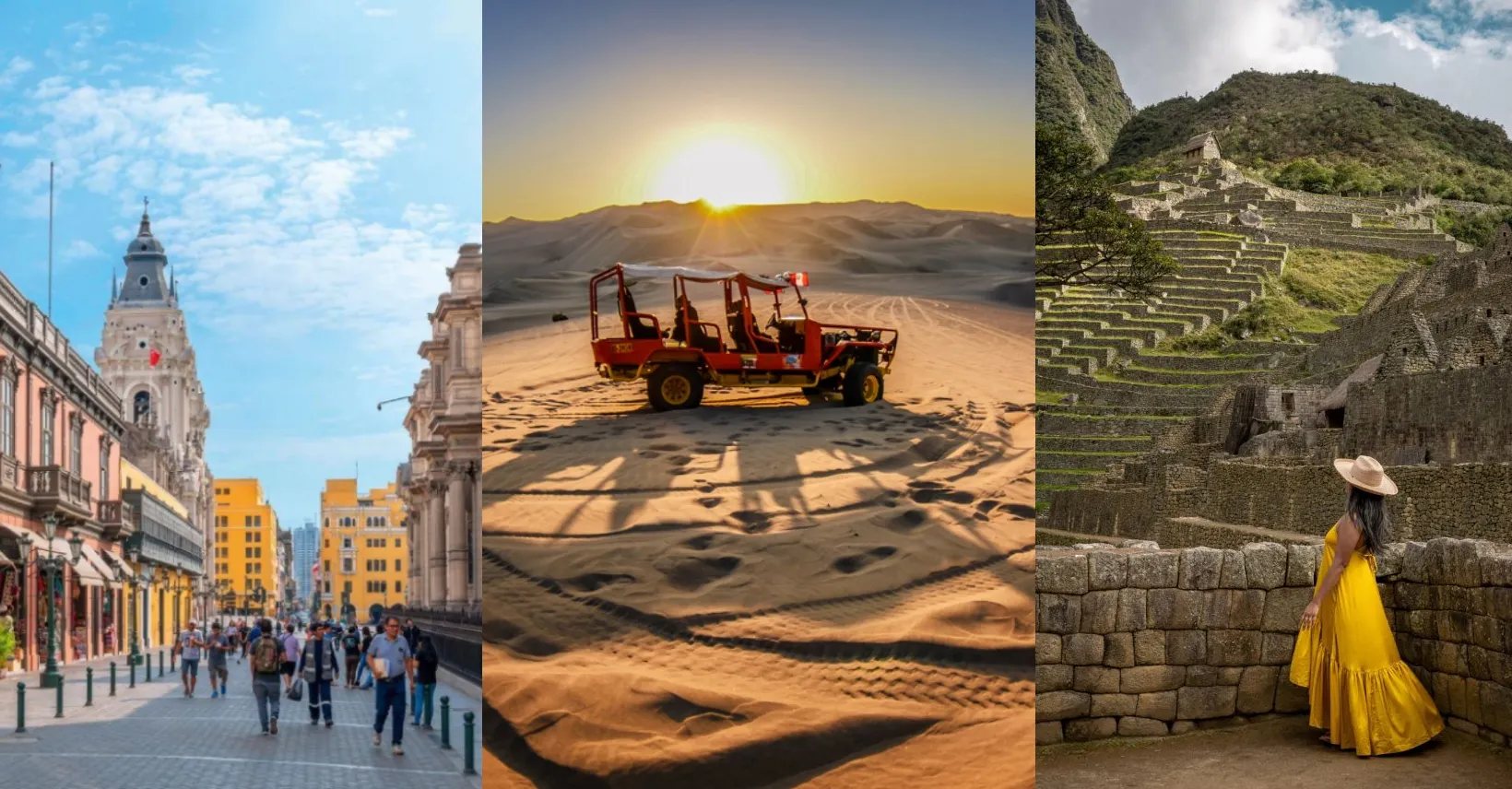
Peru doesn’t unfold in a straight line. It shifts.
- From sea level to high altitude.
- From desert plains to cloud forest ridges.
- From carved stone cities to living rainforest.
This 9-day expedition is designed around that progression, a structured movement through the three defining worlds of the country: Coast, Andes, and Amazon.
- Urban heritage.
- Ancient engineering.
- Untamed biodiversity.
Nine days. One unified journey.
Lima: Where History Meets the Pacific
Everything begins in Lima. Which once was the political heart of Spanish South America and still Peru’s cultural gateway.
In the historic center, the Plaza de Armas of Lima anchors the colonial grid. Nearby, the underground chambers of the Monastery of San Francisco reveal a different layer of the city’s past.
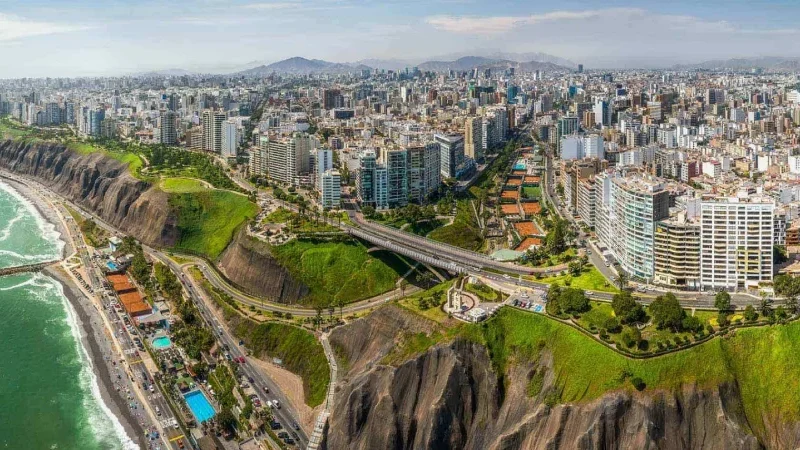
Then the coast pulls you west to the cliffs of Miraflores, the creative pulse of Barranco, and Pacific winds cutting against colonial balconies.
This is Peru’s coastal identity: historic, layered, outward-facing.
First world begins.
The Southern Coast: Marine Life & Moving Sand
The road south traces the Pan-American Highway into the desert corridor.
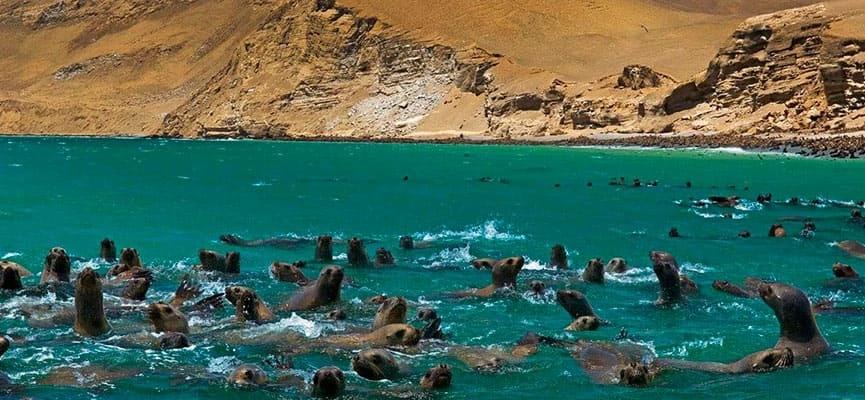
In Paracas, the Pacific becomes active. A speedboat heads toward the Ballestas Islands, where sea lions cluster on rock formations and Humboldt penguins hold position along cliff edges. Back on land, the Paracas National Reserve reveals Playa Roja. An iron-rich sand meeting deep blue water in sharp geological contrast.
Further inland, dunes rise around the oasis of Huacachina. Where a dune buggy climbs aggressively into golden sand ridges. Sandboarding turns the desert into motion. At sunset, shadows stretch across wave-like formations that shift daily with the wind.
Coastal Peru is not empty. It’s alive in different ways.
Nazca: The Desert as a Canvas
From ground level, the plateau outside Nazca appears vast and undecorated. From the air, it changes completely.
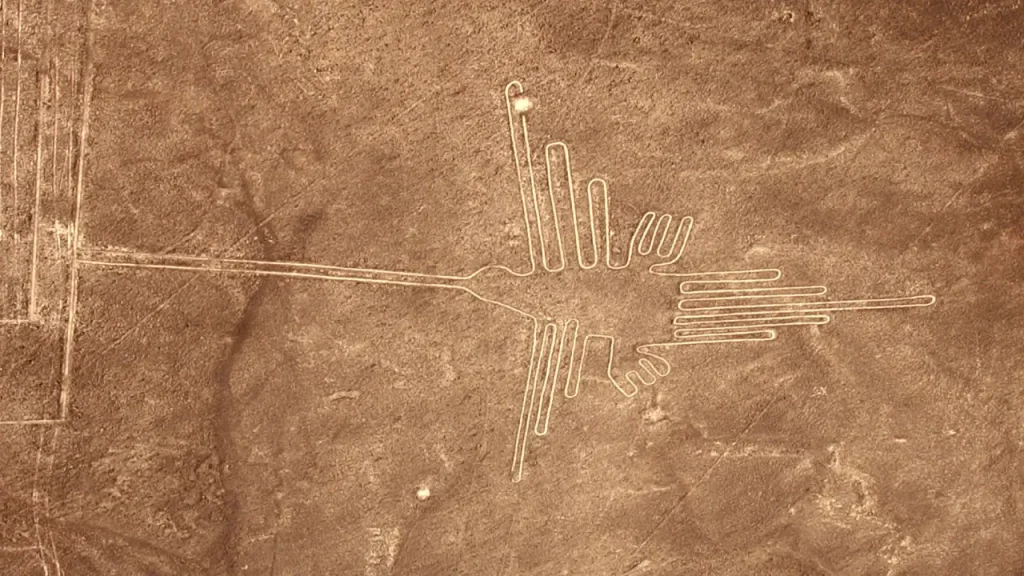
A small aircraft lifts off and begins its arc over the Nazca Lines. Kilometers of straight lines and enormous animal figures carved more than a millennium ago.
- The Hummingbird.
- The Monkey.
- The Astronaut.
Created by removing the darker surface stones to expose lighter soil beneath, these geoglyphs remain one of archaeology’s most precise large-scale works.
The coast ends here. The Andes begin next.
Cusco: The Imperial Capital
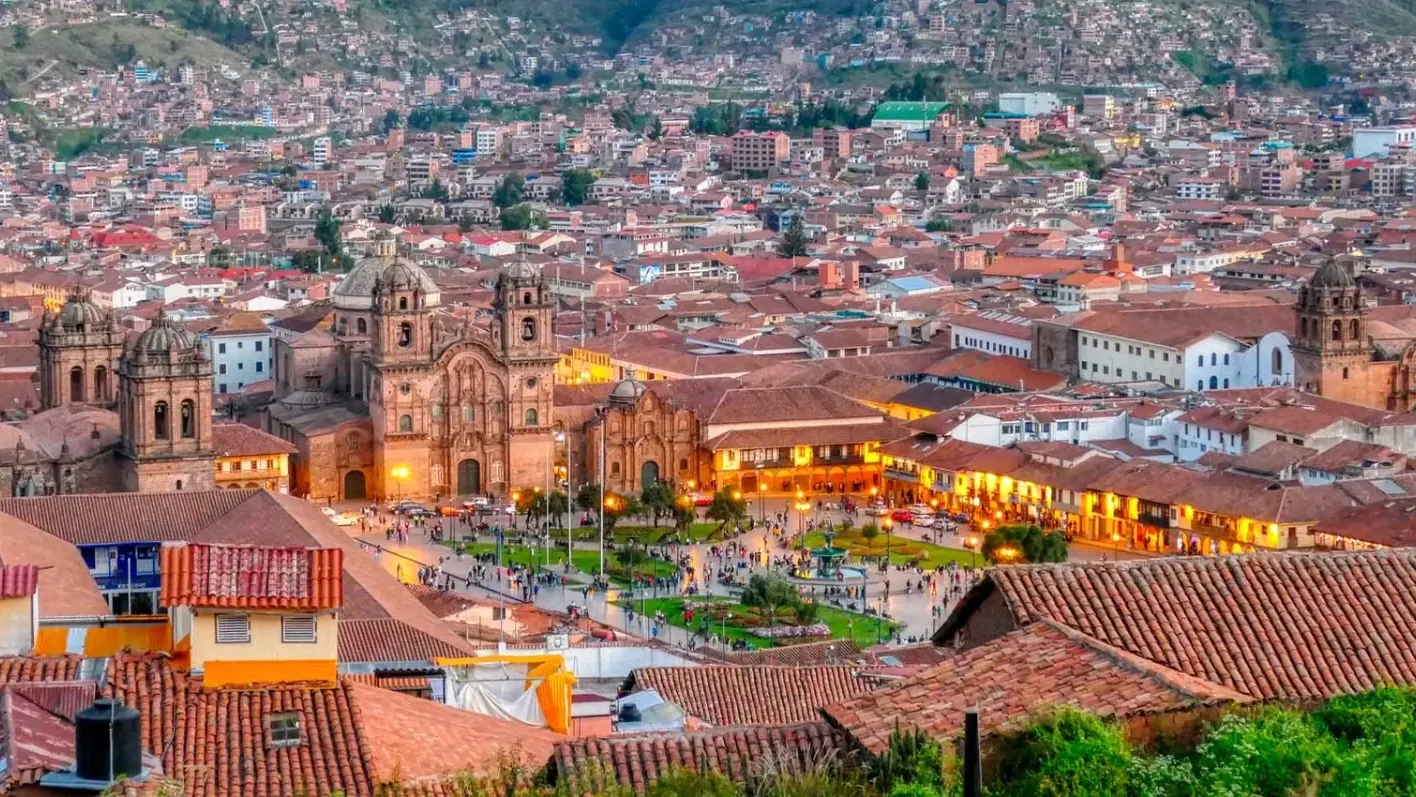
An evening flight carries you from sea level to the Andean highlands and into Cusco, once capital of the Inca Empire.
At Qorikancha, Inca masonry meets colonial architecture. Above the city, the massive ramparts of Sacsayhuamán demonstrate engineering precision that still challenges explanation. Stonework becomes the dominant language.
Nearby ceremonial sites, Q’enqo and Tambomachay, reveal the Inca understanding of water, ritual, and landscape alignment.
Altitude changes the pace, as the Andes demand adjustment.
Second world deepens.
The Sacred Valley: Engineering in the Landscape
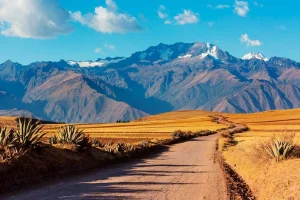
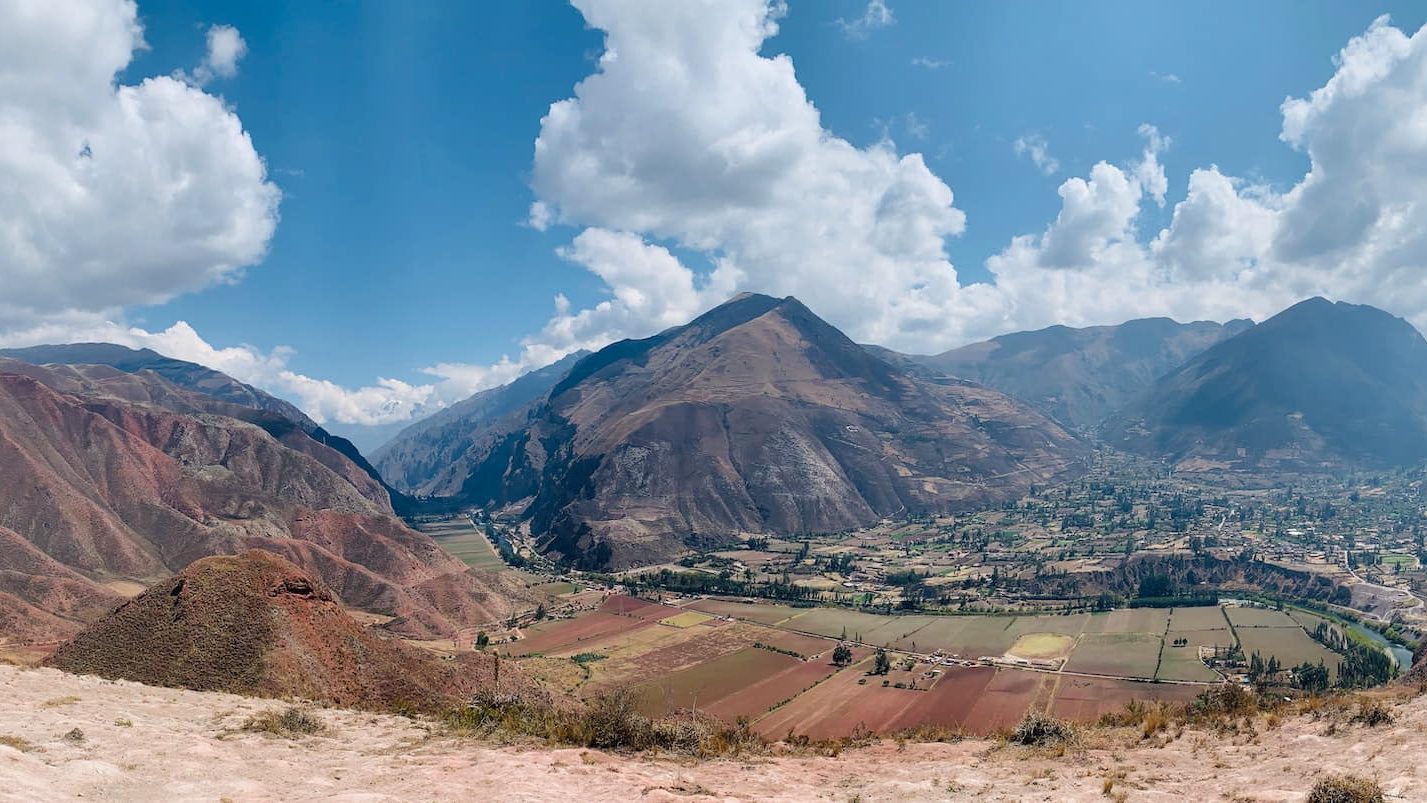
The Urubamba River cuts through the Sacred Valley, creating fertile ground for agriculture and settlement.
In Pisac, terraces climb the hillsides in geometric harmony with the mountain contours. At Moray, concentric circular terraces reveal an agricultural experimentation center, often described as an Inca laboratory.
The salt pans of Maras cascade down a hillside, each pool fed by a mineral-rich spring used since pre-Inca times.
In Ollantaytambo, the Inca grid remains intact. A living town built on imperial foundations.
This is not ruin tourism. It’s continuity.
Machu Picchu: The Citadel in the Clouds
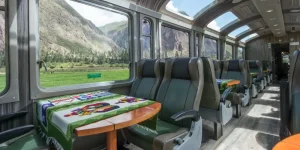
A train traces the Urubamba River toward Aguas Calientes before ascending to Machu Picchu.
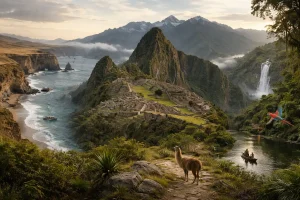
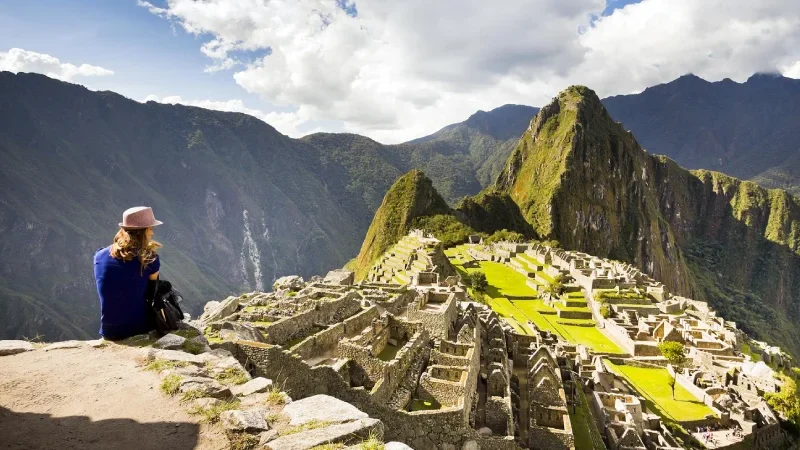
Set against cloud forest ridges, the citadel reveals itself gradually: terraces, temples, astronomical alignments. Built in the 15th century and later concealed by vegetation, Machu Picchu represents both engineering and spiritual vision.
A guided exploration reveals how the city operated: religious, agricultural, and administrative.
Highland Peru reaches its peak here.
The Amazon: The Final Transition
From the Andes, a short flight drops you into the lowlands and into Puerto Maldonado, the gateway to the Tambopata National Reserve.
Highlights:
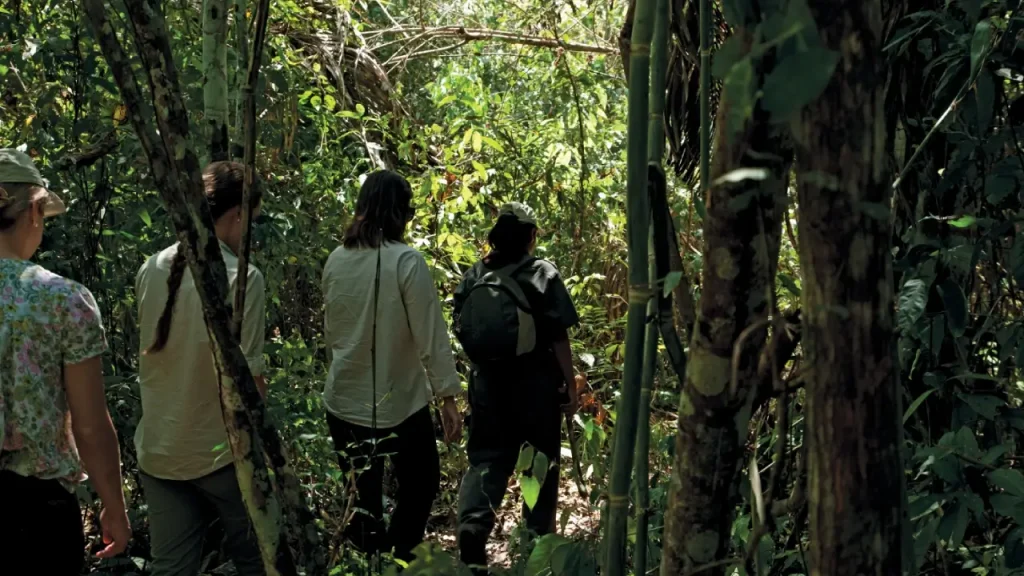
- At Lake Sandoval, giant river otters surface in coordinated groups. Monkeys move through canopy corridors. Black caimans rest along shaded banks.
- A canopy tower reveals the rainforest’s vertical architecture, layers of life stacked above one another.
- At night, the ecosystem reorganizes. Amphibians emerge. Insects dominate the soundscape.
Final world complete.
Who This Expedition Is For
This 9-day journey works best for:
- Travelers seeking a complete introduction to Peru
- First-time visitors who want structure without logistical stress
- History enthusiasts drawn to pre-Columbian engineering
- Photographers balancing culture and wildlife
- Nature lovers wanting both Andes and Amazon in one itinerary
It blends comfort, cultural depth, and light adventure. No extreme trekking. No unnecessary downtime.
Why 9 Days Works
Peru is often fragmented into separate trips.
- Coast.
- Andes.
- Amazon.
This itinerary connects them.
By moving logically through altitude, climate, and ecosystem, it creates continuity instead of contrast shock. You experience how civilizations adapted to geography, and how geography shaped identity.
The Essential Peru – 9-Day Activity Overview
| Day | Main Activities | Ecosystem Level | Highlights |
| Day 1 | Arrival in Lima, Historic Center tour, Barranco & Miraflores visit | Coastal City | Colonial Plaza Mayor, San Francisco Catacombs, Pacific cliff views |
| Day 2 | Drive to Paracas, Ballestas Islands, Paracas Reserve, Huacachina dunes | Marine Coast & Desert | Sea lions & penguins, Red Beach, dune buggy & sandboarding at sunset |
| Day 3 | Nazca Lines flight, Evening flight to Cusco | Desert Plateau & Andes | Aerial geoglyph views, transition from coast to highlands |
| Day 4 | Cusco city tour, Qorikancha, Sacsayhuamán & nearby ruins | Andean Highlands | Inca stone engineering, ceremonial sites, acclimatization |
| Day 5 | Sacred Valley: Pisac, Moray, Maras, Ollantaytambo | Andean Valley | Agricultural terraces, salt mines, living Inca town |
| Day 6 | Train to Machu Picchu, Guided exploration, Return to Cusco | Cloud Forest Highlands | UNESCO citadel, hydraulic engineering, mountain setting |
| Day 7 | Flight to Puerto Maldonado, Transfer to lodge, Lake Sandoval exploration | Amazon Lowlands | Giant river otters, canoe exploration, rainforest immersion |
| Day 8 | Jungle trek, Canopy tower ascent, Night walk | Primary Rainforest | Medicinal plants, aerial forest perspective, nocturnal wildlife |
| Day 9 | Tapir Trail hike, Return transfer | Amazon River System | Final wildlife encounters, river navigation |
Nine days.
From Pacific cliffs to Andean stone to rainforest canopy. Peru isn’t one landscape. When designed correctly, it becomes a connected story, and you move through every chapter.