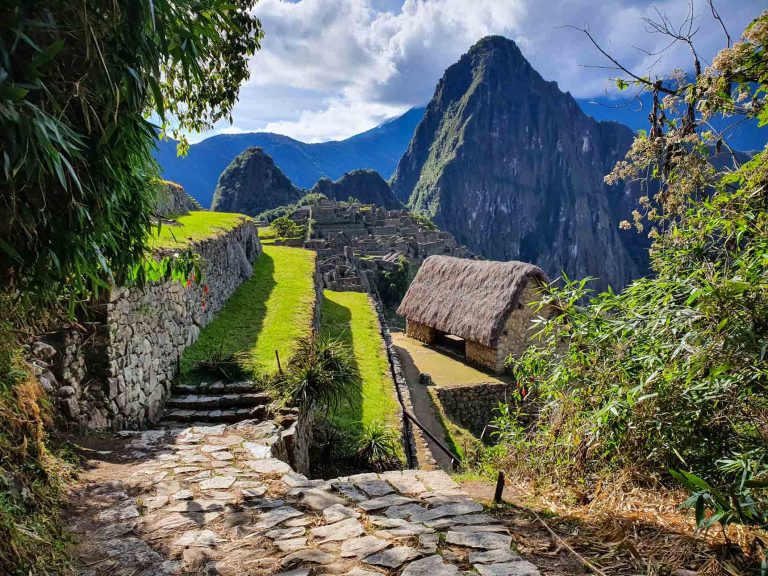
Cusco • Km 82 • Wiñay Wayna • Sun Gate • Machu Picchu
Join us for an unforgettable journey along the world famous Inca Trail, culminating in your first sighting of Machu Picchu through the Sun Gate (Inti Punku). Over four days, you will hike from Km 82 through the high Andes, explore ancient archaeological sites, cross Dead Woman’s Pass at 4,215 meters (13,829 feet), and descend into the cloud forest before entering the lost city of the Incas.
At Apple Travel Peru, we handle every detail so you can focus on the experience. All essentials, including trail permits, professional guide service, porters, camping gear, freshly prepared meals, entrancefees, train tickets, and private transfers are fully included. Experienced local guides act as supportive companions throughout the route, while dedicated porters handle all camp setup and logistics.
Highlights
Dead Woman’s Pass: Reach the highest summit of the trail at 4,215 meters (13,829 feet) with sweeping alpine views.
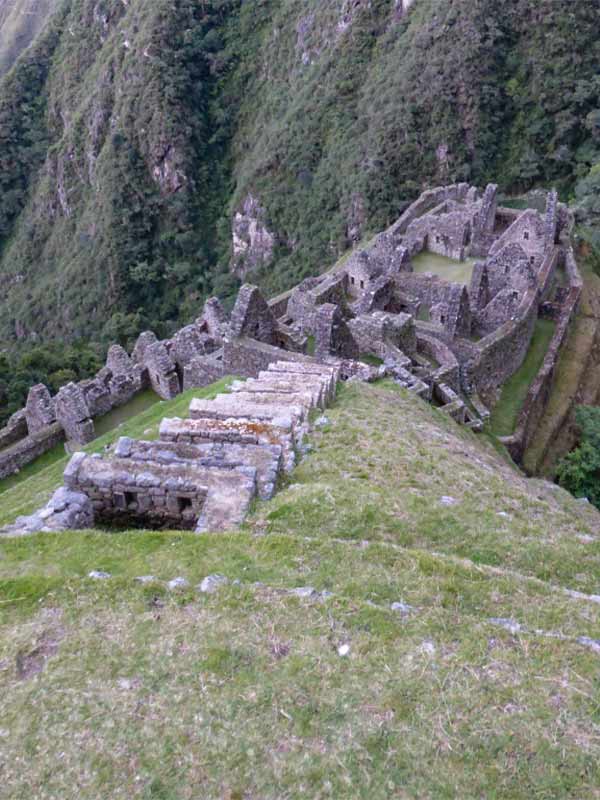
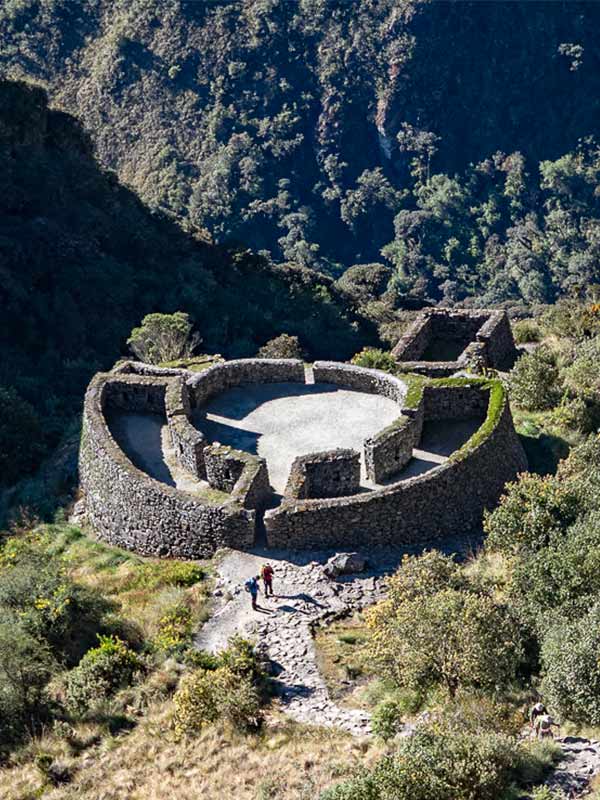
Inca Archaeological Sites: Explore key historic ruins including Patallacta, Runkurakay, Sayacmarca, Phuyupatamarka, Intipata, and Wiñay Wayna.
Diverse Microclimates: Watch the landscape shift from high mountain passes to sub tropical cloud forest trails.
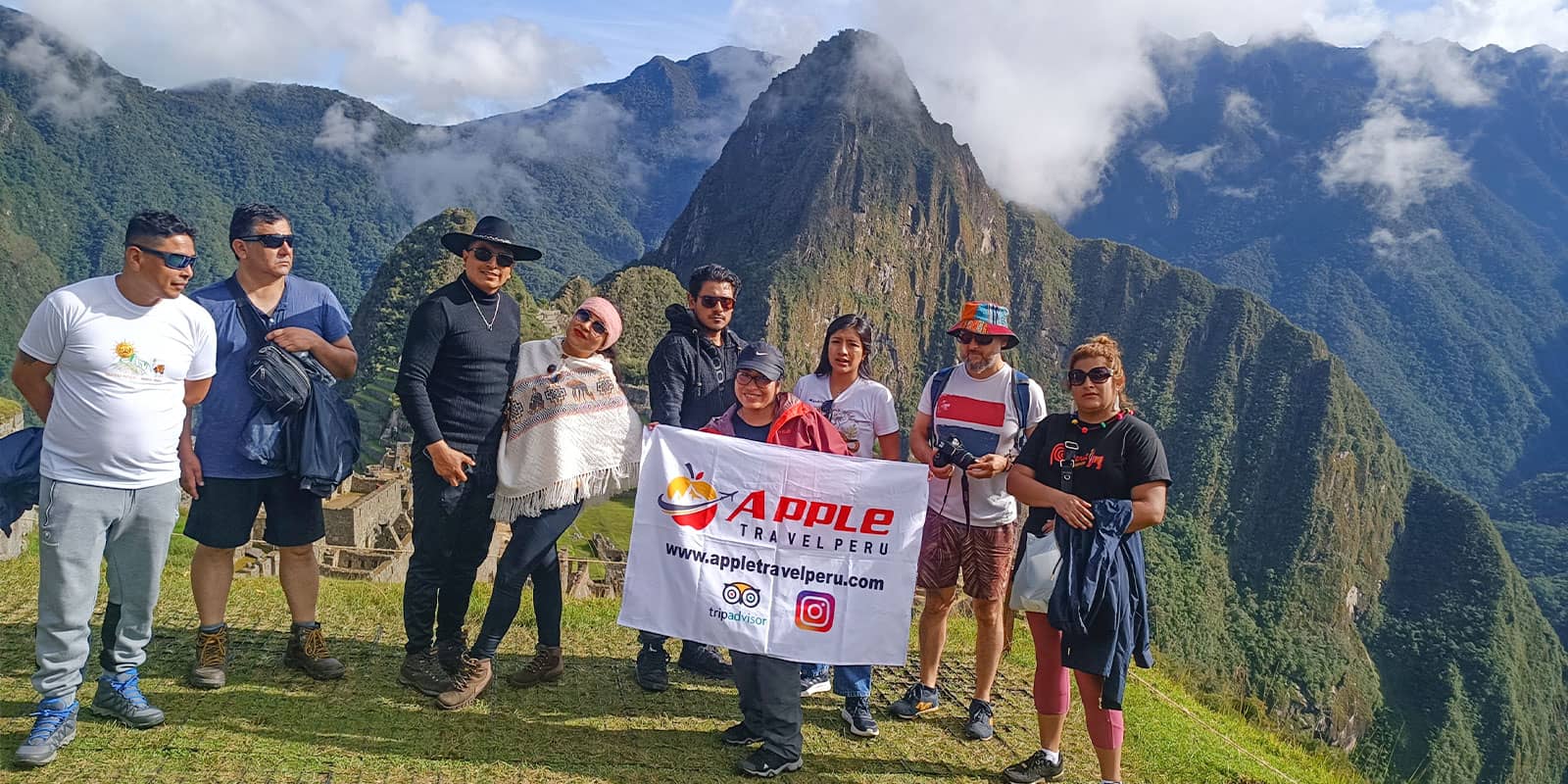
The Sun Gate Entry: Arrive at Inti Punku for your initial panoramic view of Machu Picchu at sunrise.
Full Service Camping: Sleep at designated trail campsites while our team manages camp setup, cooking, and heavy gear.
Dedicated Local Team: Travel alongside expert local guides and porters who handle your main luggage duffel throughout the trek.
Inca Trail Permits
Access to the Classic Inca Trail is limited by the Peruvian government, with a maximum capacity of 500 users per day, including trekkers and authorised support staff. The trail also requires a permit and must be booked through an authorised operator.
Because permits are limited, we recommend booking several months in advance, especially if you plan to trek during the popular dry-season months from April to October.
Day 1: Cusco – Piskacucho Km 82 – Llactapata – Ayapata
Your 4-day Classic Inca Trail trek begins with a pickup from your accommodation in Cusco, Urubamba, or Ollantaytambo. Exact pickup time is confirmed during the pre-trek briefing.
Pickup windows:
Cusco: 4:00 to 4:30 AM
Urubamba: 5:30 to 6:00 AM
Ollantaytambo: 6:30 to 7:00 AM
After breakfast, travel to Ollantaytambo, where you’ll meet your porter team, who will support you throughout the trek.
Km 82 & Start of the Inca Trail
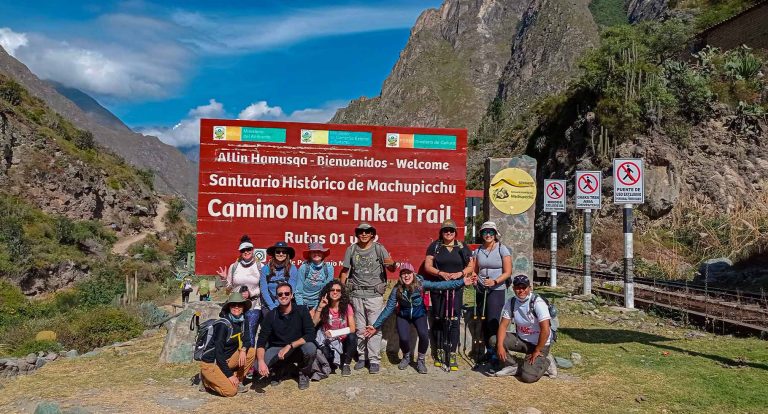
Your hike begins at Km 82, where you pass the first official Inca Trail checkpoint. Your original passport is required to enter the trail.
The initial 2-hour hike follows gentle terrain and leads directly to Patallacta, an important Inca site strategically positioned along the original route to Machu Picchu.
Patallacta to Ayapata Camp
Following your visit to Patallacta, you’ll continue hiking for approximately 2 hours to reach the lunch stop.
By afternoon, your path continues for another 2.5 hours toward Ayapata Camp (3,300 m / 10,826 ft). Along the way, you pass through small local communities where snacks, drinks, and basic supplies are available.
Hikers arrive at camp around 5:00 PM, with time to relax, enjoy a hot drink and afternoon snack, and connect with your guides, chefs, and porters.
We serve dinner around 7:30 PM, followed by a well-earned rest under the Andean sky.
Day 1 Overview
Walking Distance: 14 km / 8.7 miles
Hiking Time: 6 to 7 hours
Campsite Altitude: 3,300 m / 10,826 ft
Difficulty: Moderate (acclimatization day)
Weather: Warm and windy
Day 2: Dead Woman’s Pass – Runcuraccay Pass – Chaquiccocha
The second day begins early and is your longest and most challenging day on the trail. Your porters will gently wake you with a hot cup of coca tea, giving you time to prepare before hiking.
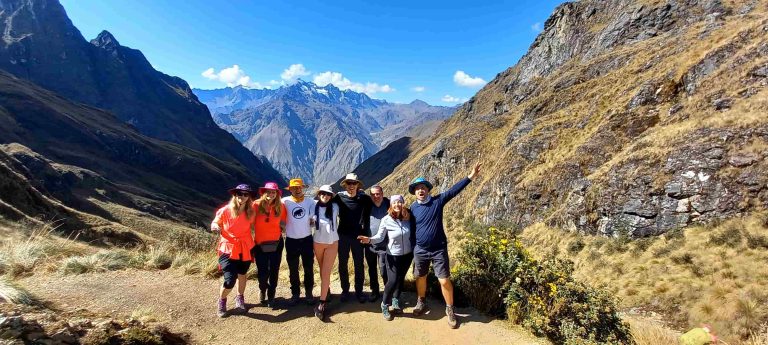
The morning ascent takes approximately 4 hours to reach Dead Woman’s Pass (4,215 m / 13,829 ft), the highest point of the trek. At the summit, take a short break to rest, rehydrate and enjoy expansive views of the surrounding Andes.
Descent to Pacaymayu Valley & Lunch
From the pass, you will begin the descent into the Pacaymayu Valley, also known as the Hidden River Valley.
After about 1.5 hours downhill, you reach your lunch stop, with time to relax, refill water bottles, and regain energy before the afternoon climb.
Second Pass, Runcu Raccay & Sayacmarca
Following lunch, the trail ascends again toward the second pass, a climb of approximately 2 hours. Along the way, stop at the small Inca site of Runcu Raccay, with views across the valley toward two cascading waterfalls.
Beyond the pass, a scenic one-hour descent brings you to Sayacmarca, a dramatic cliffside Inca fortress reachable only by a single stone staircase. Take time to explore this otherwise inaccessible ruin with your guide before enjoying a well-earned rest.
As the day winds down, weather permitting, take in a sunset over the Vilcabamba mountain range, one of the most memorable moments of the trek.
Camp at Chaquicocha (Dry Lake)
A final 20-minute walk brings you to Chaquicocha Camp (3,600 m / 11,811 ft), your campsite for the night.
Once dinner finishes, step outside to take in the brilliant southern night sky. If you are up for it, your guides will show you ancient Inca constellations far from city lights.
Day 2 Overview
Walking Distance: 16 km / 9.9 miles
Hiking Time: 7 to 8 hours
Campsite Altitude: 3,600 m / 11,811 ft
Difficulty: Most challenging day (two highest passes completed)
Area: Andes and Cloud Forest
Weather: Cold and rainy
Day 3: Chaquiccocha – Wiñay Wayna
Fresh off the most challenging stretch of the trek, Day 3 kicks off at 6:30 AM with what many consider the most breathtaking scenery along the entire Inca Trail.
The morning hike follows approximately 2 hours of gradual terrain, often called “Inca flat”, as the trail transitions into the Cloud Forest. Along the way, enjoy panoramic views of the Vilcabamba mountain range and, on clear days, sightlines to Salkantay, the second-highest snow-capped peak in the Sacred Valley.
Phuyupatamarka & Intipata
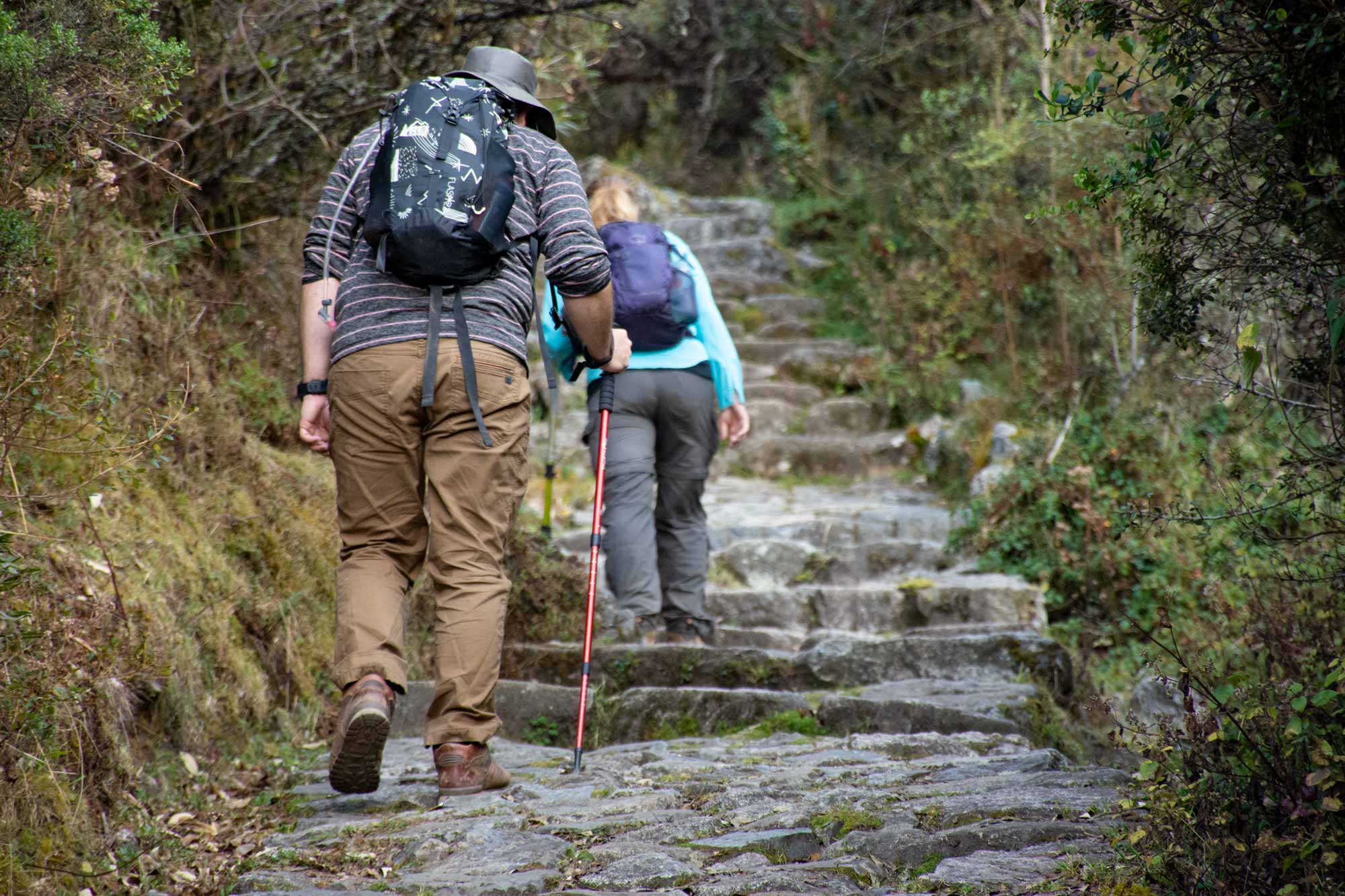
Toward the end of the flat section, the trail climbs to Phuyupatamarka (3,600 m / 11,811 ft), the “Town in the Clouds”. From here, take in sweeping views over the Urubamba River and catch your first glimpse of Machu Picchu Mountain, while the citadel itself remains hidden.
The trail then descends for approximately 3 hours along stone staircases toward your final campsite near Wiñay Wayna. During the descent, you will visit two important Inca sites:
Phuyupatamarka
Intipata (Terraces of the Sun)
Wiñay Wayna Camp & Afternoon Exploration
Arrive at Wiñay Wayna Camp around 1:00 PM for lunch and well-earned rest. This is the most popular campsite on the Inca Trail due to its proximity to Machu Picchu.
In the afternoon, your guide provides a short orientation, followed by a 1.5-hour guided visit to the impressive Wiñay Wayna ruins. Your guide will explain the site’s importance and tie together the historical and cultural context from the entire trek, preparing you fully for Machu Picchu the next day.
Evening Tradition & Preparation for Machu Picchu
In the evening, enjoy a farewell dinner with your porters, chefs, and guides, a traditional moment on the Inca Trail. The team is formally introduced, giving you the opportunity to thank them for their support throughout the journey.
An early night is recommended, as the following day begins before dawn in order to reach Machu Picchu at sunrise, weather permitting.
Day 3 Overview
Walking Distance: 10 km / 6.2 miles
Hiking Time: Approx. 5 hours
Campsite Altitude: 2,600 m / 8,530 ft
Difficulty: Easy (mostly downhill)
Area: High Cloud Forest
Weather: Warm and very humid
Day 4: Sun Gate – Machu Picchu – The Lost City Of The Incas
The final day begins early with a 3:30 AM wake up call and breakfast at 4:00 AM. After breakfast, wait at the checkpoint to be among the first groups allowed on the trail when gates open at 5:30 AM.
You’ll say goodbye to your porters and chefs, then continue toward the Sun Gate (Inti Punku).
Sunrise at the Sun Gate
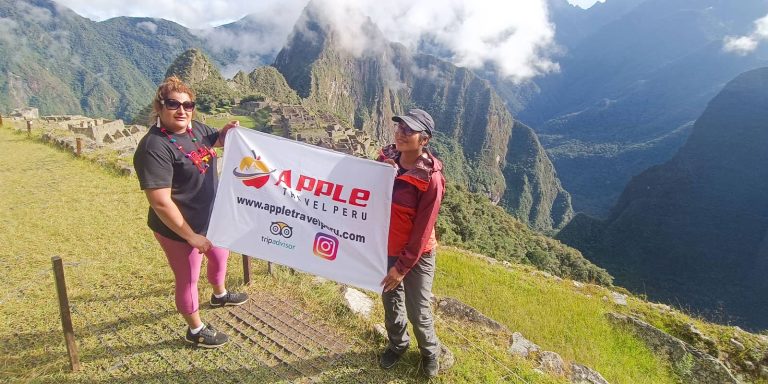
Reach the Sun Gate around 6:30 AM, where sweeping views of the surrounding mountains and Machu Picchu below await. From here, begin a 1-hour descent toward the citadel.
As you approach, the views become increasingly impressive. Around 7:40 AM, pass the final checkpoint and enter Machu Picchu.
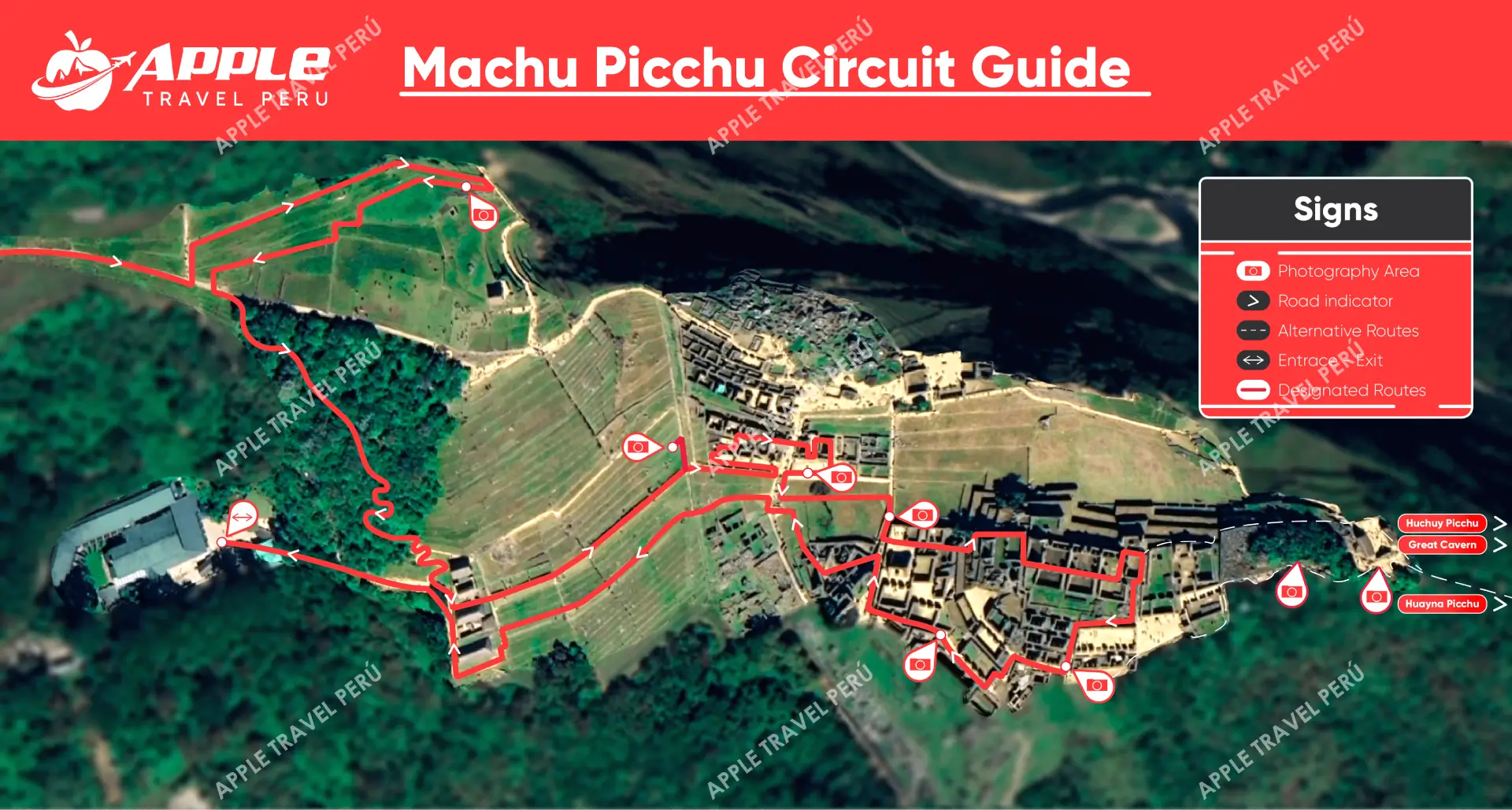
Machu Picchu Circuits & Guided Tour
Start with Circuit 1, offering elevated viewpoints over the citadel. Later, continue with Circuit 3, followed by a 2-hour guided tour covering Machu Picchu’s most important landmarks, including:
Temple of the Sun
Temple of the Condor
Temple of the Three Windows
Sun Dial (Intihuatana) and the Quarry
House of the Inca
You’ll also explore the site’s agricultural, residential, and religious sectors, gaining a complete understanding of the city.
Citadel Departure & Return to Cusco
Once the tour finishes, you will receive your shuttle bus tickets for the descent to Aguas Calientes. Take some time to explore the town at your own pace or, if arranged in advance, complete the optional hike to Huayna Picchu. If you wish, your guide may join you in Aguas Calientes for an optional farewell lunch at a local restaurant.
In the afternoon, board your train from Aguas Calientes (departures between 2:30 PM and 3:45 PM). Upon arrival in Ollantaytambo or Poroy, an Apple Travel driver meets you at the station for your private vehicle transfer back to your Cusco hotel.
Day 4 Overview
Highlight: Sunrise at the Sun Gate & Machu Picchu
Difficulty: Easy hiking, very early start (3:30 AM)
Area: High Cloud and Subtropical Forest
Weather: Hot and very humid (bring plenty of water)
WHAT’S INCLUDED IN THE CLASSIC INCA TRAIL TO MACHU PICCHU?
What Is Included
Hotel Pickup & Drop-Off: Door to door private transportation from your accommodation in Cusco, Urubamba, or Ollantaytambo.
Inca Trail Permits & Machu Picchu Entrance: Official government permits for the 4-day trail and entrance to the Machu Picchu Citadel.
Professional Local Guides: Native, fluent English-speaking guides trained in history, first aid, and mountain rescue.
Full Porter Support: Dedicated porter team to carry all communal camping gear, food, and up to 7 kg (14 lbs) of your personal duffel bag.
Camping Equipment: Spacious 4-person Eureka tents (used for 2 people), foam sleeping mats, pillows, and dining tent with tables and chairs.
Freshly Prepared Meals: 3 Breakfasts, 3 Lunches, 3 Dinners, plus daily afternoon tea/happy hour and snacks prepared by our mountain chef.
Clean Drinking Water: Boiled, filtered, and cooled drinking water provided at every meal (starting from Day 1 lunch).
Return Transportation: All transit back to Cusco is included, featuring shuttle bus transfers, Expedition Train tickets, and private hotel drop off.
Safety & First Aid: Guides carry emergency oxygen tanks, pulse oximeters, medical kits, and satellite phones on every trek.
Pre-Trek Briefing: Join us at our Cusco office the evening before departure for your orientation and duffel bag distribution.
NOT INCLUDED
First Day Breakfast & Final Day Lunch: Breakfast on Day 1 (stops in Ollantaytambo) and lunch on Day 4 in Aguas Calientes.
Sleeping Bag & Trekking Poles: Available to rent from us during your pre-trek briefing if needed.
Huayna Picchu or Machu Picchu Mountain Permits: Optional summit hike permits ($75 USD per person, must be booked in advance).
Travel Insurance: Highly recommended for all high altitude trekking in Peru.
Tips for Trail Staff: Gratuities for your guide, mountain chef, and porter team (optional but deeply appreciated).
Pricing & Additional Options
$677 per person
Review the options below if you wish to add extra peak hikes or train upgrades to your trek booking.
Huayna Picchu Mountain
Huayna Picchu stands directly next to the citadel, offering a 45-minute climb to the summit. Although hikers complete the path independently, your guide accompanies you to the trail entry checkpoint. Booking requires an additional permit secured in advance.
Permit time slots run from either 7:00 to 8:00 AM or 10:00 to 11:00 AM. We reserve the 10:00 AM entry slot for our guests, allowing you to complete your main guided tour of Machu Picchu beforehand. Entry times designate your start window, giving you full flexibility to hike at your own pace.
Price: $75 USD per person
Machu Picchu Mountain
Towering high above the ruins, this peak boasts panoramic views across the entire valley during a 90-minute ascent. Securing an additional entrance permit allows access to this trail.
Entry permits for this peak strictly enforce a 9:00 to 10:00 AM start time. Because of this limited window, completing the standard 4-Day Inca Trail and climbing Machu Picchu Mountain on the same morning is not logistically possible. Hikers must arrange an extra day in Aguas Calientes to complete this hike.
Price: $75 USD per person
Vistadome Train Upgrade
Standard tour bookings include return travel on the Expedition Train, typically departing Aguas Calientes at 4:22 PM. Upgrading to the Vistadome service provides larger seats, panoramic wrap-around windows, and onboard cultural presentations.
Vistadome departures usually run at 4:43 PM toward Poroy station. Private vehicle transfer from the train station directly to your Cusco hotel remains fully included with this upgrade.
Price: $75 USD per person
IMPORTANT INFORMATION
What Happens If I Cannot Cross Dead Woman’s Pass?
Safety comes first on Warmiwañusca (4,215 m / 13,828 ft). If severe altitude sickness or exhaustion strikes, our team initiates an immediate, safe descent to a lower campsite like Ayapata or Pacaymayo.
In Field Medical Care: Guides carry pulse oximeters, complete first aid kits, and emergency oxygen tanks to monitor blood oxygen levels.
Dedicated Sweep Guide: Assistant guides trail the back of groups larger than 8 trekkers to support slower hikers and spot early symptoms of Acute Mountain Sickness.
Bailout Protocols: Hikers unable to continue safely walk down with an assigned staff member to recover at lower altitudes.
Do We Have Access to Private Toilets on the Trail?
Yes. While official campsites offer basic concrete squat toilets, Apple Travel Peru sets up private, chemical toilet tents exclusively for our group.
Private Camp Toilets: Our porters transport and set up clean, seat mounted chemical toilet tents at every lunch stop and overnight campsite.
Public Facilities Note: Park authority campsite restrooms get busy quickly and lack toilet paper or hot water.
Trail Rules: No facilities exist between camps, so trekkers must carry Ziploc bags for used paper and practice Leave No Trace rules.
How Early Do Inca Trail Permits Sell Out?
Peak dry season permits (May through August) routinely sell out 5 to 7 months in advance as soon as government release dates open.
Strict Daily Limits: The Peruvian Ministry of Culture caps entries at 500 permits per day, with roughly 300 allocated to guides, cooks, and porters.
Non Transferable Rules: Government permits link strictly to your passport number, meaning dates or names cannot be modified once booked.
Backup Treks: Alternative routes such as the Salkantay or Lares treks do not require strict permit quotas if Inca Trail spots run out.
Will My Phone Battery Last 4 Days Without Charging Outlets?
Mobile phones easily survive the trek if kept on Airplane Mode alongside a 10,000 mAh to 20,000 mAh external power bank. Zero charging stations exist along the 4 day route.
Cold Weather Battery Drain: High altitude and freezing nights drain lithium batteries rapidly, while searching for cell service exhausts power.
Best Charging Practices: Keep Airplane Mode active continuously and store your phone inside your sleeping bag at night to keep the battery warm.
What Weather Should I Expect on the Inca Trail?
Andean weather varies quickly across microclimates, requiring flexible packing for both warm sunshine and sudden mountain rain.
Safety Adjustments: Guides occasionally adjust route timings if severe weather impacts trail safety.
Essential Packing List: Waterproof jackets, rain pants, ponchos, and insulated gloves keep you warm and dry during unexpected showers.
Clothing Layers: Pack lightweight layers alongside a packable down jacket for chilly camp nights.
Getting to Cusco
Flying to Cusco (CUZ) requires a few key travel steps depending on your origin route. Most international travelers transit through Lima (LIM), though direct international flights also operate from Santiago, Chile.
Customs and Bag Re-checking in Lima: If connecting through Lima, you must clear immigration, claim your luggage, and re-check your bags with your domestic airline before taking your flight to Cusco.
Airline Options: LATAM Airlines offers the highest frequency of daily flights into Cusco. Sky Airline and JetSMART also provide reliable budget-friendly domestic routes.
Flight Delays and Altitude: High winds or rainy weather in Cusco occasionally cause flight delays or cancellations. Booking an arrival day with buffer time before your trek is strongly recommended.
Bus Travel Alternatives: Long-distance buses offer comfortable daytime or overnight service from nearby regions like Puno (6–7 hours) or Arequipa (10–12 hours). Bus routes from Lima take approximately 20 hours through winding mountain terrain.
Pre-Trek Briefings
We host an orientation session at our Cusco office the evening before your trek departure. This 30 to 45 minute briefing covers final trail details, safety guidelines, and the distribution of your official duffel bag. If your arrival schedule conflicts with this time, notify our team in advance to coordinate an alternative briefing slot.
Duffel Bags
Our porters carry your duffel bag (measuring 66 cm x 36 cm) between campsites and deliver it directly to your tent each evening. Official regulations cap the total bag weight at 7 kg (14 lbs) per trekker. This allowance provides 4 kg for your personal clothing and items, with the remaining 3 kg reserved for your sleeping bag and pad.
Hotel Pickups
We pick you up directly from your hotel if it’s located in the historic center of Cusco, Urubamba, or Ollantaytambo. Your guide confirms your exact pickup time during the pre-trek briefing, allowing a 30 to 45 minute window for morning traffic and local pickups.
Many narrow cobblestone streets in central Cusco restrict transport vans. Selecting a hotel on an accessible street makes departure much smoother, and our team is happy to send over a list of recommended properties.
Check the chart below for valid pickup locations based on your trek:
Trek
Possible Starting Locations
Inca Trails
Cusco, Urubamba, Yunahuara & Ollantaytambo
Salkantay Treks
Cusco pickup only
Lares Trek
Pickup from Cusco
Huchuy Qosqo Trek
Cusco departure
Ausangate and Rainbow Treks
Cusco pickup
Day Tours
Cusco, Urubamba & Ollantaytambo
Returning to Cusco
Return travel from Machu Picchu back to your hotel in Cusco is completely managed by our team.
Bus to Aguas Calientes: A 25-minute shuttle bus takes you down from the citadel to Aguas Calientes. Buses run continuously on a first-come, first-served basis.
Train Departure: Your guide provides your physical train tickets for the journey from Aguas Calientes to either Ollantaytambo (2 hours) or Poroy (3.5 hours). Plan to arrive at the platform 30 minutes before departure.
Private Transfer to Cusco: Upon exiting the train station, look for our representative holding an Apple Travel Peru sign. Our driver will transport you by van to San Francisco Square in central Cusco (2 hours from Ollantaytambo, 30 minutes from Poroy).
Hotel Drop-off: From San Francisco Square, individual pre-paid taxis take you directly back to your hotel door.
Extra Hikes: Huayna Picchu & Machu Picchu Mountain
Climbing one of the peaks overlooking the citadel offers incredible panoramic views, but both require an extra permit purchased well in advance.
Huayna Picchu Mountain: The most famous climb, taking about 45 minutes up and 45 minutes down via steep Inca staircases. We book the 10:00 to 11:00 AM entrance window so you can complete your guided tour of Machu Picchu first. Your guide shows you the trailhead, and you complete the hike at your own pace.
Machu Picchu Mountain: A longer, less crowded trail taking 1.5 hours up and 1.5 hours down. Because of strict entry time slots, completing this hike on Day 4 of the 4-Day Inca Trail is not logistically possible alongside your main citadel tour unless you add an extra day in Aguas Calientes.
Health & Safety Concerns
Honesty with your guide regarding health conditions is essential for trail safety. Guides hold certified first aid training, and our office collaborates directly with a medical clinic in Cusco for specialized care if required.
Trekkers must consult a physician prior to travel to confirm physical fitness for high altitude hiking and to receive medical guidance on necessary vaccinations. Assessing personal capability for each section of the trek remains the responsibility of every participant.
Trail Evacuation Protocol: If an injury or illness stops your hike, an assigned staff member escorts you to the nearest road access point to meet a transport vehicle bound for a Cusco clinic.
Severe Altitude Sickness: If acute mountain sickness prevents walking but you still wish to visit Machu Picchu, our team will arrange alternative train travel. Additional local fees apply, though we reuse existing tickets where possible to minimize costs.
Group Dynamics
Joining a group tour means trekking alongside travelers with varying fitness levels and walking paces. You are encouraged to hike at your own comfortable rhythm; our lead and assistant guides divide time across the entire group to ensure everyone moves safely.
Personal Belongings
Keeping track of personal equipment throughout the trek remains the responsibility of each trekker. Check transport vans, dining tents, and campsites thoroughly before departing each location, as misplaced items along public trail sections can be difficult to recover.
Tipping Guidelines
Tipping is a traditional gesture on the Inca Trail, though it remains entirely optional. Apple Travel Peru pays fair, competitive wages to all staff, meaning tips serve as a personal thank you for exceptional service.
Groups typically pool tip money together for the porter and chef team on the final evening. Porters and chefs prefer tip contributions in Peruvian Soles, whereas guides accept Soles, U.S. Dollars, or electronic payments.
Trek
Per Porter
Chef
Inca Trails (4, 5, and 7 Days)
60 – 80 soles
150 soles
2D/1N Inca Trail with Camping
50 soles
100 soles
Salkantay Treks
100-120 soles
200 soles
Lares Trek
100-120 soles
200 soles
Huchuy Qosqo Trek
50 soles
100 soles
Ausangate
100-120 soles
200 soles
Note: Table amounts reflect recommended total pooled amounts received by each individual staff member from the group.
Travel Insurance
Comprehensive travel insurance covering high altitude trekking up to 4,500 meters (14,763 feet) is strongly recommended for all expeditions. Adequate policy coverage protects your trip investment against unexpected medical emergencies, trip cancellations, or transport delays.
What to Pack for the Classic Inca Trail
Essential Documents & Daypack Items
Original Passport: Must match the exact passport number used on your trek permit.
Student ID Card: Required if you booked your permit with a university discount.
Small Daypack: A 20L to 25L pack to carry your personal daily items (Machu Picchu strictly enforces a 25L maximum limit).
Hydration System: Camelbak bladder or reusable water bottles capable of holding 2 to 3 liters.
Hiking Boots: Well-broken-in boots with good ankle support.
Cash in Peruvian Soles: Small bills for trail snacks, local bathroom fees on Day 1, and staff tipping.
Packed in Your Porter Duffel Bag (7 kg Max)
Porters carry up to 7 kg (14 lbs) per hiker. This total includes 3 kg reserved for your sleeping bag and pad, leaving 4 kg for your personal clothing and gear.
Trekking Clothes: 2 to 3 moisture-wicking shirts, 2 pairs of lightweight hiking pants, and 4 sets of undergarments and trekking socks.
Warm Cold-Weather Layers: Mid-layer fleece, thermal base layers, and a packable down jacket for sub-freezing campsite nights.
Camp Footwear: Lightweight sneakers or sandals to relax in while your boots dry.
Camp Accessories: Down sleeping bag (rated to -10°C / 14°F), headlamp with extra batteries, and a small quick-dry towel.
Dry Sacks: Plastic lining bags to protect your clothing from damp weather inside the duffel.
Toiletries & First Aid
Sun & Insect Defense: High SPF sunscreen, lip balm, insect repellent, and a sun hat.
Hygiene Kit: Biodegradable wet wipes, hand sanitizer, travel-sized toothbrush and toothpaste, and toilet paper.
Personal Medication: First-aid items (blister moleskin, band-aids), ibuprofen, and personal prescription medicine.
Carried Inside Your Daily Backpack
Small daypacks work best for trail comfort. Keep in mind that park regulations strictly forbid bags larger than 25L inside Machu Picchu. Anyone carrying an oversized backpack must leave it at the secure luggage storage station located at the citadel entrance.
First Morning Water: Bring 2 liters of water for your first morning. Our team supplies clean, filtered water at each meal starting at lunch on Day 1, as we do not have time to filter water before the trek starts.
Sunhat & Rain Gear: Pack a sunhat alongside your waterproof rain jacket or poncho.
Fleece & Warm Layers: Keep a lightweight fleece layer easily accessible for sudden temperature drops.
Camera & Music: Bring your camera, phone (for photos or music), and headphones.
Sanitation & Waste: Carry hand sanitizer, toilet paper, and a small plastic Ziploc bag for your personal waste.
Extra Cash: Bring cash in small Peruvian Soles for souvenirs, drinks along the trail, and staff tips.
Earplugs: Essential for getting a quiet night of sleep at the busy campsites.
The 2 day Inca Trail to Machu Picchu was everything I expected and more. Gorgeous from beginning to end. The tour guides were great and very knowledgeable.
Explore more Apple Travel Peru experiences connected to Classic Inca Trail to Machu Picchu 4 days.
Compare nearby routes, travel time, difficulty, and scenery to find the option that best fits your Peru plans.