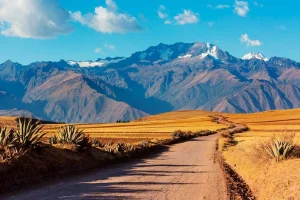
Salkantay is not a trek you rush through. It demands time, effort, and a certain disposition to be uncomfortable. Long days over mountain passes, and valleys. Moving from exposed alpine terrain into warmer, greener landscapes. The reward comes slowly, often after effort, and never all at once.
What makes Salkantay Trek demanding is a combination of singular efforts and accumulated fatigue, that builds after each day on the trails.
A Trek That Never Really Stops
From the moment you leave the trailhead, Salkantay keeps adding challenges. High altitude, long distances, weather shifts are presented in front of you, and once or two all in a single day. Even on quieter sections, the terrain rarely lets you settle into a single rhythm for long.
Most people prepare for the physical challenge of the trail. But few think about what happens once the hiking stops. The experience doesn’t end when the boots come off.
The Part of the Trek Few People Talk About
The conversation usually gravitates around what happens during the daytime: the pass, the lakes, the scale of the landscape. Nights are usually an afterthought, treated as something to get through before the next morning.
But nights are where the trek is either absorbed or resisted. Now think of cold, uneven sleep, damp gear, early alarms, and muscles that don’t quite reset. None of these feel challenging on their own, but over several days, they quietly shape how the trek is experienced.
What you don’t recover at night follows you onto the trail the next day.
How Fatigue Accumulates on Salkantay
Salkantay Trek doesn’t give you many clean resets. The first days are colder and higher, the middle section demands sustained effort, and the later stages often bring humidity and rain just as the body is most worn-out.
This is where the trek becomes less about any single moment and more about accumulation. Sleep quality, warmth, and shelter start to matter as much as fitness.
A Different Way to Move Through the Same Mountains
Upgrading your Salkantay trek doesn’t change the route. You still walk the same paths, climb the same slopes, and cross the same landscapes. What changes is the rhythm of the experience. Instead of treating nights as a pause between hiking days, they become part of the journey itself. Moments of genuine rest that allow the body to recover and the mind to slow down. It’s not about comfort replacing challenge. It’s about recovery supporting it.
Three Places Where the Upgrade Truly Matters
These are the points on the trek where the body and the landscape shift, and where better nights make the biggest difference.
Soraypampa: Finding Your Balance Early
Soraypampa is where many trekkers spend their first night at real altitude. The valley is wide and exposed, with cold air settling in quickly after sunset. This is where the trek begins to test how well you’ve acclimatized.
A warm, protected night here will help you starting the trek on steady ground. You will wake up rested and ready to tame the highest point of the trek.
Collpapampa: Recovery at the Turning Point
After crossing the high pass, the trail drops into greener terrain. Collpapampa sits right at this transition, where the physical peak of the trek gives way to long descents and changing weather.
For many hikers, this is the most demanding point of the journey. Muscles are tired, energy is uneven, and the body needs a proper reset. A restorative night here can redefine the second half of the trek.
Llactapata: Ending with Perspective
As the trail approaches Machu Picchu, the atmosphere softens. The landscape opens, and the journey begins to feel reflective rather than demanding.
Spending a night in a mountain lodge near Llactapata allows you to recover before the last push to Aguas Calientes. Plus, it is the perfect spot to appreciate what you have already endured, and the reward ahead of you.
Check our Sky Domes Site for more info.
How This Looks on the Trail
This approach to Salkantay isn’t limited to a single itinerary. Depending on how much time you have and how you want to experience the trek, the same philosophy can take different forms.
Choquequirao to Machu Picchu — 6 Days
Day 1 | Cusco – Capuliyoc – Santa Rosa Alta
Early drive from Cusco to Capuliyoc, the trailhead overlooking the Apurímac Canyon. Descend to Chiquisca for lunch, then continue down to the canyon floor before a sustained ascent to Santa Rosa Alta.
Overnight: Mountain campsite at Santa Rosa Alta.
Stats
- Distance: 12.6 km
- Highlights: Apurímac Canyon views
Day 2 | Santa Rosa Alta – Marampata – Choquequirao
Steady ascent to Marampata followed by a scenic ridge walk to Choquequirao. Afternoon guided exploration of the archaeological site, including main plazas, terraces, and ceremonial sectors.
Overnight: Campsite near Choquequirao.
Stats
- Distance: 6 km
- Highlights: Guided visit of Choquequirao
Day 3 | Choquequirao – Río Blanco – Maizal
Climb toward the Choquequirao Pass, then descend into the Río Blanco valley. After crossing the river, begin a long ascent through dense forest to Maizal, passing waterfalls and ancient agricultural terraces.
Overnight: Mountainside campsite at Maizal.
Stats
- Distance: 13 km
- Highlights: Pinchaunuyoc archaeological site
Day 4 | Maizal – Victoria Pass – Yanama – Colpapampa
Ascent on original Inca trail to Victoria Pass (4,150 m), the highest point of the trek. Descend into the Yanama Valley, then transfer by vehicle to Colpapampa.
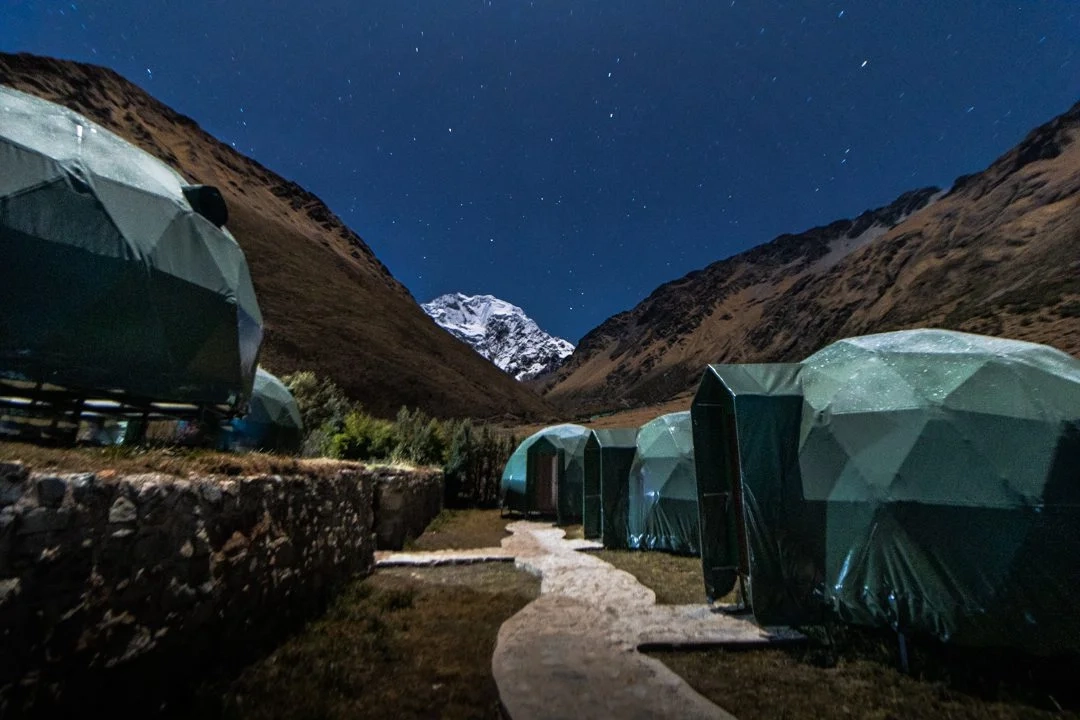
Overnight: Sky Domes in Colpapampa.
Stats
- Distance: 8 km
- Highlights: Victoria Pass, Inca trail sections
- Accommodation: Panoramic Sky Domes
Day 5 | Colpapampa – Lucmabamba – Llaqtapata – Aguas Calientes
Drive to Lucmabamba and begin the ascent on an authentic Inca trail through cloud forest to Llaqtapata, with views toward Machu Picchu. Descend to Hidroelectrica and continue on foot to Aguas Calientes.
Overnight: Hotel in Aguas Calientes.
Stats
- Distance: 18 km
- Highlights: Llaqtapata ruins, final ascent
Day 6 | Machu Picchu – Return to Cusco
Early bus to Machu Picchu for a guided tour of the citadel. Optional hikes (Huayna Picchu or Machu Picchu Mountain, permits required). Afternoon return by train to Ollantaytambo and transfer to Cusco.
Stats
- Highlights: Guided Machu Picchu visit
Salkantay to Machu Picchu — 5 Days
Day 1 | Challacancha – Humantay Lake – Soraypampa
Early departure from Cusco to Challacancha, the trailhead. Hike to Soraypampa and arrive around midday at the Sky Domes for lunch. Afternoon hike to Humantay Lake via a loop trail, returning to Soraypampa for the night.
Overnight: Sky Domes at Soraypampa.
Stats
- Distance: 10 km
- Max altitude: 4,200 m
- Highlights: Humantay Lake
- Accommodation: Sky Domes
Day 2 | Soraypampa – Salkantay Pass – Collpapampa
Early start and ascent to Salkantay Pass (4,630 m), the highest point of the trek. Descent through alpine terrain into cloud forest, passing Huayracmachay before continuing to Collpapampa.
Overnight: Sky Domes at Collpapampa.
Stats
- Distance: 18 km
- Max altitude: 4,630 m
- Highlights: Salkantay Pass
- Accommodation: Sky Domes with wet area (sauna and jacuzzi)
Day 3 | Collpapampa – Playa Sahuayaco – Llaqtapata
Morning shuttle to Playa Sahuayaco. Hike through jungle terrain, coffee farms, and small settlements, followed by a gradual ascent to Llaqtapata.
Overnight: Llaqtapata Mountain Lodge, next to the archaeological site.
Stats
- Distance: 9 km
- Max altitude: 2,750 m
- Highlights: Llaqtapata ruins
- Scenic drive: Lucmabamba Valley
- Accommodation: Llaqtapata Mountain Lodge
Day 4 | Llaqtapata – Hidroelectrica – Aguas Calientes
Descent from Llaqtapata through cloud forest to Hidroelectrica. Continue on a flat trail along the railway to Aguas Calientes.
Overnight: Hotel in Aguas Calientes.
Stats
- Distance: 15 km
- Max altitude: 2,750 m
- Highlights: Cloud Forest descent, Urubamba Valley
Day 5 | Machu Picchu – Return to Cusco
Early bus to Machu Picchu for a guided tour of the citadel. Return to Aguas Calientes and continue by train to Ollantaytambo, followed by transfer to Cusco.
Stats
- Highlights: Machu Picchu visit, scenic train ride
- Guided tour: 2 hours
Salkantay Weekend Getaway — 2 Days
Day 1 | Cusco – Challacancha – Humantay Lake – Soraypampa
Early departure from Cusco to Challacancha, the Salkantay trailhead. Hike along the classic Salkantay route to Soraypampa, arriving around midday for lunch at camp. Afternoon hike to Humantay Lake, then return to Soraypampa.
Overnight: Sky Domes at Soraypampa.
Stats
- Distance: 10 km
- Max altitude: 4,200 m
- Highlights: Humantay Lake
- Accommodation: Sky Domes at Soraypampa.
Day 2 | Soraypampa – Salkantay Pass – Return to Cusco
Morning ascent to Salkantay Pass (4,630 m), the highest point of the trek. Late morning return by vehicle to Cusco, arriving in the afternoon.
Stats
- Scenic drive back to Cusco
- Distance: 10 km
- Max altitude: 4,630 m
- Highlights: Salkantay Pass
Who This Way of Trekking Is For?
When nights are restorative, the days feel different. Energy carries more evenly. Mornings start calmer. The focus shifts away from discomfort and back toward the landscape, and the features along the trek.
The mountains remain the same, but your relationship with them changes. There’s more space to notice details, to enjoy quiet moments, to arrive at viewpoints without feeling rushed or depleted. Over several days, those small differences add up.
Upgrading the Salkantay trek makes sense for hikers who care about the continuity of the experience, not just the highlights. For those who want to walk fully through the landscape, day after day, without the trek becoming a test of endurance alone. It’s for travelers who understand that how a journey feels is shaped as much by recovery as by effort.