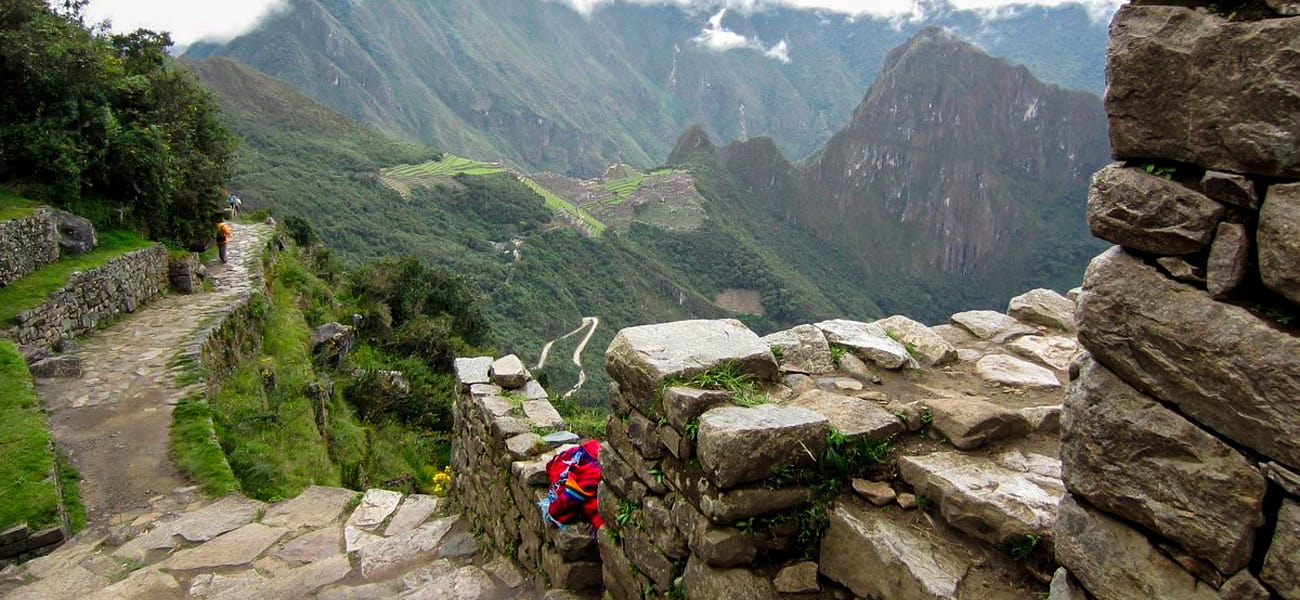
Not every journey to Machu Picchu has to be long to be meaningful. The Short Inca Trail offers the essence of the legendary route into a focused 2-day experience. An experience that still allows you to walk original stone paths, explore remarkable archaeological sites, and enter Machu Picchu on foot through the Sun Gate.
This is not a rushed version of the Inca Trail. It is a carefully selected stretch that delivers history, landscape, and arrival in a way that feels intentional and complete.
What Makes the Short Inca Trail Unique?
The Short Inca Trail follows an official section of the original Inca network, protected within the Historic Sanctuary of Machu Picchu. Unlike visiting the citadel exclusively by train, this route offers context. How the Incas approached Machu Picchu, how the terrain shaped their architecture, and how the site fits into the surrounding landscape.
Key elements that define the experience:
- Walking on original Inca stone paths
- Passing through cloud forest ecosystems
- Visiting important archaeological sites along the way
- Entering Machu Picchu through Inti Punku
The Experience on the Trail
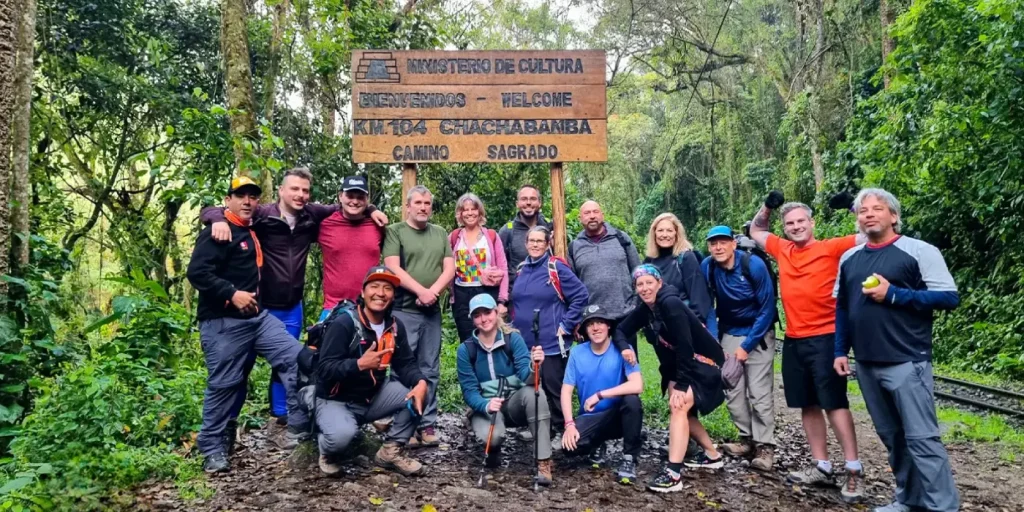
Entering the Inca Trail at KM 104
The hike begins at KM 104 of the railway line, where travelers officially enter the Inca Trail after crossing the Urubamba River. Almost immediately, the atmosphere changes. The noise of the train fades, and the path narrows into stone steps framed by dense vegetation.
From the first stretch, it’s clear this is a journey through a protected historical corridor.
Walking Through the Cloud Forest
One of the defining features of the Short Inca Trail is its passage through the cloud forest. As the trail climbs gradually, the environment shifts constantly:
- Abundant vegetation
- Subtle changes in temperature and humidity
- Occasional openings with views over the Urubamba Valley
The trail is moderately demanding but well paced, allowing time to enjoy the surroundings without feeling rushed.
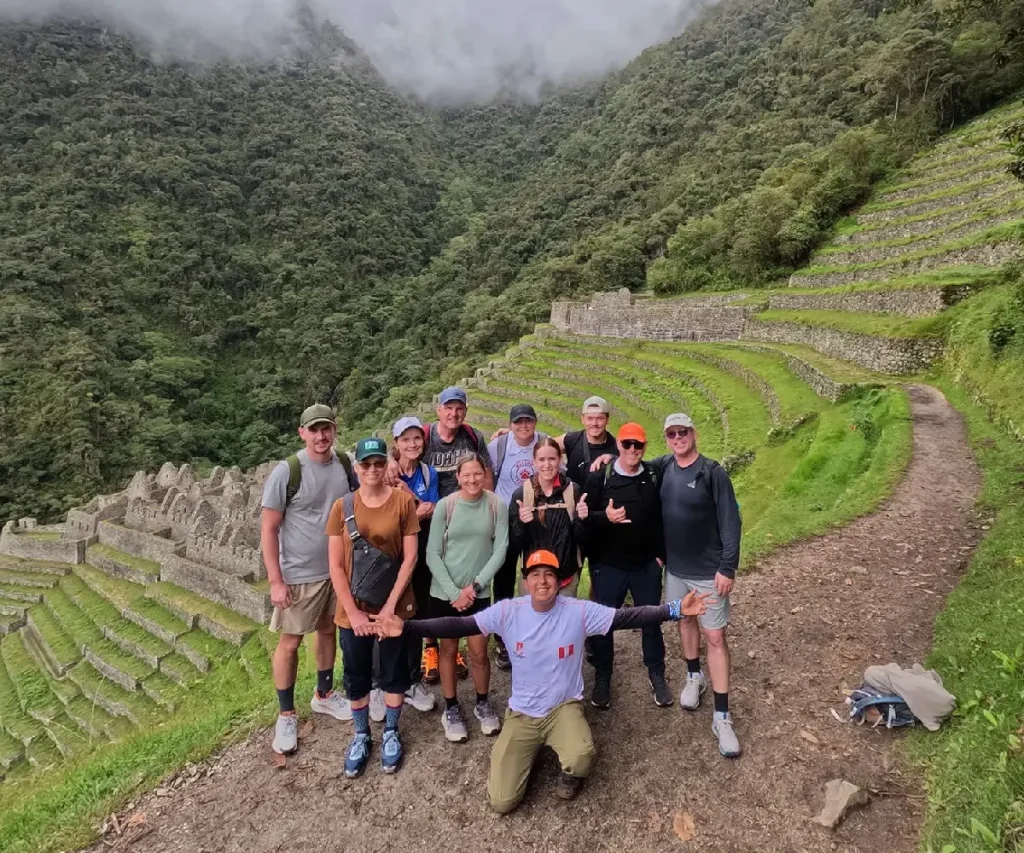
Wiñay Wayna
Wiñay Wayna is one of the most impressive archaeological sites on the entire Inca Trail system, and for many hikers, an unexpected highlight.
Built into a steep hillside, the site features:
- Extensive agricultural terraces
- Residential structures
- A sophisticated water channel system still flowing today
Wiñay Wayna offers insight into how the Incas adapted their architecture to extreme terrain, and how these sites functioned as more than ceremonial spaces.
Inti Punku: The First View of Machu Picchu
From Wiñay Wayna, the trail continues gently toward Inti Punku, the Sun Gate. This point marks the original ceremonial entrance to Machu Picchu for those arriving on foot during Inca times.
Reaching the Sun Gate in the afternoon, hikers are rewarded with their first panoramic view of Machu Picchu from above. The citadel appears framed by mountains, distant and quiet.
The Emotional Payoff: Arriving at Machu Picchu on Foot
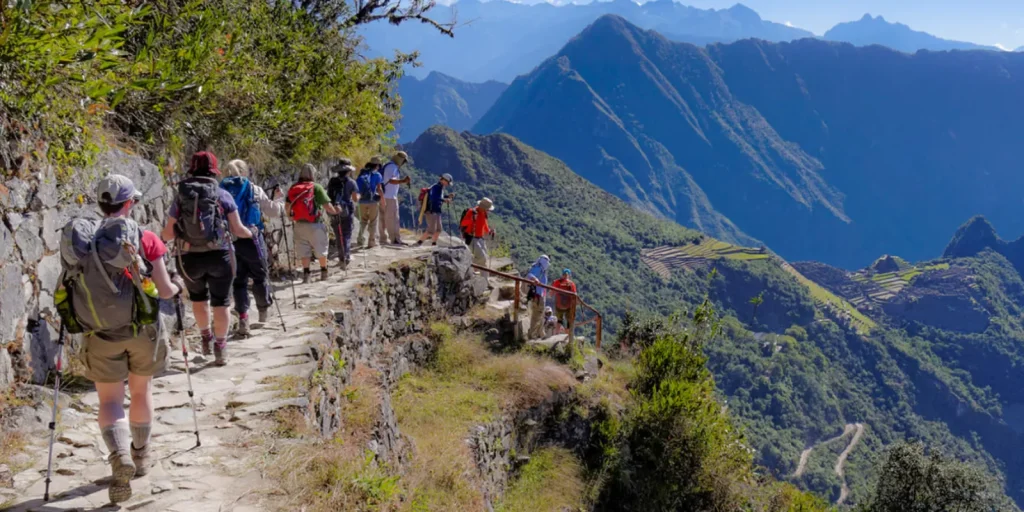
There is a clear difference between seeing Machu Picchu for the first time from a lookout and arriving there after hours on the trail.
Walking into the site:
- Creates a sense of progression and anticipation
- Adds meaning to the geography and layout of the citadel
- Connects the ruins to the surrounding mountains and valleys
Even though the visit continues the following day, this first encounter often becomes the defining memory of the Short Inca Trail.
A Brief Overview of the 2-Day Itinerary
This experience unfolds over 2 well-balanced days:
- Day 1: Travel from Cusco through the Sacred Valley, hike the Short Inca Trail from KM 104, arrive at Machu Picchu via the Sun Gate, overnight in Aguas Calientes.
- Day 2: Guided visit of Machu Picchu, followed by return travel to Cusco.
The itinerary is designed to prioritize experience over distance.
Day 2: Guided Visit of Machu Picchu
The second day focuses on understanding Machu Picchu as a complete site, not just a photo opportunity.
With a guided visit, travelers explore:
- The agricultural terraces and urban sectors
- Key ceremonial and residential areas
- The relationship between architecture, astronomy, and landscape
This guided context brings meaning to what you saw from above the previous day, completing the journey from trail to sanctuary. After the tour, there is typically free time to explore within designated circuits or enjoy the town of Aguas Calientes before returning to Cusco.
Who Is the Short Inca Trail For?
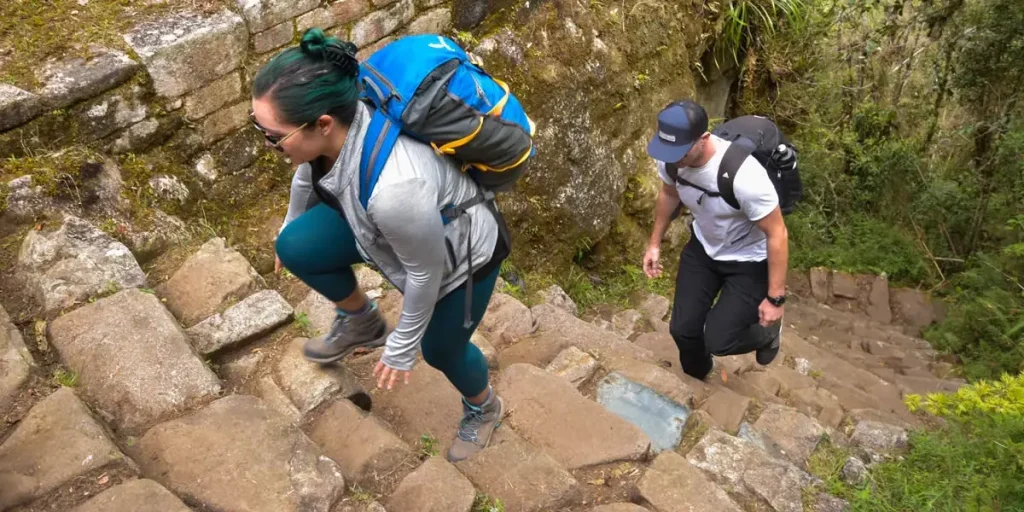
The Short Inca Trail is ideal for:
- First-time visitors to Machu Picchu
- Active travelers with limited time
- Those seeking a cultural hike without camping
- Travelers who want more than a train-only visit
It may not be the best choice for travelers looking for multi-day trekking or those wanting a more physically demanding expedition.
Practical Considerations
- Difficulty: Moderate; suitable for hikers comfortable with sustained walking and some uphill sections
- Permits: Required and limited; advance booking is essential
- Weather: Conditions can change quickly; preparation is important year-round
- Guides: Mandatory and essential for context, safety, and access
A Focused Way to Experience the Inca Trail
The Short Inca Trail proves that depth doesn’t always require distance. By combining a meaningful hike, important archaeological sites, and a thoughtful arrival at Machu Picchu, it offers one of the most balanced ways to experience the region.
For travelers seeking connection, context, and efficiency, it remains one of the smartest ways to walk into Machu Picchu.
FAQS
Is the Short Inca Trail difficult?
It is considered moderate, with manageable elevation gain and a steady pace.
Do I need a permit?
Yes. The Short Inca Trail uses the same permit system as the Classic Inca Trail and has daily limits.
Is this better than visiting Machu Picchu by train only?
For travelers who want context, movement, and historical perspective, yes.
How is it different from the Classic Inca Trail?
It is shorter, does not involve camping, and focuses on highlights rather than endurance.
Can I do this if I have limited time in Cusco?
Yes. This route was designed specifically for that purpose.