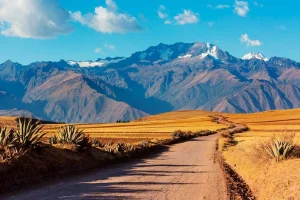
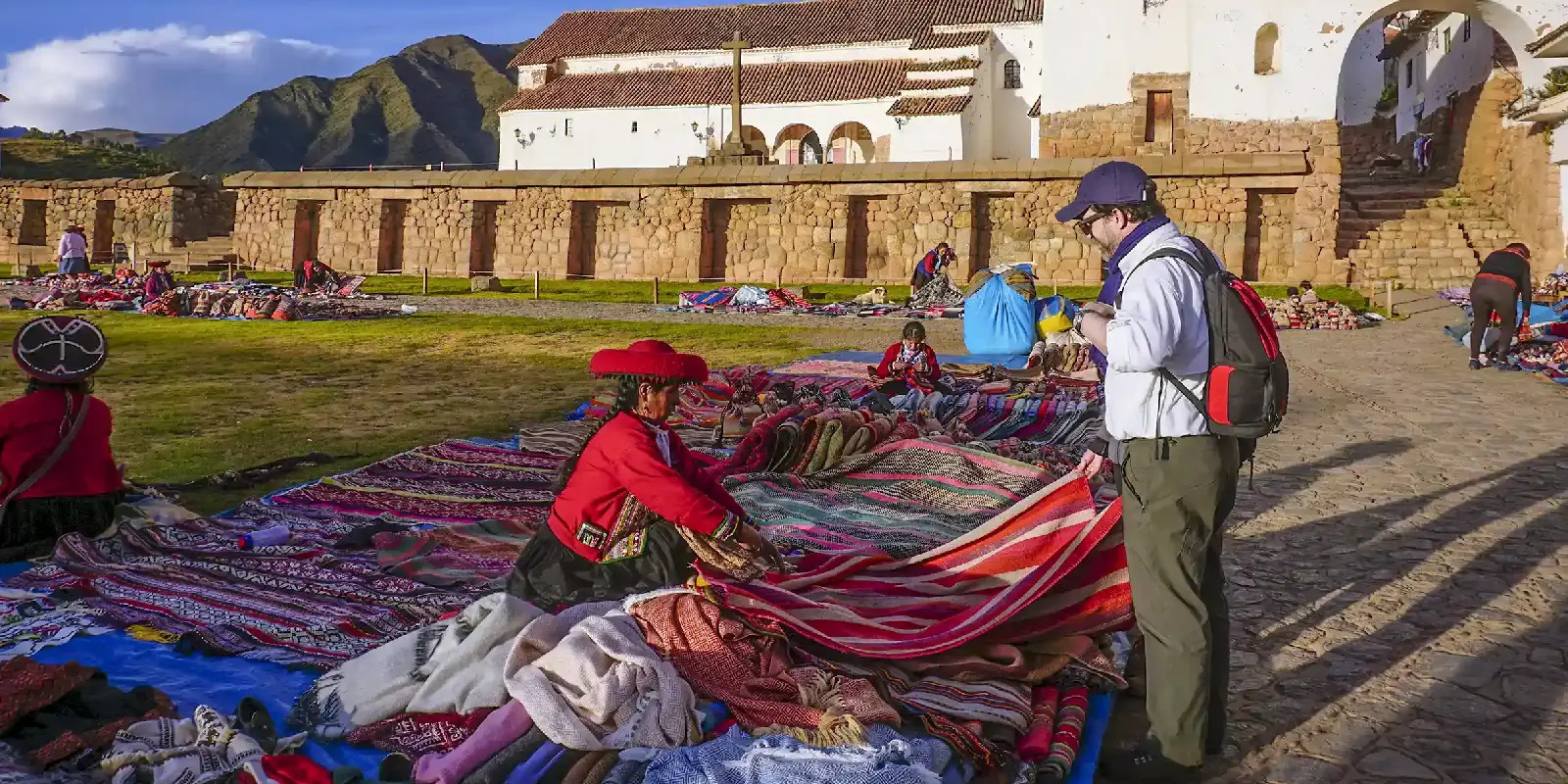
High above the Sacred Valley, where wide plains meet snowcapped peaks, Chinchero offers something increasingly rare in the Cusco region: a place where daily life, tradition, and landscape still move at a local rhythm.
Often passed through on the way to somewhere else, Chinchero rewards travelers who slow down. It is not defined by a single monument or viewpoint, but by continuity of culture, craftsmanship, and connection to the land.
Why Chinchero Matters
Chinchero was an important Inca royal estate, traditionally associated with Tupac Inca Yupanqui. Its location was strategic: elevated, defensible, and overlooking key routes through the Sacred Valley.
What makes Chinchero especially relevant today is not only its Inca past, but how that past remains visible in everyday life. Inca agricultural terraces still shape the land. Colonial structures rest directly on Inca stonework. And textile traditions passed down for generations continue to define the community’s identity.
Where Is Chinchero Located & How to Get There
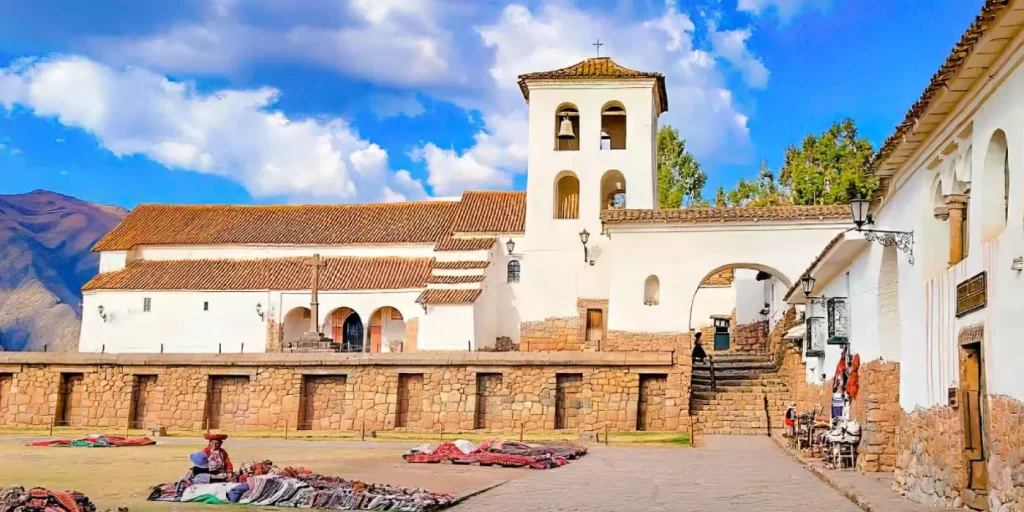
Chinchero is located in the northwestern part of the Sacred Valley, at approximately 3,760 meters (12,330 ft) above sea level.
- From Cusco: about 45 minutes by road
- From Ollantaytambo: about 1 hour
- From Urubamba: about 40 minutes
It sits along the high plateau above the valley floor, making it an ideal first or last stop on a Sacred Valley circuit. Because of its altitude, Chinchero is also a good place to visit after some acclimatization in Cusco.
Chinchero’s Textile Tradition: A Living Craft
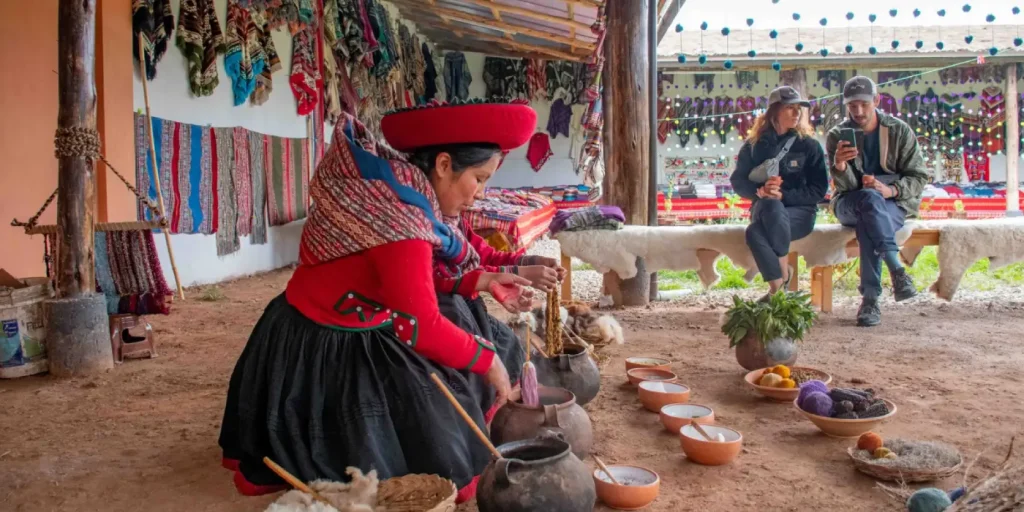
Textiles crafting is one of the main activities in Chinchero.
Origins of the Weaving Tradition
Andean textiles predate the Inca Empire by thousands of years. By Inca times, weaving was already a highly specialized craft tied to social status, identity, and ritual life. Chinchero became one of the regions where these traditions were carefully preserved.
Today, weaving remains a central part of community life, not a revived practice.
Natural Fibers & Dyes
Chinchero weavers primarily use:
- Alpaca and sheep wool, hand-spun using traditional techniques
- Natural dyes derived from plants, minerals, and even insects
One of the most notable dyes is cochineal, an insect that produces a wide range of reds, pinks, and purples depending on preparation. Other dyes come from local roots, leaves, flowers, and even lichens.
Weaving Techniques & Symbolism
Most textiles are woven using the backstrap loom, a technique that allows for precise control and complex patterns.
Patterns are not decorative alone. They communicate:
- Community identity
- Natural elements (mountains, rivers, animals)
- Agricultural cycles and cosmology
Each piece reflects both personal skill and collective heritage.
Community-Based Textile Centers
Many families in Chinchero participate in weaving cooperatives. Visiting these centers allows travelers to:
- See the full process, from raw fiber to finished textile
- Understand the time and skill involved
- Support fair, community-based craftsmanship
- It easier to distinguish authentic textiles from mass-produced imitations.
Main Activities Around Chinchero
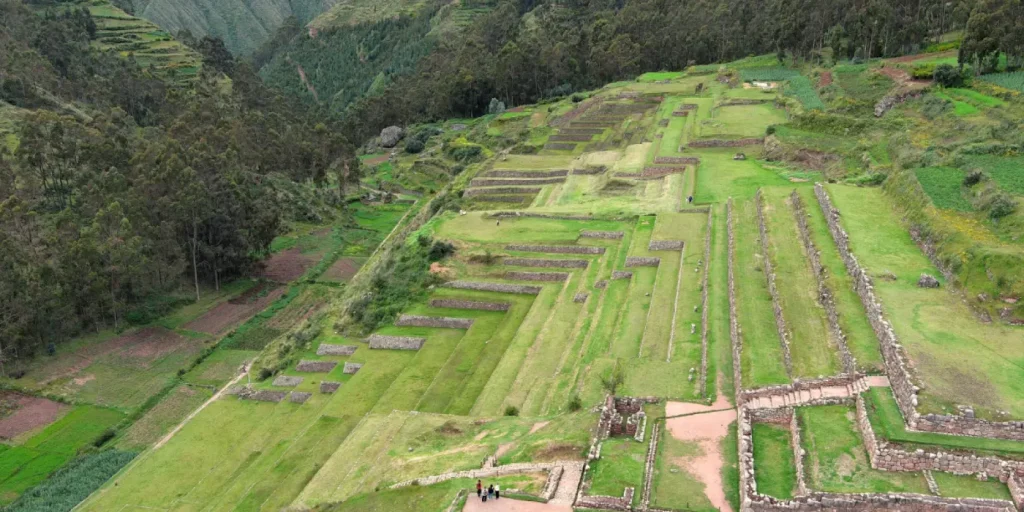
The Chinchero Archaeological Site
The archaeological site sits at the edge of town, blending seamlessly into daily life.
Highlights include:
- Inca agricultural terraces and stone walls
- Open ceremonial spaces with panoramic valley views
- A colonial church built directly on Inca foundations
The site provides context, how the Incas organized space, agriculture, and ceremony in high-altitude environments.
Huaypo Lake
A short drive from Chinchero, Huaypo Lake is a quiet, high-altitude body of water surrounded by open farmland and distant mountains.
It’s ideal for:
- Gentle walks
- Landscape photography
- A pause between cultural visits
On calm days, the reflections of surrounding peaks make it one of the most peaceful spots in the area.
Piuray Lake
Piuray Lake is both scenic and essential, it serves as a major freshwater reservoir for Cusco.
Surrounded by fields and rural communities, the lake offers a different perspective on the Sacred Valley: agricultural, open, and calm. It’s a place where modern needs and traditional life intersect.
Stand-Up Paddleboarding on Piuray Lake
Paddleboarding on Piuray Lake adds a light adventure element to the Chinchero experience.
- Calm waters make it suitable for beginners
- The activity is quiet and non-intrusive
- It offers a unique way to experience the landscape from water level
When Is the Best Time to Visit Chinchero?
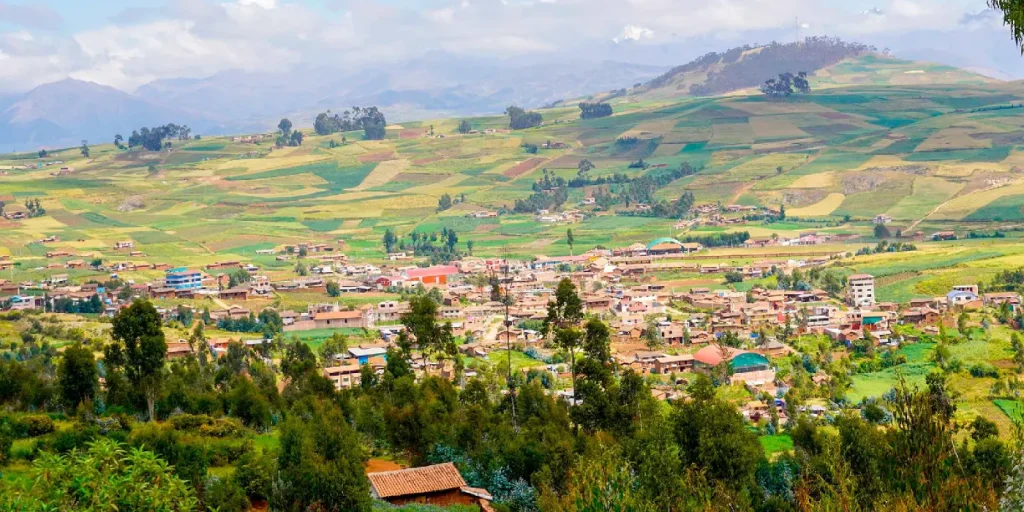
Chinchero can be visited year-round, but conditions vary.
- Dry season (May–September): clearer skies, cooler mornings, ideal for outdoor activities
- Rainy season (October–April): greener landscapes, fewer visitors, occasional rain
Sundays are market days, when the town becomes especially active and colorful.
Who Is Chinchero For?
Chinchero is especially rewarding for:
- Travelers interested in living culture
- Those seeking meaningful interaction over quick sightseeing
- Families and first-time Sacred Valley visitors
- Active travelers combining culture with light outdoor activities
Practical Tips for Visiting Chinchero
- Dress in layers; weather can change quickly
- Be respectful when visiting communities and workshops
- Ask before taking photos of people
- Allow at least half a day to experience Chinchero without rushing
Why Chinchero Deserves More Than a Stop
Chinchero is not a place to rush through. It’s a place to listen, observe, and connect. By combining history, living traditions, and quiet landscapes, it offers one of the most balanced experiences in the Sacred Valley, one that adds meaning to everything that comes before or after it.
FAQS
Is Chinchero worth visiting?
Yes, especially for travelers interested in culture, textiles, and local life rather than only major ruins.
How much time do I need in Chinchero?
A half day allows time for the archaeological site, a textile visit, and nearby lakes.
Are the textiles in Chinchero authentic?
Many are, particularly those sold through community weaving centers. Understanding the process helps identify quality.
Can I visit Chinchero independently?
Yes, but guided visits add valuable cultural and historical context.
Is paddleboarding on Piuray Lake suitable for beginners?
Yes. The lake is calm, and activities are adapted for first-time participants.
How does Chinchero compare to other Sacred Valley towns?
Chinchero is less commercial and more community-focused, offering depth rather than spectacle.