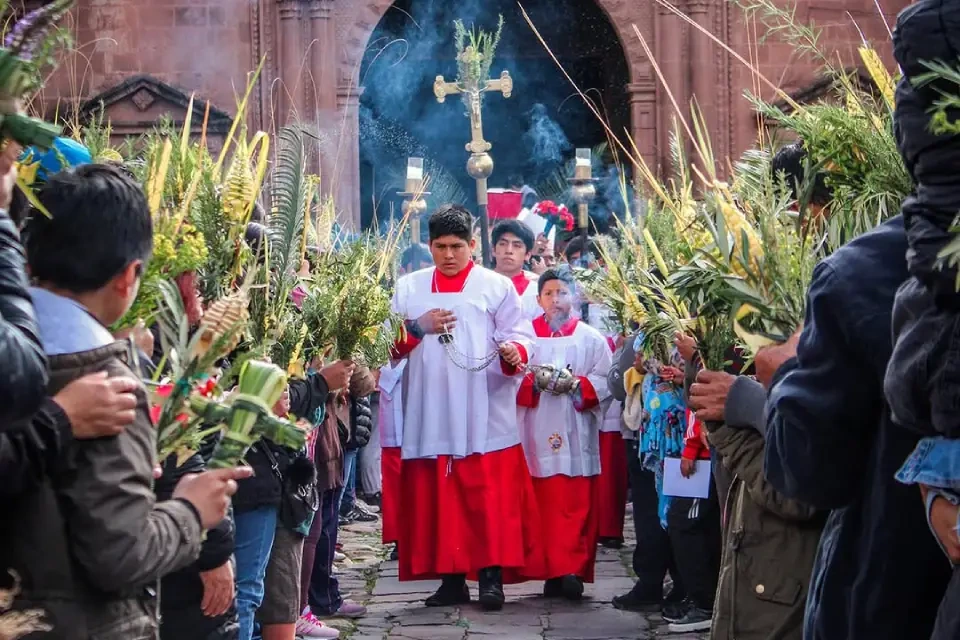
In Cusco, Holy Week does not arrive quietly. Purple banners hang from colonial balconies. Church bells echo across stone streets. The scent of incense drifts through the Plaza de Armas. Shops soften their music. Families dress in darker tones. The city slows.
Semana Santa in Cusco is not staged for visitors. It is living culture. And for one week each year, faith becomes visible in the streets.
What Is Semana Santa in Cusco?
Semana Santa, Holy Week, commemorates the final days of Christ leading up to Easter Sunday. Throughout Peru it is important, but in Cusco it carries a particular intensity shaped by centuries of devotion and Andean identity.
The week includes:
- Palm Sunday
- Holy Monday
- Holy Thursday
- Good Friday
- Easter Sunday
The most significant moment in Cusco happens on Holy Monday, when the city gathers for its most revered religious figure.
Señor de los Temblores: Protector of Cusco
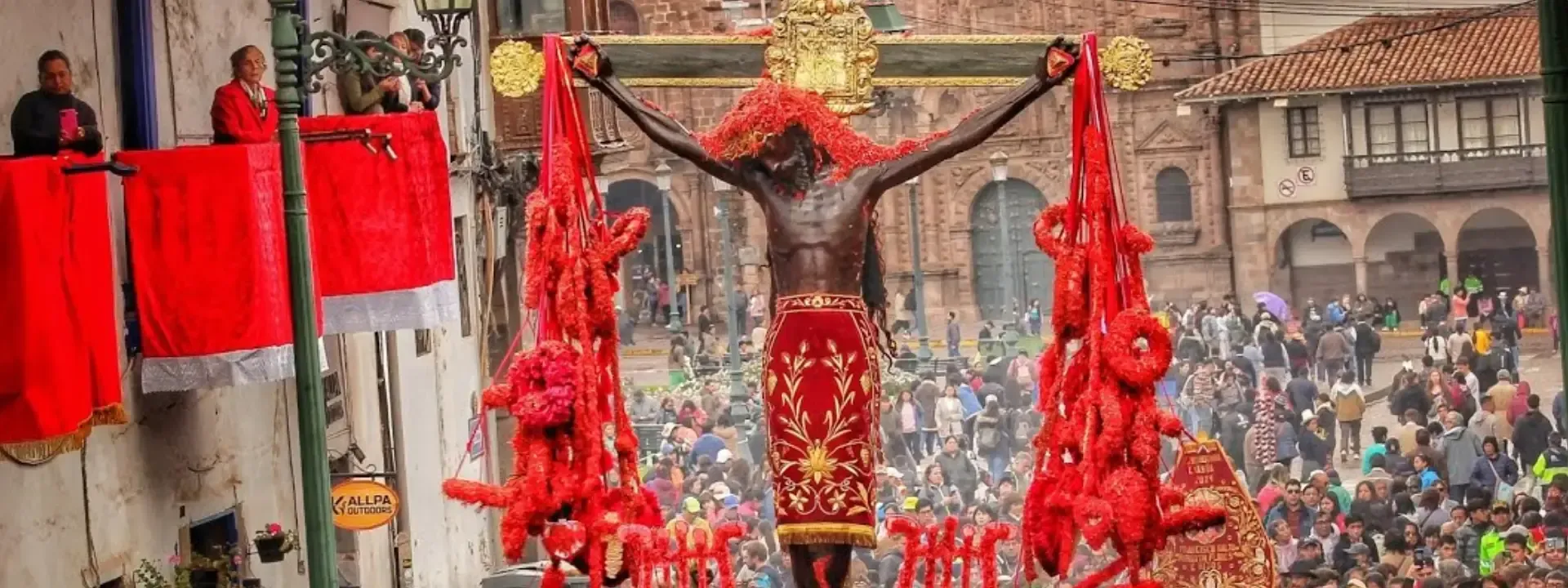
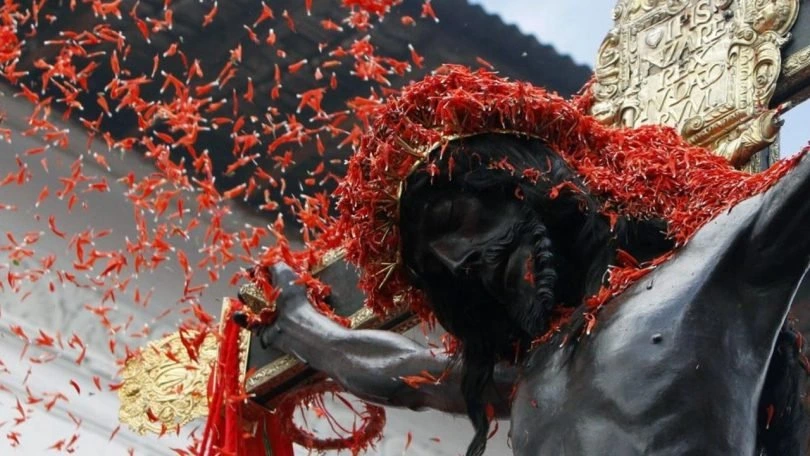
At the heart of Holy Week stands Señor de los Temblores, known as the “Lord of the Earthquakes.” The image is housed inside the Cusco Cathedral, overlooking the Plaza de Armas.
According to tradition, after the devastating earthquake of 1650, people took the image of Christ through the streets. The tremors reportedly stopped, and from that moment forward, the people of Cusco embraced Him as their protector.
Every Holy Monday:
- The cathedral doors open.
- The image emerges covered in red ñucchu flowers.
- Thousands gather in silence.
- The blessing is given over the Plaza.
It is not a spectacle. It is collective memory.
For travelers, witnessing this procession offers something rare: a moment where tourism steps aside and devotion takes center stage.
A Living Blend of Faith and Andes
Cusco’s Holy Week reflects more than Catholic ritual.
The reverence for Señor de los Temblores also connects to an Andean understanding of natural forces. Earthquakes, mountains, and the land itself are powerful presences in Andean cosmology. Over time, Catholic imagery and indigenous belief intertwined.
That is why this devotion remains deeply rooted today.
The 12 Platos: Good Friday’s Sacred Table
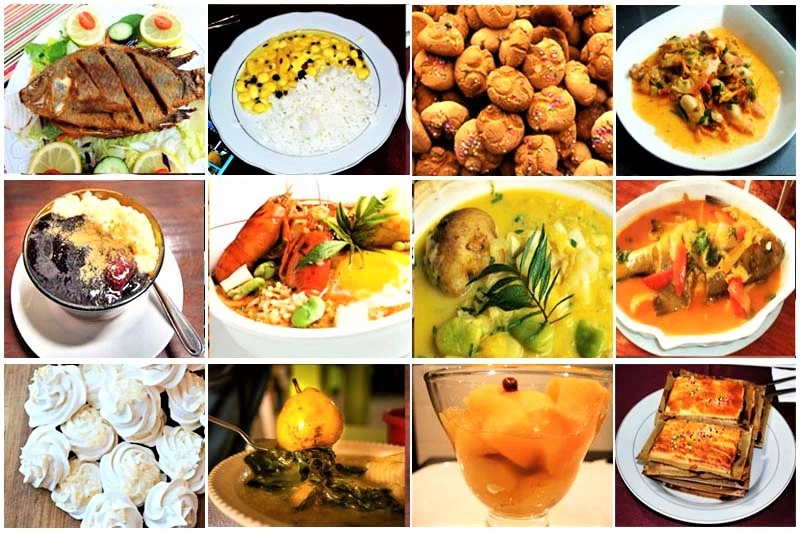
If Holy Monday belongs to the streets, Good Friday belongs to the table. On this day, families across Cusco prepare “Los 12 Platos”, the Twelve Dishes.
- The number represents the 12 Apostles.
- The meal follows Catholic fasting tradition, meaning no red meat is served.
- Instead, the table reflects abundance through grains, fish, legumes, and sweets.
It is not a restaurant tasting menu. It is a ritual of remembrance, gratitude, and family gathering.
Below is a typical structure of the 12 dishes served in Cusco homes:
Traditional 12 Platos of Cusco
| Dish | Description | Symbolic / Cultural Role |
| Chupe de Viernes | Hearty soup made with potatoes, milk, rice, beans, lentils, and sometimes cheese | Nourishment and unity; shared first |
| Fried Trout or Bacalao | Fish prepared simply, often with rice or potatoes | Observance of meat abstinence |
| Habitas (Fava Beans) | Boiled or sautéed Andean beans | Agricultural abundance |
| Lentils | Stewed lentils with mild seasoning | Humility and sustenance |
| Quinoa Dish | Prepared as a stew or side | Ancestral Andean grain |
| Rice with Milk (Arroz con Leche) | Creamy dessert with cinnamon | Sweetness after sacrifice |
| Mazamorra de Frutas | Fruit-based pudding | Celebration of harvest |
| Torrejas | Fried fritters topped with chancaca syrup | Festive indulgence |
| Humitas or Empanadas | Corn-based preparations | Indigenous culinary roots |
| Boiled Potatoes with Cheese | Native potatoes served simply | Connection to the land |
| Seaweed (Cochayuyo) | Rehydrated Andean seaweed | Coastal-Andean trade heritage |
| Additional Sweet or Grain Dish | Varies by household | Family tradition element |
Not every home prepares identical dishes. What matters is the number and the act of sharing. Many families begin eating at midday and continue gradually throughout the afternoon. It is a slow celebration, not a single sitting.
When to Experience Holy Week in Cusco
Semana Santa typically falls in March or April, depending on the Easter calendar.
Key moments:
- Holy Monday – Procession of Señor de los Temblores
- Good Friday – Preparation and sharing of the 12 Platos
- Easter Weekend – Continued church celebrations
Travel tip:
- Hotels in the historic center fill quickly.
- Streets around the Plaza de Armas may close during the procession.
- It is an ideal time for travelers interested in culture beyond archaeological sites.
Why Visit Cusco During Semana Santa?
If Inti Raymi feels ceremonial and historic, Holy Week feels intimate and spiritual.
It reveals a different side of Cusco:
- A city of faith, not only ruins
- A community shaped by memory
- A table where tradition still guides the menu
For travelers seeking authenticity, Semana Santa offers a deeper layer of the Andean experience. One that cannot be reconstructed or performed.