A Trek Rooted in Real Places
The Lares Trek to Machu Picchu is valued for its cultural immersion and varied high-Andean scenery. Unlike the quota-restricted Inca Trail, Lares routes travel through villages, high passes, and pastoral valleys before linking hikers to Ollantaytambo and the train to Aguas Calientes for Machu Picchu.
Itinerary Snapshot
- Duration: 4 days / 3 nights: trek portion + transfer to Aguas Calientes + Machu Picchu visit.
- Trailhead / start altitude: trailheads in the Lares area begin around 3,300 m.
- Highest pass listed in the itinerary: Condor Pass (Pachacutec) at 4,680 m.
- Typical campsite altitudes in the itinerary: camps near 3,750–3,850 m.
- Final approach: descend to Ollantaytambo, then train to Aguas Calientes (2,000 m) and visit Machu Picchu.
How are the Facts organized?
To stay clear and useful, we grouped the facts into six factual categories:
- Geography & scenery
- Culture & community
- Wildlife & nature
- Trekking & logistics
- Food, hot springs & traditions
- Machu Picchu connection
Top 30 Lares Facts
Geography & Scenery
- Trailhead altitude: the itinerary begins near 3,300 m in the Lares valley area.
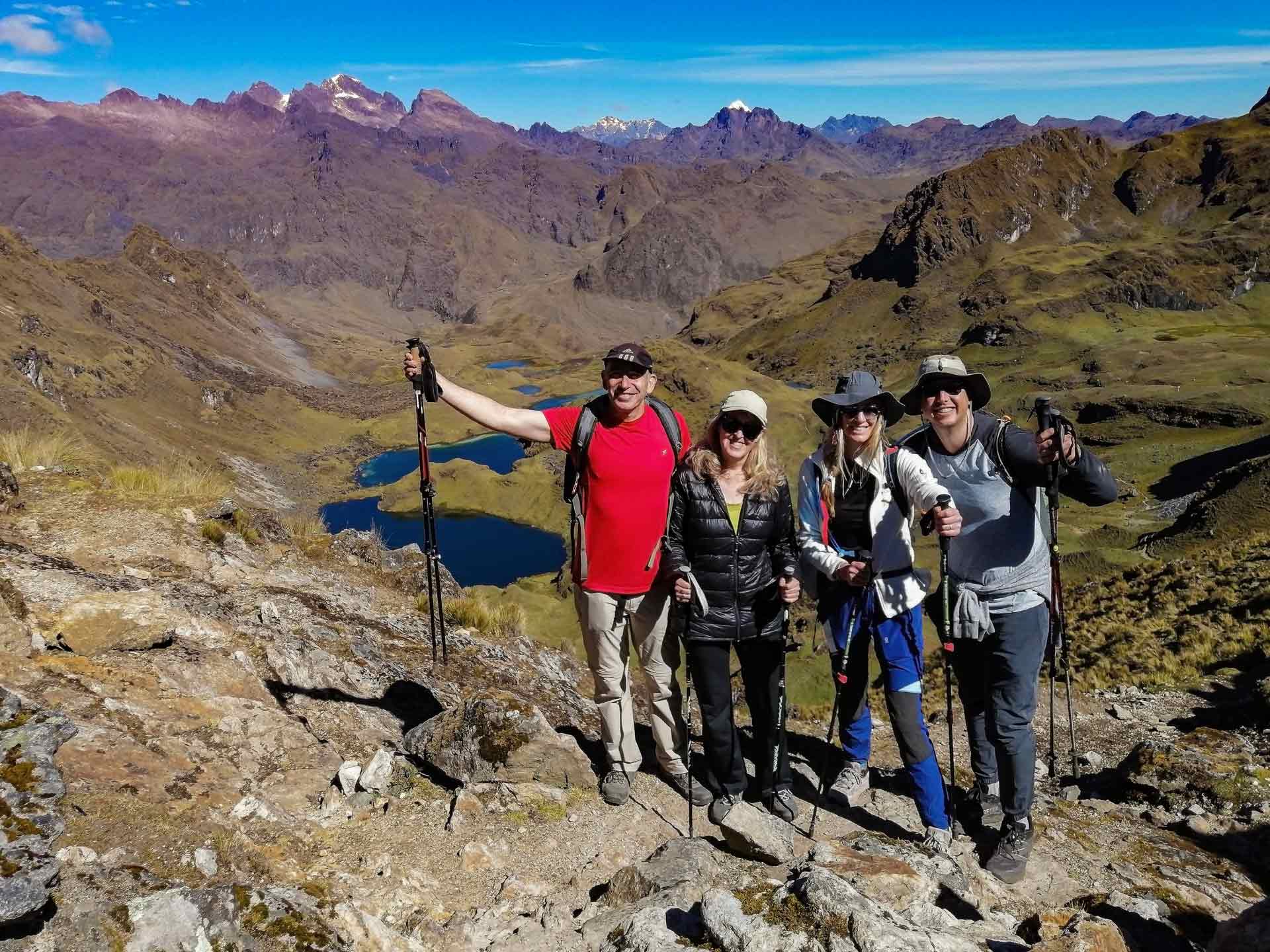
- Highest altitude on the route: Condor Pass (Pachacutec) at 4,680 m, the trek’s highest point.
- Campsite altitudes: typical camp elevations around 3,750–3,850 m.
- Most significant nearby peak: Mount Sahuasiray at 5,818 m visible from the high passes.
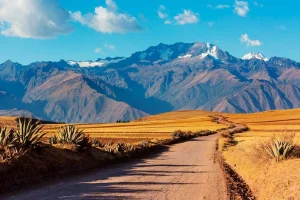
- Landscape change: the trek moves from high Andean puna and glacial valleys down into the warmer microclimates of the Sacred Valley by Day 3.
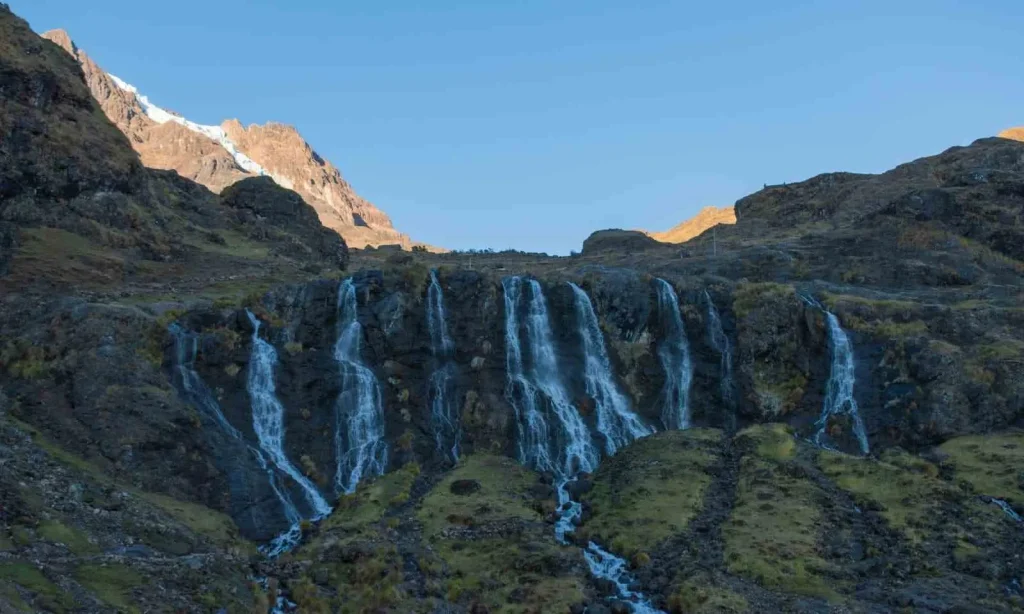
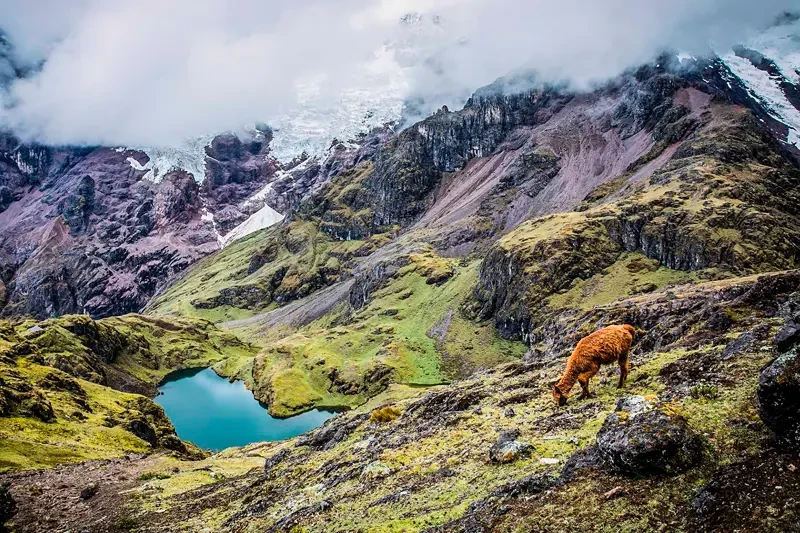
- Hydrology & lakes: the route crosses or approaches high-altitude glacial lakes and lagoons like: Canchispaccha or Cancha Cancha lakes.
Culture & Community
- Village stops including Kiswarani and Cancha Cancha, where hikers meet local families.
- Language: the most popular local language is Quechua. Quechua remains widely spoken in Lares villages.
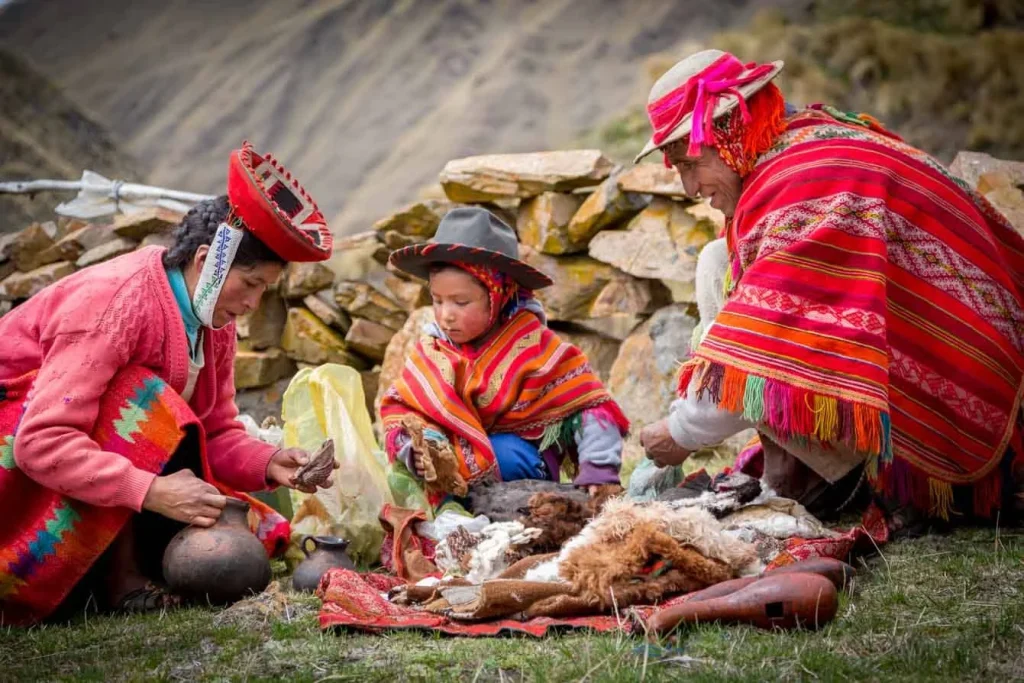
- Traditional weaving: villages visited en route are centers of textile weaving, where residents practice traditional techniques.
- Local livelihoods: pastoral life, herding alpacas and llamas as a common local activity.
- Remote settlements: overnight stays in isolated mountain villages with limited modern infrastructure, like Cancha Cancha where there is no road access.
- Village architecture: featuring stone construction and traditional building styles consistent with high-Andean settlements.
Wildlife & Nature
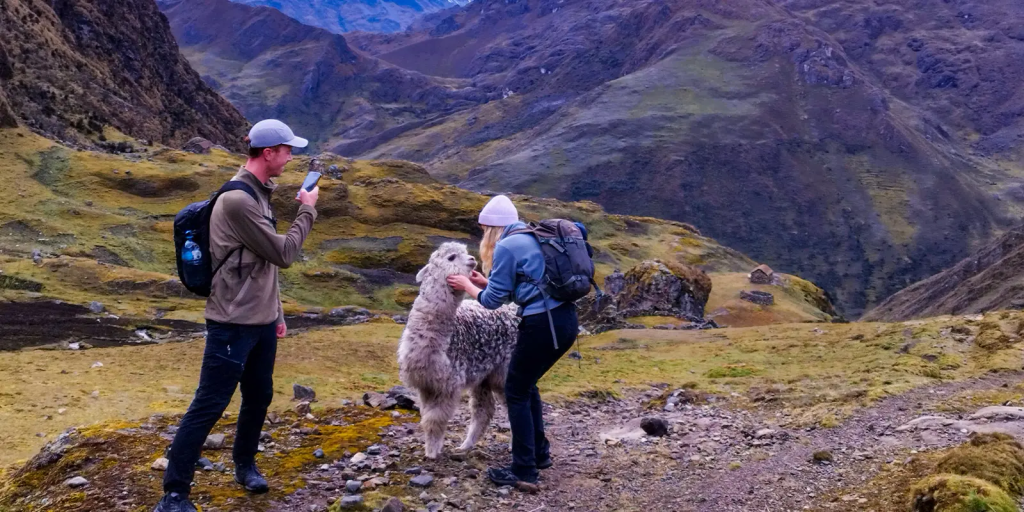
- Andean camelids: alpacas and llamas are present along the route and are used by local families.
- High-altitude birds: the area is habitat for high-Andean birds, travelers may spot caracaras, hawks, or even condors near the passes.
- Vizcachas and small mammals: rocky sectors in high passes are suitable habitat for vizcachas.
- Native plant species: high puna vegetation, including grasses like ichu, dominate the high sections.
- Seasonal wildflowers: in dry-season months the lower sections and valley floors show seasonal alpine flora like Cantuta or Erodium.
Trekking & Logistics
- Less crowded than Inca Trail: because Lares is not quota-restricted like the Inca Trail, the itinerary typically means fewer hikers on the route.
- Daily walking distances: day-distances in the itinerary are typically 6–12 km per day, combining ascents to passes and descents to camps or villages.
- Support team: the itinerary includes horses and porters to move equipment, enabling hikers to carry mainly daypacks.
- Camps & overnight: the trip uses camping at remote sites for the first nights before a hotel night in Aguas Calientes.
- Altitude profile: ascent to the highest pass at 4,680 m, then descent into warmer valleys at 2,000 m at Aguas Calientes.
- Required fitness level: categorized as challenging, with altitude being the top difficulty rather than technical terrain.
Food, Hot Springs & Traditions
- Lares hot springs: stop at Lares hot springs, naturally heated by geothermal energy.
- Local cuisine: meals on the trek are Andean-style, featuring local staples like potatoes, quinoa, and corn prepared by cooks on the route.
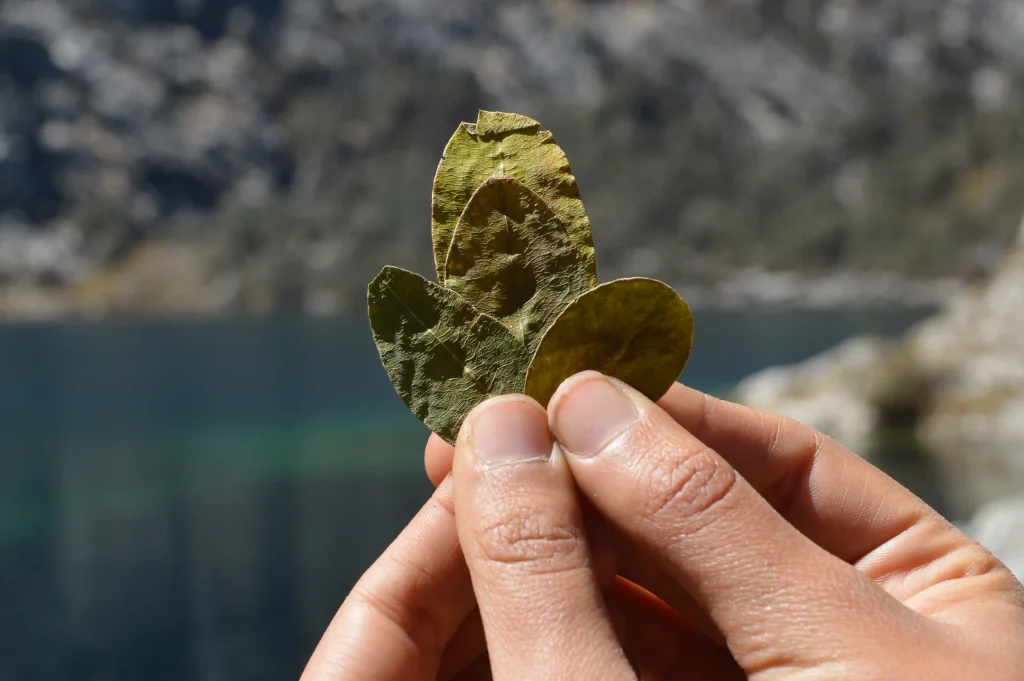
- Coca tea tradition: coca tea (mate de coca) is served to help with altitude symptoms, a traditional Andean remedy.
- Community food production: the villages visited practice traditional agriculture, growing native potatoes and tubers adapted to high altitudes.
- Evening camp routine: warm drinks and communal dinners at camp as part of the support service.
Machu Picchu Connection
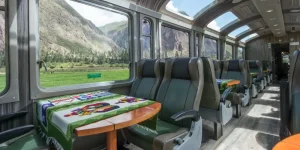
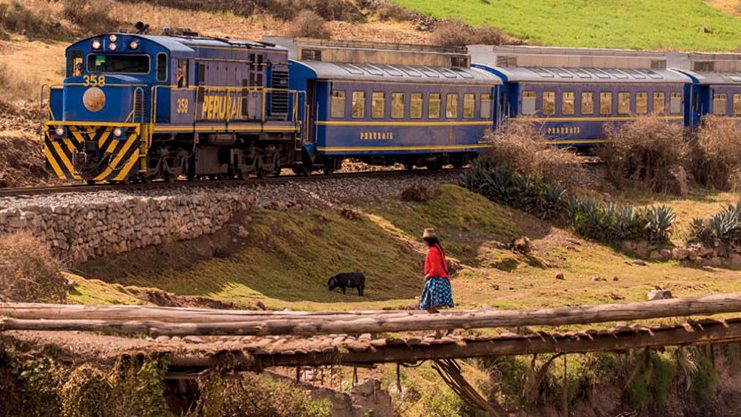
- Train to Aguas Calientes: after descending to Ollantaytambo, the itinerary includes a train transfer to Aguas Calientes to position hikers for Machu Picchu.
- Early Machu Picchu entry: the final day includes an early bus and guided visit to Machu Picchu, timed for sunrise or early morning light.
Why Hikers Choose Lares
- Cultural immersion: villages & weaving, and direct community contact.
- It shows less tourist density than the Inca Trail because routes and overnight villages are remote.
- The schedule combines hot springs, high passes, and a direct Machu Picchu connection, making the trek a cultural + scenic route.
Lares vs Other Treks
- Lares vs Inca Trail: Lares has no official permit quota in the itinerary, focuses more on living communities than on Inca ruins.
- Lares vs Salkantay: Lares includes village visits and hot springs, while Salkantay is glacier-and-mountain focused.
- Lares vs Ausangate: Lares equals cultural valley routes; Ausangate treks focus on very high alpine lakes and peaks.
Practical Tips
- Acclimatize: we recommend 1–2 days in Cusco before starting.
- Bring layered clothing: nights at camp can be cold near or below freezing at approximately 3,750 m.
- Footwear: sturdy, broken-in hiking boots are advised for uneven, natural trails.
- Bring cash for small purchases on route.
Best Time to Trek
- The itinerary works best in the dry season (May–September) when high-pass conditions are more stable and camps are drier.
- Shoulder months (April & October) are possible alternatives depending on weather; heavy rains (Jan–Mar) increase trail difficulty.
Why Hike Lares with a Professional Operator?
The itinerary includes logistics that benefit from a guided operator:
- Transport coordination: Cusco ⇄ Lares ⇄ Ollantaytambo
- Support team: cook, porters, expedition gear
- Local permits & park timing for the Machu Picchu connection
- Cultural mediation: guides help arrange respectful village visits
Best Lares Trek Companies
| Operator | What They Do Well / Their Strengths | Who They’re Best For |
|---|---|---|
| Sam Travel Peru | • Long-established local operator with many years of experience. • Small groups (max 8 people), which allows for personalized attention. • Offers a “fully portered trek”, pack animals carry heavy gear so clients only carry light daypacks. • Flexible dietary / special diet accommodations (vegetarian, allergies, etc.). • Reputation for reliable logistics and good service. | Travelers seeking a well-organized, comfortable but authentic trek Good for couples, older travelers, or anyone who values support & comfort especially on high-altitude trekking. Also ideal if you want a stress-free trek and good support (porters + experienced guides + meal support). |
| 69 Explorer | • Local-owned operator with a focus on value & strong cost/benefit ratio. • Offers small to mid-sized groups (2–8 pax) for Lares and other treks. • Emphasis on “alternative” or less-touristed routes, which may appeal to travelers seeking authenticity and less crowding. • Clear communication, local staff, and budget-conscious pricing, good for travelers who want quality without luxury price tags. | Budget-conscious adventurers, backpackers, younger travellers, or anyone looking for a balance between quality service and lower cost. Great if you’re okay with simpler accommodations but want a genuine trek experience and good logistics from a local operator. |
| Orange Nation Peru | • Focus on community-based, sustainable tourism, they appear committed to local development and working with local communities. • Small to mid-size groups (avg 5 pax, max 12), allows for intimate group dynamics and personalized experiences. • Known for reliability, mid-range pricing, and balanced service. Good if you want comfort + social responsibility. | Travelers who care about ethical tourism, sustainability and giving back to local communities. Also suitable for those who don’t need luxury but want a socially responsible trekking experience with fair group sizes and solid service. |
The Itinerary’s Promise
The itinerary combines authentic village life, a strenuous high-pass day, rewarding descents, hot springs, and a direct path to Machu Picchu. Those elements are the factual backbone of why the Lares Trek remains a compelling, verifiable alternative to other Cusco treks.