Cusco is often presented as a city of landmarks. Places like Sacsayhuamán, Tambomachay, and Qenqo appear on every itinerary, and for good reason. These are key sites for understanding Inca engineering, power, and urban planning. But the Inca understanding of the world was not limited to isolated monuments. It was shaped by movement, landscape, water, and ritual connections between places.
To begin understanding that deeper logic, you need to look beyond the walls and follow the paths that linked them. One of the clearest examples of this is the Camino Ritual Inca. A ceremonial route that has only recently been restored and is still largely unknown to most visitors.
This route offers a different way of reading Cusco, as a living ritual landscape.
What is The Camino Ritual Inca?
The Camino Ritual Inca is a ceremonial route dating to the Inca period, identified and restored by Peru’s Ministry of Culture. Unlike the Qhapaq Ñan, which functioned as an imperial road network for administration and movement across the Andes, this route had a ritual and symbolic purpose.
It connected key ceremonial spaces through the hills north of Cusco, linking the city’s spiritual center with huacas, water sources, and sacred terrain inside what is today the Sacsayhuamán Archaeological Park.
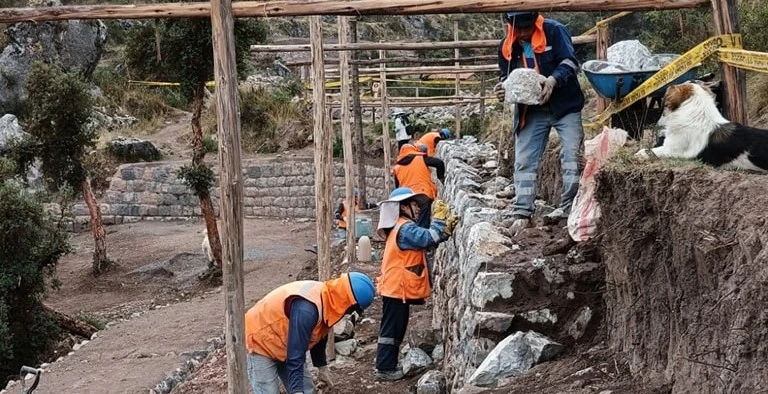
This is not a trekking route in the conventional sense. It is a short, walkable cultural corridor, designed for ritual movement rather than long-distance travel.
Ritual Roads and Inca Cosmology
In Inca thought, geography was sacred. Mountains “Apus”, springs, rivers, and carved rock formations were not background features; they were active elements in religious life. Rituals often involved movement through the landscape, reinforcing relationships between humans, deities, and natural forces.
Roads used for ceremonial purposes were carefully planned. Their alignment, construction, and proximity to water channels or huacas were intentional. Walking these paths was part of ritual practice, not just transportation.
The Camino Ritual Inca reflects this worldview. It links ceremonial points in a sequence that makes sense when seen through Inca cosmology, particularly the importance of water, elevation, and visibility over the Cusco basin.
The Restored Route: From Qoricancha to Ñustapakana
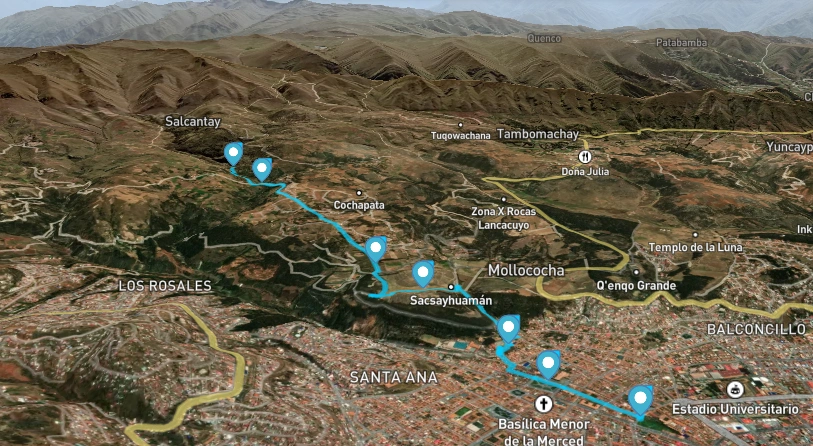
The restored segment of the Camino Ritual Inca follows a route traditionally understood to begin at Qoricancha, the most important temple in the Inca capital, and extends through the hills toward Ñustapakana, a lesser-known but significant huaca.
The documented sequence of sections includes:
- Qoricancha – the spiritual core of Cusco
- Qolcampata – an early connection between the urban center and the hills
- Llaullipata – an open ceremonial area above the city
- Wakarumiyoq – a segment identified through restored stonework and path alignment
- Chakan / Balcón del Diablo – a ritual zone associated with rock formations and water flow
- Ñustapakana – a ceremonial endpoint within the Sacsayhuamán area
Key Sites Along the Trail
Chakan / Balcón del Diablo
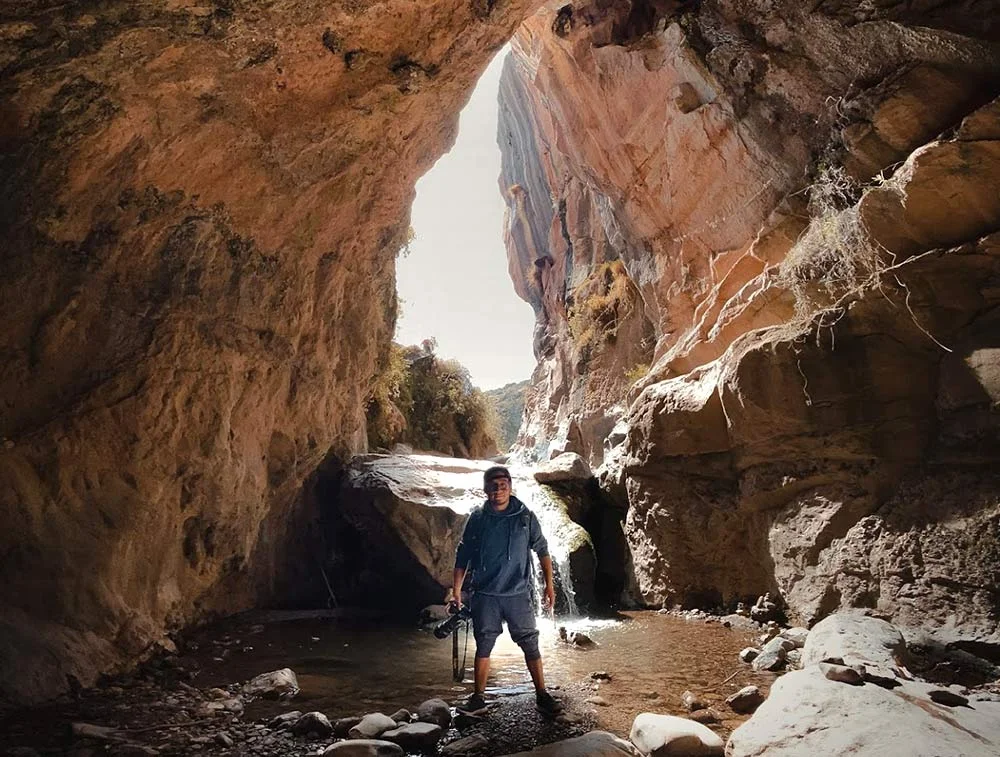
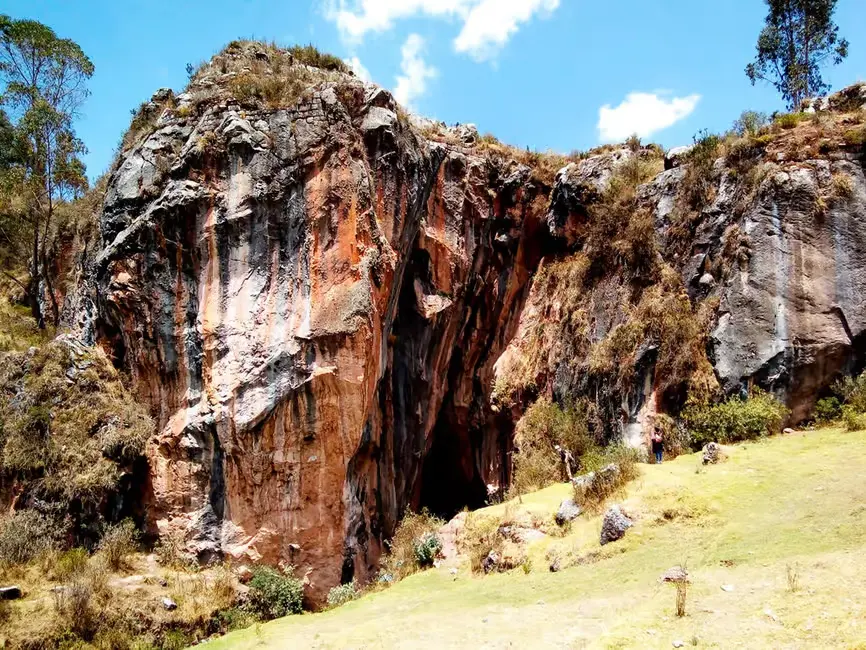
This area stands out for its relationship with the Chakan River and surrounding rock formations. Water plays a central role here, both physically and symbolically. Archaeological work has identified this sector as part of the ceremonial corridor, reinforcing the idea that water flow was integral to ritual movement. This site features a cave and a natural balcony formation, plus, in its surroundings there is a ceremonial plaza “Usnu”.
Wakarumiyoq
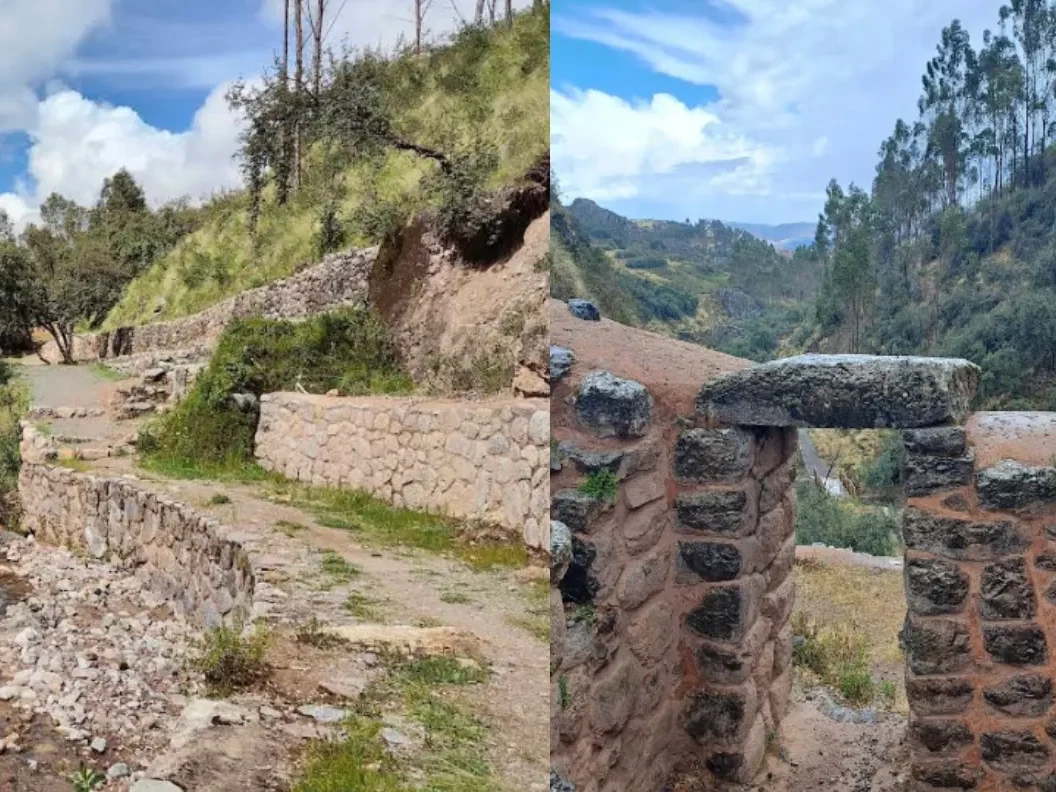
Wakarumiyoq is less visually obvious than major Inca monuments, which is part of why it’s often overlooked. Its importance comes from its position along the route and the presence of restored path elements. This section highlights how many ritual spaces were subtle, designed to be experienced rather than observed from a distance.

Ñustapakana
Ñustapakana gives the route its name. Identified as a huaca, it marks a key ceremonial point within the ritual landscape north of Cusco. While modest in appearance compared to Sacsayhuamán, its role within the route underscores how Inca ritual geography extended far beyond monumental architecture.
What We Still Don’t Fully Understand
Despite recent restoration, much of the Camino Ritual Inca remains only partially studied. Archaeological publications focus mainly on the restored segment. Possible extensions and connections, especially those related to water systems and nearby sites like Q’espehuara, are still under investigation.
There is evidence suggesting that additional ritual points and architectural remains exist along the river corridors connected to the route. However, these have not yet been fully excavated or formally integrated into the restored trail.
Going Further into Cusco’s Ritual Landscape
The Camino Ritual Inca is not the final answer to Cusco’s mysteries. It is an entry point. Beyond it lie other little-known sites, water systems, and ceremonial spaces that remain largely unexplored.
Understanding Cusco means accepting that much of its story is still incomplete. And that’s precisely what makes exploring it worthwhile.
You can combine this exploration with our classic Cusco City Tour, or choose an e-bike experience if you are looking to add some adrenaline to this exploration.