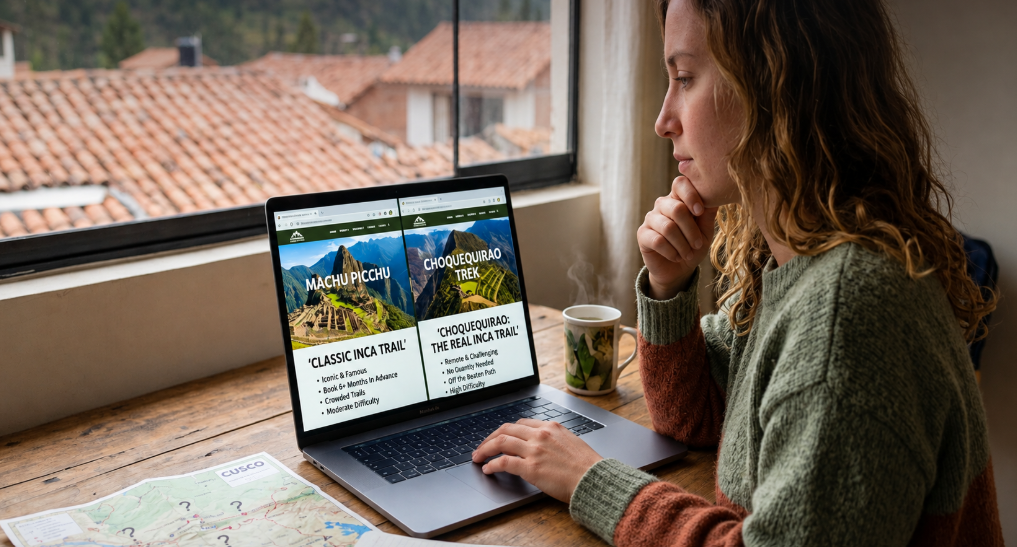
Choosing between the Choquequirao trek and a Machu Picchu trek comes down to your physical endurance, desire for solitude, and travel goals.
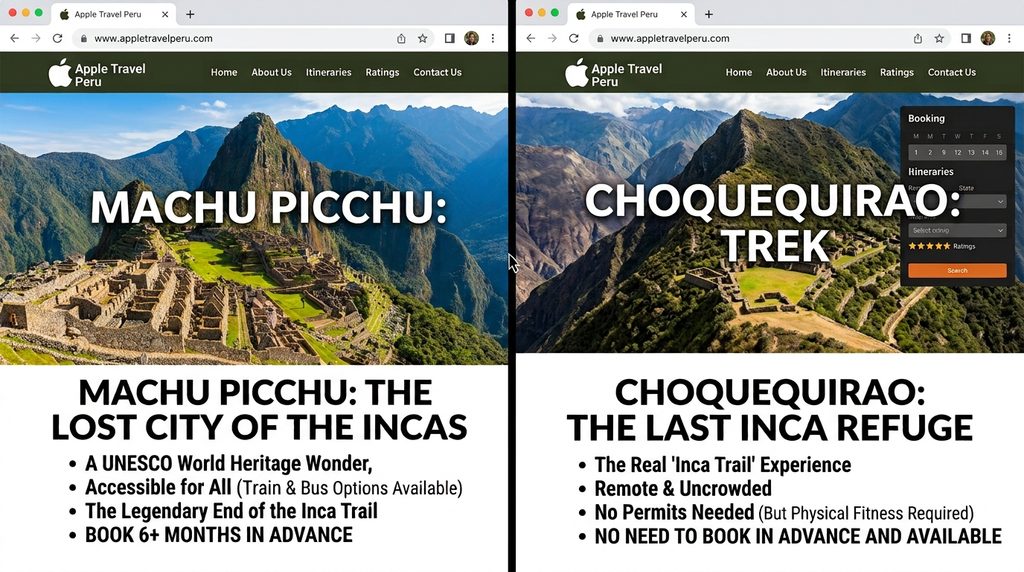
While Machu Picchu is Peru’s iconic bucket-list wonder, accessible via structured trails or train routes, Choquequirao (“Machu Picchu’s Sister City”) is an extreme wilderness trek reserved for dedicated hikers. Reaching Choquequirao requires descending and ascending steep mountain canyons on foot, rewarding tough trekkers with vast, uncrowded Incan ruins that receive fewer than 50 visitors per day.
Choosing Your Peru Trek: Choquequirao vs Salkantay vs Inca Trail
| Feature | Choquequirao Trek | Classic Inca Trail | Salkantay Trek |
|---|---|---|---|
| Trail Distance | 64 km (40 miles) round trip | 42 km (26 miles) one way | 74 km (46 miles) one way |
| Typical Duration | 4 to 5 days | 4 days | 5 days |
| Maximum Elevation | 3,100 m (10,170 ft) | 4,215 m (13,828 ft) | 4,630 m (15,190 ft) |
| Total Elevation Change | Extreme (3,000m+ drop & climb) | Moderate to High | High |
| Daily Visitor Count | 20 to 50 visitors | 500 (Porters included) | 200 to 400 visitors |
| Permit Requirement | None (Entrance at gate) | Strict (Book 4–6 months ahead) | None (Machu Picchu ticket only) |
| Trek Difficulty | Strenuous to Extreme | Moderate to Challenging | Challenging |
| Trail Infrastructure | Basic campsites, simple facilities | Established campsites, basic toilets | Mountain lodges, glass domes, campsites |
| Best For | Experienced hikers seeking complete solitude | History lovers wanting the classic route | Adventure hikers wanting alpine scenery |
What Is Choquequirao? “Machu Picchu’s Sister City” Explained
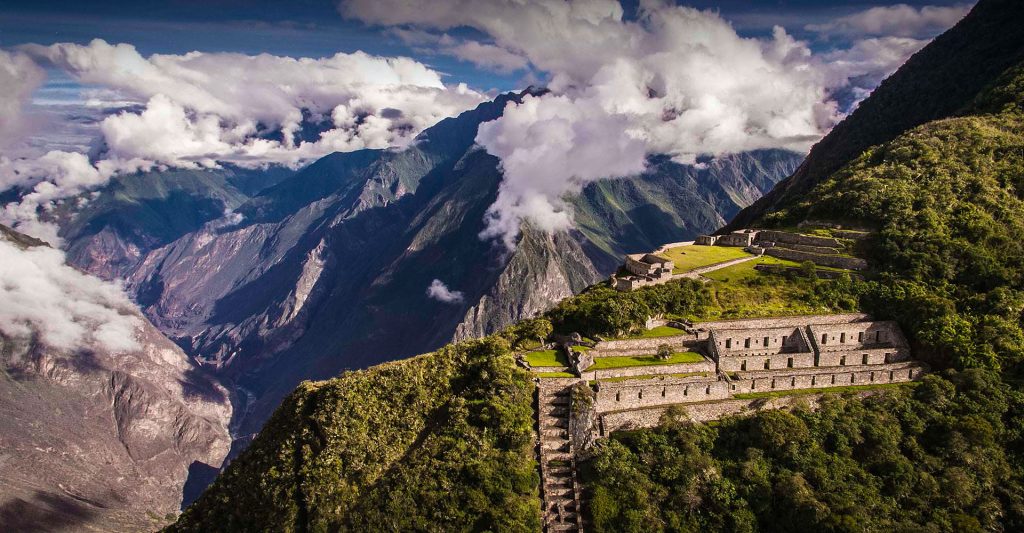
Perched at 3,050 meters (10,000 feet) above the roaring Apurímac River, Choquequirao was built during the late 15th century as an administrative, religious, and royal estate. Architecturally, it closely resembles Machu Picchu, featuring double-splay doorways, ceremonial plazas, agricultural terraces, and royal quarters.
Choquequirao is three times larger than Machu Picchu, yet only 30% of the site has been excavated.
Why Choquequirao Remains Uncrowded
Unlike Machu Picchu, there are currently no roads, trains, or cable cars leading to Choquequirao. The only way to reach the citadel is on foot, starting from the town of Capuliyoc or Cachora. Because the trail demands crossing the deep Apurímac Canyon, the physical barrier keeps tourist numbers remarkably low, giving hikers a rare opportunity to explore stone temples without crowds or velvet ropes.
Key Differences: Choquequirao vs. Machu Picchu Treks
Choquequirao vs. Machu Picchu Treks
1. Trail Difficulty & Physical Demands
One of the most physically demanding treks in the Andes. Requires descending over 1,500 m (4,900 ft) into the hot Apurímac Canyon on Day 1, followed immediately by a grueling 1,500 m vertical climb up switchbacks on Day 2 under direct sun.
Features stone staircases and high passes like Dead Woman’s Pass (4,215 m) or Salkantay Pass (4,630 m). Daily elevation changes are far more gradual, with steady valley walks rather than direct canyon drops.
2. Solitude vs. Tourism Infrastructure
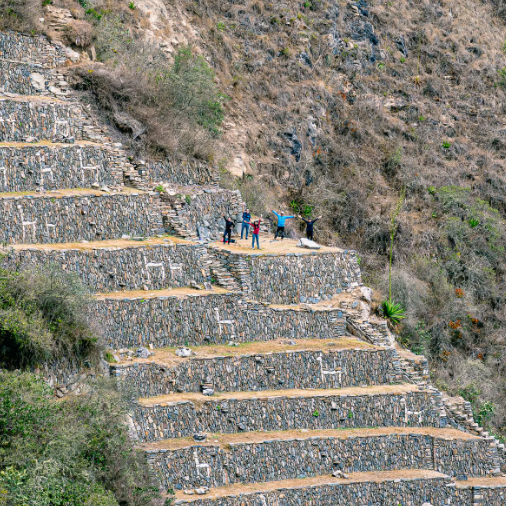
Offers pure wilderness solitude. Riverside campsites are quiet and rustic. You can explore the main plaza and the famous Llama Terraces completely alone with fewer than 50 total visitors per day across the entire site.
Welcomes thousands of visitors daily. Even when arriving via mountain trails, your final exploration of the citadel is shared with large tour groups and day-trippers arriving by train from Cusco and Ollantaytambo.
3. Permits & Booking Flexibility
No government permit caps exist. You can reserve a guided expedition weeks or even days in advance, making it an excellent option for last-minute or flexible itineraries.
The Classic Inca Trail is strictly capped at 500 people per day and sells out 4 to 6 months in advance during peak season. Citadel entrance tickets must also be secured months ahead.
Highlights of Each Trek
Why Choose Choquequirao
An Authentic Sense of Discovery: Walk among active archaeological digs and unrestored stone walls overgrown by high-jungle foliage.
The Llama Terraces: Unique stone artwork built directly into massive agricultural terraces.
Absolute Solitude: Explore royal Incan sectors with no tour groups in sight.
Apurímac Canyon Views: Hike through dramatic vertical landscapes where Andean condors frequently soar overhead.
Why Choose Machu Picchu
Better Facilities: Trails leading to Machu Picchu feature well-maintained campsites, glamping options, and hot showers along select routes.
The Iconic Postcard View: Stand at the Guardhouse and look down over the classic postcard vista.
Rich Historical Route: The Classic Inca Trail allows you to walk on original paved Incan stones and pass multiple smaller ruins along the way.
Diverse Landscapes: Salkantay offers dramatic shifts from snow-capped glaciers down into tropical cloud forests.
Can You Trek to Both Choquequirao and Machu Picchu?
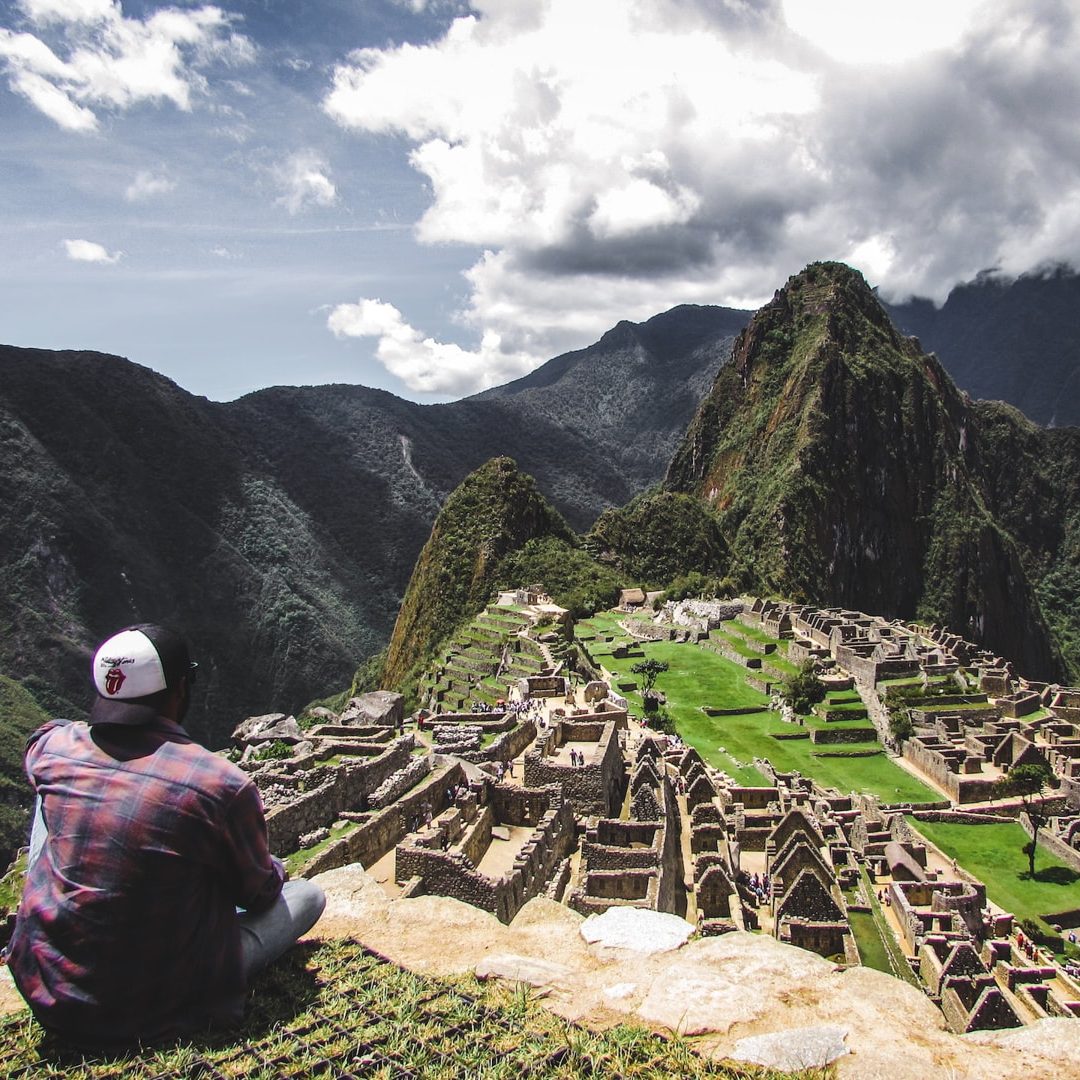
Yes. For extreme trekkers, the Choquequirao to Machu Picchu Expedition is an 8-to-9-day trail that connects both citadels across the rugged Vilcabamba mountain range.
This epic route leads you from the Apurímac Canyon up to Choquequirao, over high mountain passes reaching 4,660 meters, through isolated Quechua villages, and down into the cloud forest surrounding Aguas Calientes, ending at Machu Picchu. It is widely considered one of the finest long-distance mountain treks in South America.
Essential Travel Tips for Choquequirao
- Acclimatize First: Spend at least 2 to 3 days in Cusco (3,400 m) or the Sacred Valley before starting the trek. Although Choquequirao sits lower than Cusco, the massive vertical climbs require strong cardiovascular function.
- Train for Steep Descents: The long downhill switchbacks into the canyon put heavy pressure on knees and toes. Trekking poles are essential.
- Prepare for Temperature Swings: The canyon floor (Playa Rosalina) gets hot and dusty during the day, while evening campsites near the ruins are cold and windy. Pack lightweight sun protection along with warm thermal layers.
- Hike with an Experienced Local Guide: The trail is isolated with minimal emergency services. Booking through an established operator ensures mule support, proper meals, wilderness first aid, and emergency satellite communication.
Final Verdict: Which Trek Should You Book?
- Book the Choquequirao Trek if: You are an experienced hiker seeking a serious physical challenge, prefer quiet trails over tourist hotspots, and want to explore a massive Incan city in complete tranquility.
- Book a Machu Picchu Trek if: You are visiting Peru for the first time, want to see the iconic world wonder, prefer well-established routes, or are traveling with hikers who need moderate trail options.
Plan Your Expedition with Apple Travel Peru
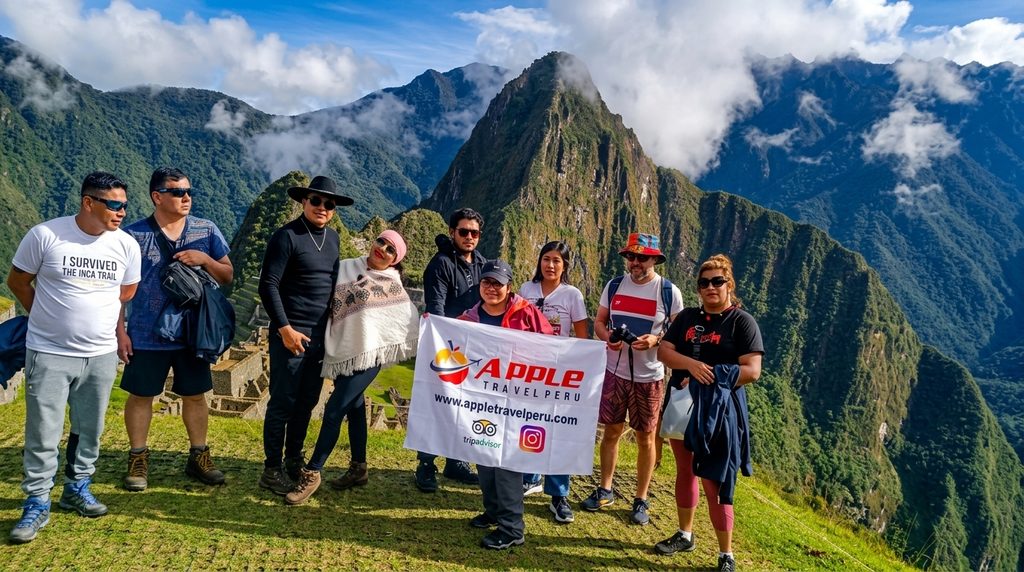
At Apple Travel Peru, we organize custom private and small-group trekking expeditions to both Choquequirao and Machu Picchu. Our trips include licensed bilingual guides, professional field cooks, pack mules for gear, quality camping equipment, and full altitude safety protocols.
Contact our Cusco team today to check trail availability and design your custom Andean itinerary.