After days of measured effort, this is the first place on the Inca Trail where no one is counting kilometers or elevation gain anymore.
The stone steps are still steep, but something changes here. Water begins to run alongside the path. The terraces open outward. Voices lower. That shift isn’t fatigue. It’s design.
A Place Meant for Pause
Many travelers reach Wiñay Wayna assuming it’s just another ruin before the main event. That reading misses the point.
Wiñay Wayna wasn’t built to impress at first glance. It was built to slow people down. To create a transition between movement and arrival, between effort and awareness, just before entering the sacred landscape of Machu Picchu.
On the Inca Trail, this is where forward momentum gives way to presence.
Eternal Youth, Continuous Renewal
The name Wiñay Wayna translates roughly as Forever Young. A phrase that feels less poetic and more practical once you’re there.
Everything in the site suggests renewal:
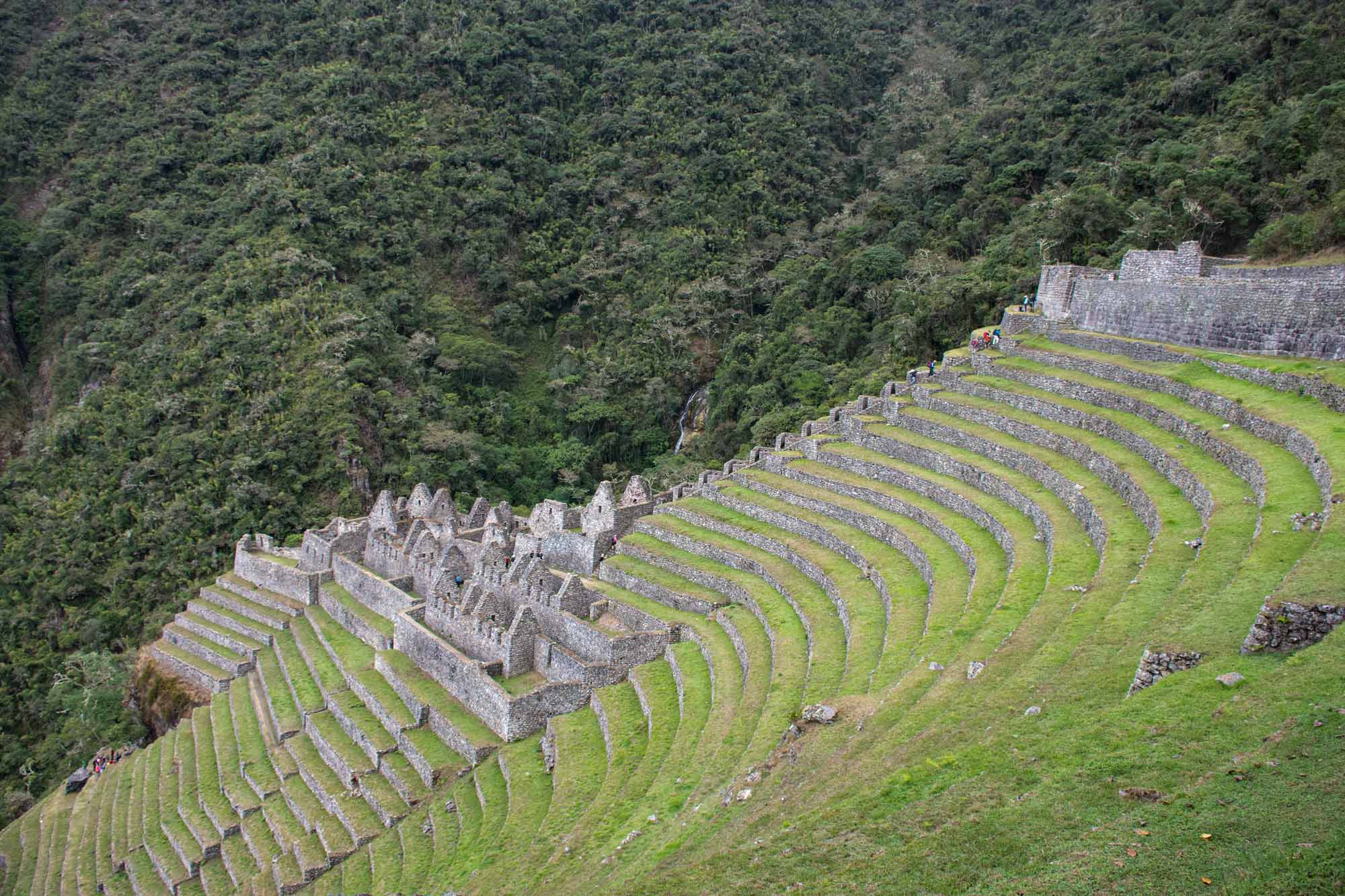
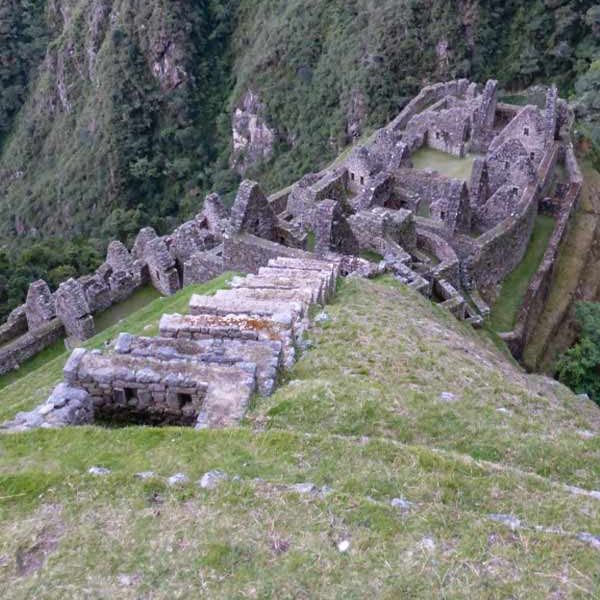
- Terraces layered into the slope, still green
- Water channeled carefully through stone fountains
- Vegetation reclaiming the architecture without erasing it
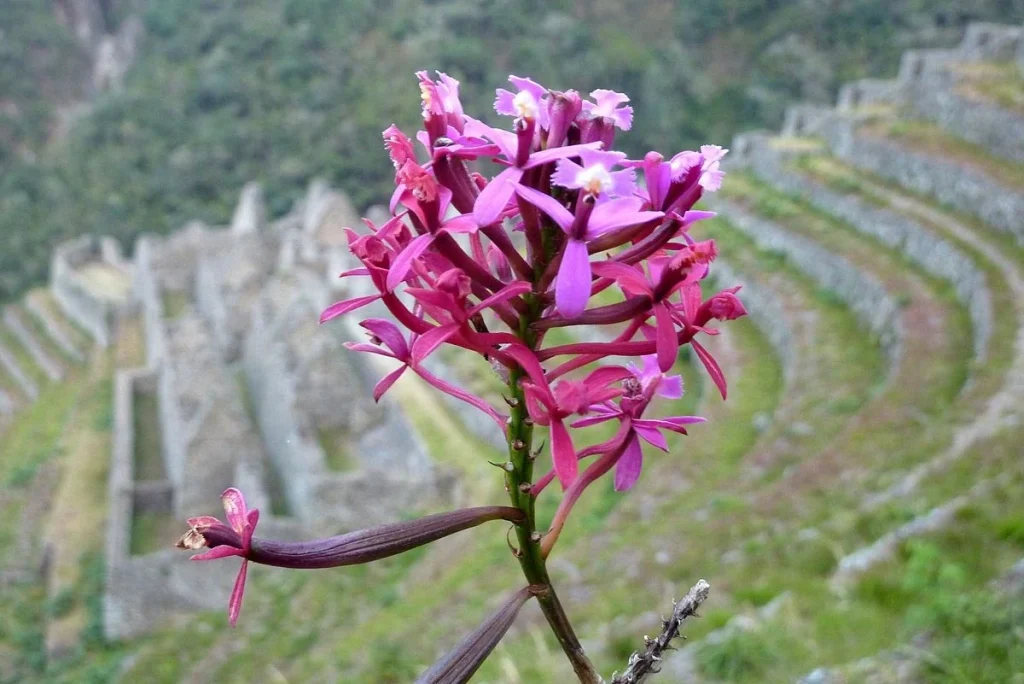
Nothing here feels static, as the place breathes. This wasn’t a ruin frozen in time. It was a living settlement designed to support life, rest, and continuation. An idea that fits perfectly with its role on the trail.
Architecture That Calms Instead of Overwhelms
Unlike monumental Inca sites meant to assert power or order, Wiñay Wayna works at a human scale.
The terraces climb dramatically, but they don’t dominate. Paths curve naturally. Water flows constantly, softening the geometry of stone with sound and motion.
The effect is subtle but immediate: people slow down. This is architecture doing emotional work.
Why This Was the Last Major Stop
Wiñay Wayna sits close enough to Machu Picchu to feel like anticipation, but far enough to still require restraint.
Its placement suggests purpose:
- A final gathering place
- A point of preparation
- A space to recalibrate before entering a sacred zone
- A site for the cult of water
- A site for farming experimentation

The Emotional Peak of the Inca Trail
Ask people what they remember most vividly from the Inca Trail, and many will mention Wiñay Wayna, often with surprise.
Guides instinctively give more time. Groups spread out. Silence feels appropriate, not awkward. The site invites reflection without demanding it.
This is where the journey becomes internal:
| Feature / Sector | What It Is | Why It Matters | Where You’ll Find It |
| Lower Agricultural Terraces | Extensive stone terraces carved into the steep hillside | Showcases advanced Inca agriculture and landscape adaptation; sets the visual tone of the site | First major area you encounter when entering Wiñay Wayna from the trail |
| Upper Terraces | Higher, narrower terrace levels climbing toward the ceremonial sector | Creates a powerful vertical rhythm; emphasizes the site’s scale and effort | Above the main residential zone, looking up from the lower terraces |
| Ceremonial Sector (Temple Area) | Cluster of finely built structures with precise stonework | Likely used for ritual, offerings, and spiritual preparation before Machu Picchu | Central upper area, slightly elevated and more enclosed |
| Water Fountains (Baths) | Series of stone fountains fed by a permanent spring | Symbol of purification and renewal; one of the most emotionally grounding elements | Running through the middle of the site, between terraces and buildings |
| Residential Sector | Smaller rooms and living spaces for inhabitants or caretakers | Reveals that Wiñay Wayna was lived in, not just visited | Adjacent to the fountains and ceremonial area |
| Colcas (Storage Structures) | Storage buildings used for food and supplies | Indicates logistical importance along the Inca Trail network | On the edges of the settlement, near terraces and access paths |
| Observatory / Lookout Points | Elevated viewpoints overlooking the Urubamba Canyon | Reinforces spatial awareness and connection to the surrounding landscape | Natural high points near the upper terraces |
| Control Gate (Trail Checkpoint) | Entry/exit control point on the Inca Trail | Confirms Wiñay Wayna’s role as a managed and intentional stop | Along the Inca Trail just beyond the main complex |
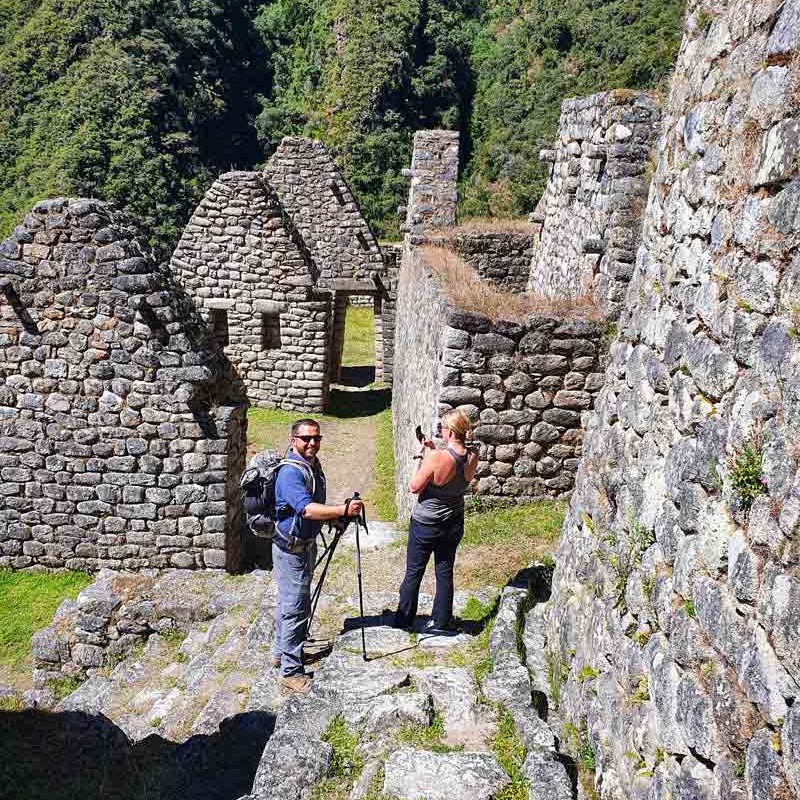
| Stone Staircases & Internal Paths | Narrow stairways connecting all sectors | Forces slower movement and deliberate progression through the site | Throughout the entire complex |
| Vegetation Integration | Orchids, moss, and native plants growing among ruins | Gives the site its “Forever Young” identity and living quality | Across terraces, walls, and fountains |
What Most People Miss Today
Because Machu Picchu is so close, Wiñay Wayna is often rushed.
People take photos, listen quickly, and move on unaware that this is the last place on the trail designed for stillness. Once you leave, the experience accelerates again. Those who linger tend to remember it differently.
Why Machu Picchu Feels Different After Wiñay Wayna
Without Wiñay Wayna, Machu Picchu might feel like a discovery. With it, arrival feels inevitable.
The trail has already done its work slowing you down, quieting the noise, shifting your attention. By the time you see the city, you’re not searching for spectacle. You’re ready to receive it. That difference changes everything.
Not Everything Important Is at the End
Wiñay Wayna isn’t a checkpoint. It’s a release.
A place where the Inca Trail stops asking for effort and starts asking for awareness. Where movement turns into meaning, just before the journey reaches its most famous point.