Packing for Peru can be tricky because you aren’t just packing for one season—you are packing for three entirely different climate zones: the dry coastal desert (Lima), the high-altitude Andes (Cusco & Salkantay Trek), and the hot, humid Amazon Basin (Puerto Maldonado).
Whether you are booking our flagship 4-Day Glamping Salkantay Trek, the classic 5-Day Extended Expedition, or an Inca Trail alternative, this regional checklist breaks down exactly what to wear, gear essentials, and critical differences between Peru’s Dry Season and Rainy Season.
Peru Climate Overview: Dry Season vs. Rainy Season
Apple Travel Peru Glamping Advantage
On all Apple Travel Peru treks, guests receive a 7 kg (15 lbs) duffel bag allowance carried by our horse team. Your duffel will meet you at our private Sky Dome basecamps every night, so you only need to carry a lightweight daypack on the trail!
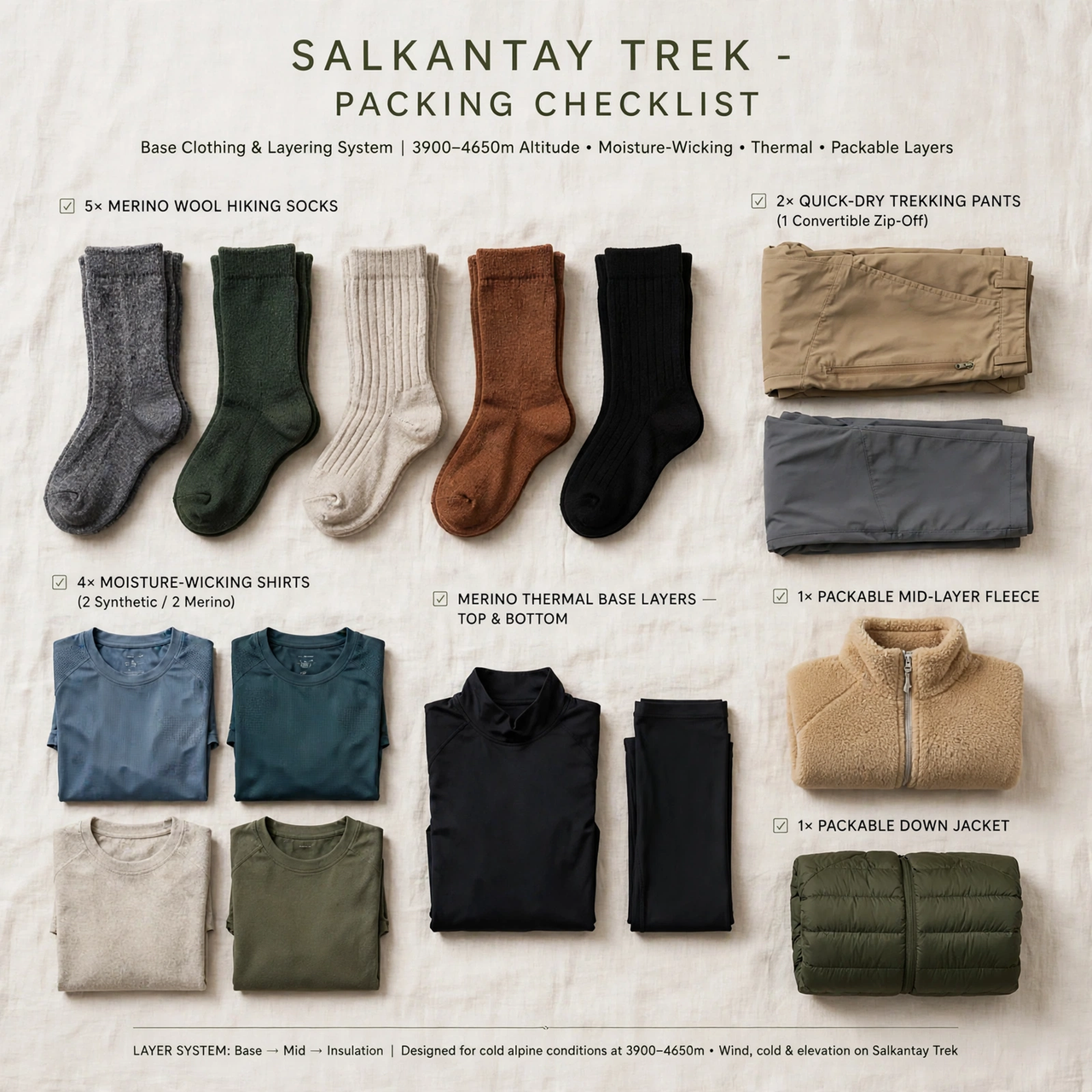
The high Andes demand a strict 3-Layer Strategy: a moisture-wicking base, an insulating mid-layer, and a waterproof/windproof outer shell.
Base Clothing & Layering
- 4–5 Pairs of Merino Wool Hiking Socks: Prevents blisters and keeps feet warm when damp.
- 3–4 Moisture-Wicking Shirts: Synthetic or Merino wool only. Avoid cotton, which holds sweat and induces hypothermia at $4,650\text{ m}$ altitude.
- 2 Pairs of Trekking Pants: Lightweight, quick-dry pants (convertible zip-offs work great).
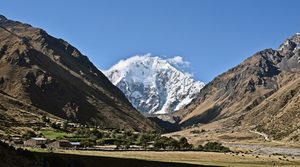
- Thermal Base Layers (Top & Bottom): Essential for cold nights at Soraypampa Basecamp ($3,900\text{ m}$). Merino wool or heavy synthetic grid fleece.
- 1 Mid-Layer Fleece or Down Jacket: Pack a packable down jacket for cool evenings inside our dining domes.
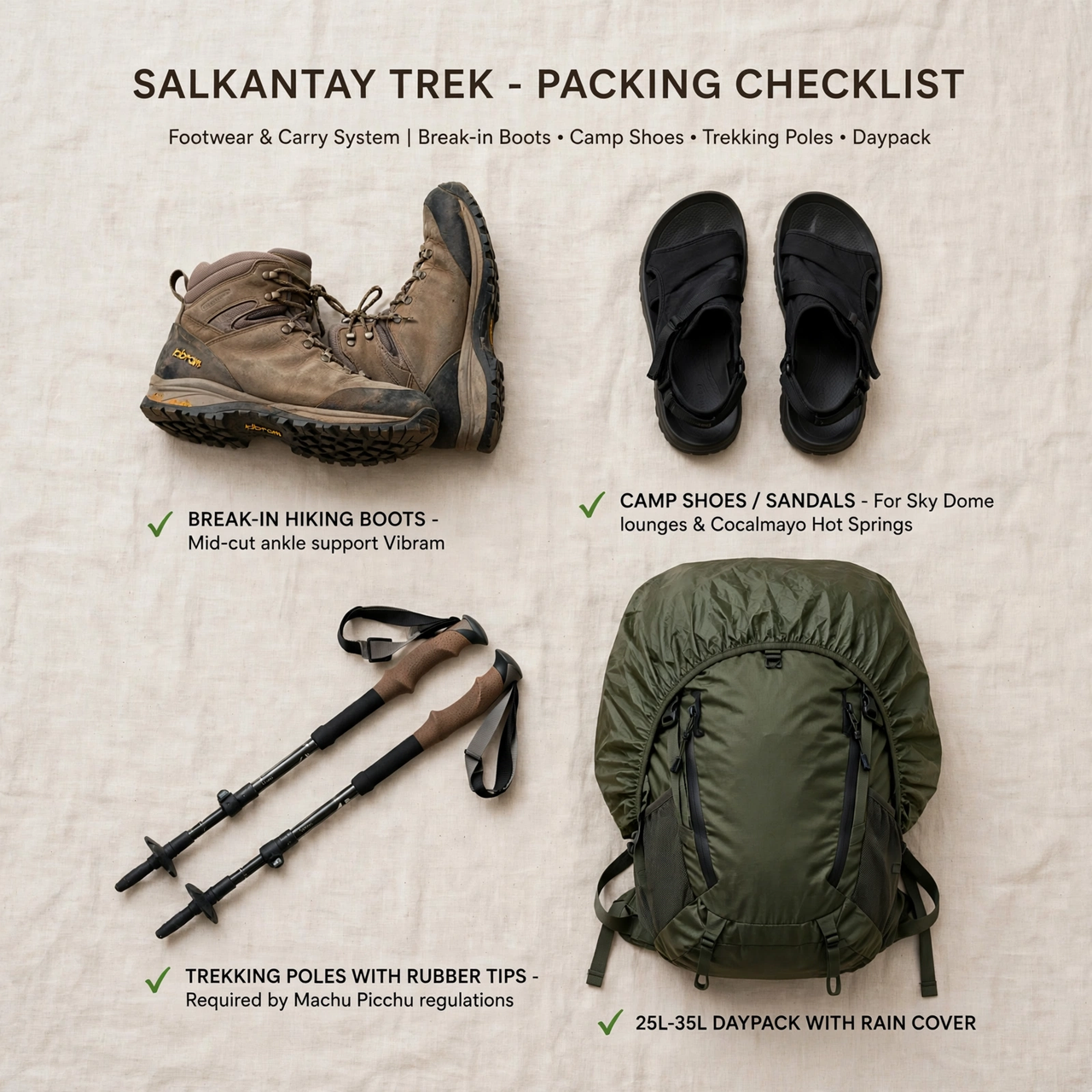
Footwear & Trail Gear
- Break-in Hiking Boots: Mid-cut ankle support with Vibram or waterproof rubber soles. Never wear brand-new boots on Day 1!
- Camp Shoes / Sandals: Lightweight slip-ons for relaxing in our Sky Dome lounges or Cocalmayo Hot Springs.
- Trekking Poles with Rubber Tips: Essential for saving knee stress on steep downhills (Rubber tips are required by Machu Picchu park regulations).
- 25L–35L Daypack with Rain Cover: To carry your water, camera, extra layers, and daily snacks.
What to Add for the Dry Season (May – Sept)
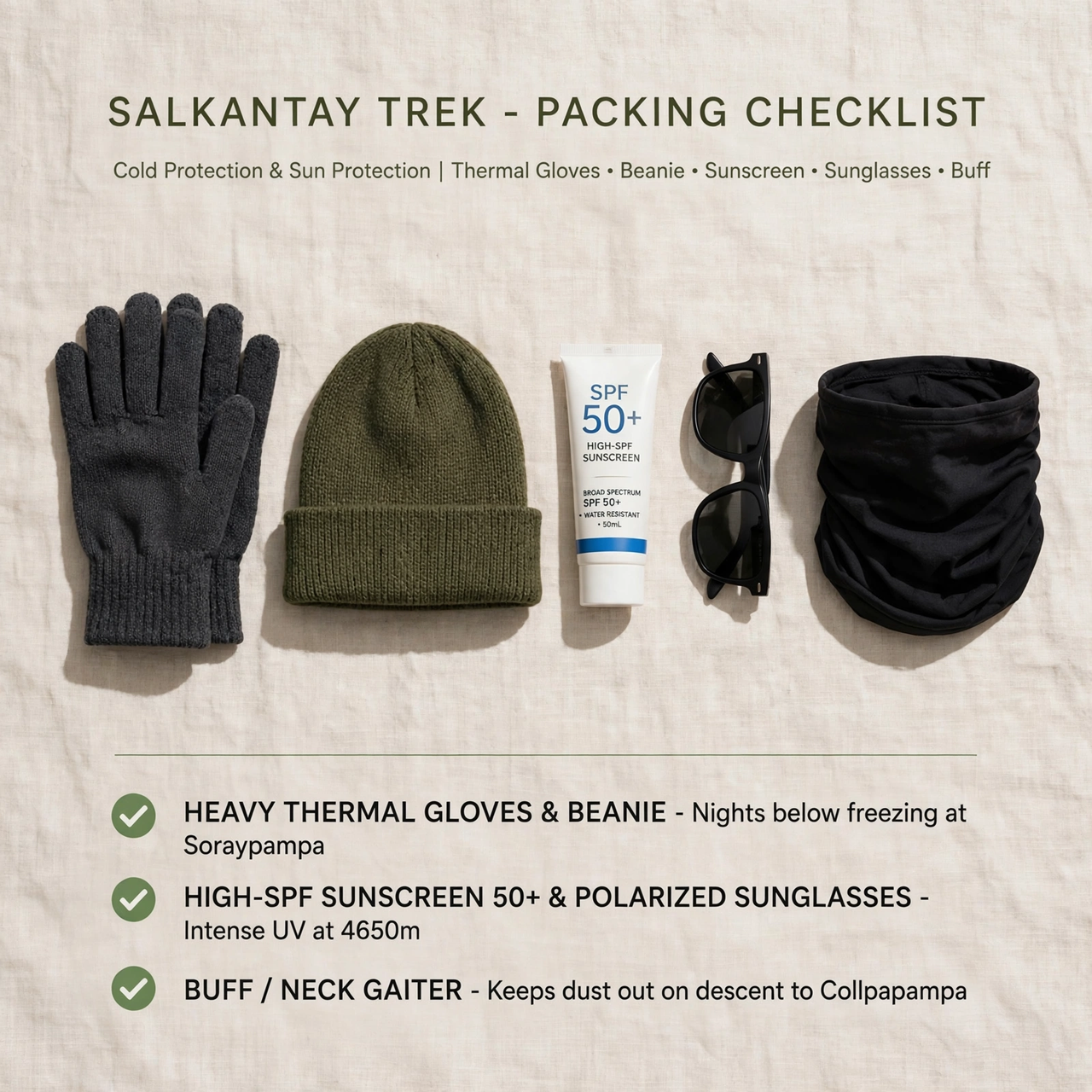
- Heavy Thermal Gloves & Beanie: Nighttime temperatures at Soraypampa regularly dip below freezing.
- High-SPF Sunscreen (50+) & Polarized Sunglasses: UV rays at 4,650 m elevation are intense under cloudless skies.
- Buff / Neck Gaiter: Keeps trail dust out of your lungs on the descent to Collpapampa.
What to Add for the Rainy Season (Nov – Apr)
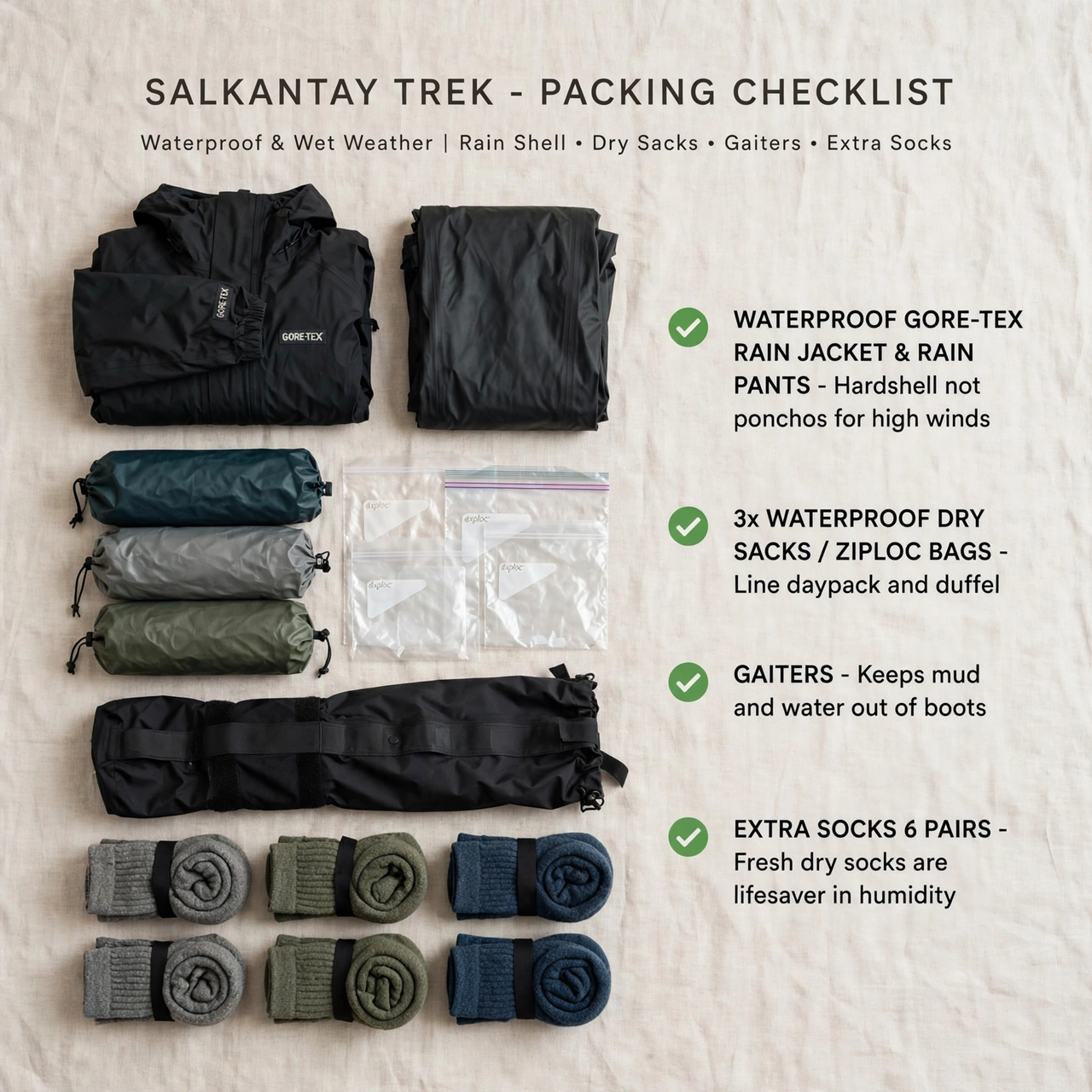
- Waterproof GORE-TEX Rain Jacket & Rain Pants: Ponchos blow around in high mountain winds; a sturdy hardshell keeps you dry.
- 3x Waterproof Dry Sacks / Ziploc Bags: Line the inside of your daypack and duffel bag so your clothes stay bone-dry.
- Gaiters: Keeps mud and water out of your hiking boots on wet cloud forest sections.
- Extra Socks (6 Pairs): Drying gear overnight at high humidity is difficult—fresh dry socks are a lifesaver.
The Coastal Desert (Lima & Paracas) Lima and the southern coast are temperate and desert-dry, but high coastal humidity and seasonal fog demand versatile, easy-to-layer clothing.
- Dry Season (Dec – April in Lima): Warm, sunny beaches. Pack light shorts, t-shirts, swimwear, and sandals.
- Rainy / Winter Season (May – Nov in Lima): Overcast, foggy, and damp (“La Garúa”). Pack jeans, light jackets, sweaters, and comfortable walking shoes.
Base Clothing & Essentials
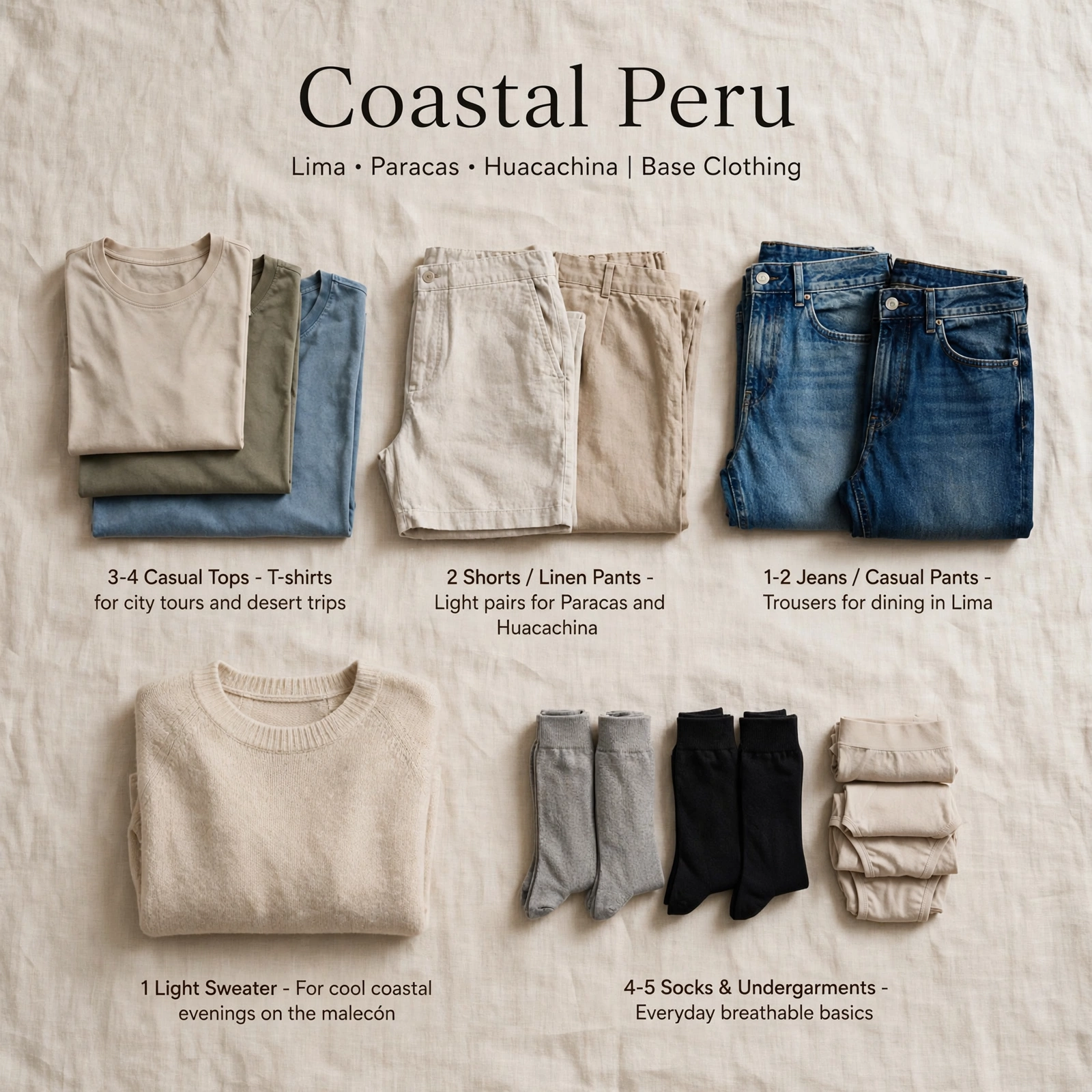
- 3–4 Casual Tops: T-shirts for city tours and desert trips.
- 2 Shorts / Linen Pants: Light pairs for Paracas and Huacachina.
- 1–2 Jeans / Casual Pants: Trousers for dining in Lima.
- 1 Light Sweater: For cool coastal evenings on the malecón.
- 4–5 Socks & Undergarments: Everyday breathable basics.
Footwear & Coastal Gear
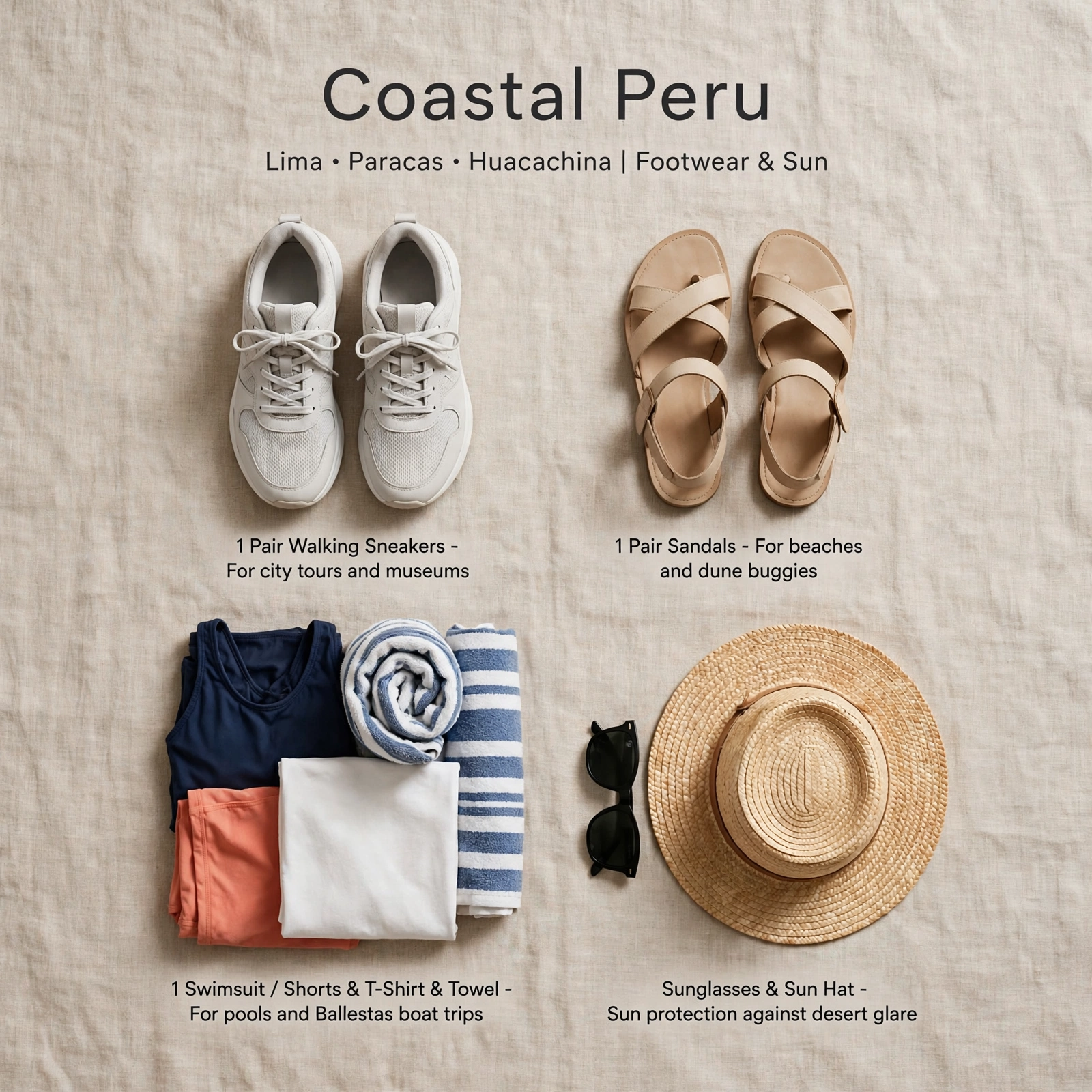
- 1 Pair of Walking Sneakers: For city tours and museums.
- 1 Pair of Sandals: For beaches and dune buggies.
- 1 Swimsuit / Shorts & T-Shirt & Towel: For pools and Ballestas boat trips.
- Sunglasses & Sun Hat: Sun protection against desert glare.
What to Add for the Summer / Dry Season (Dec – April)
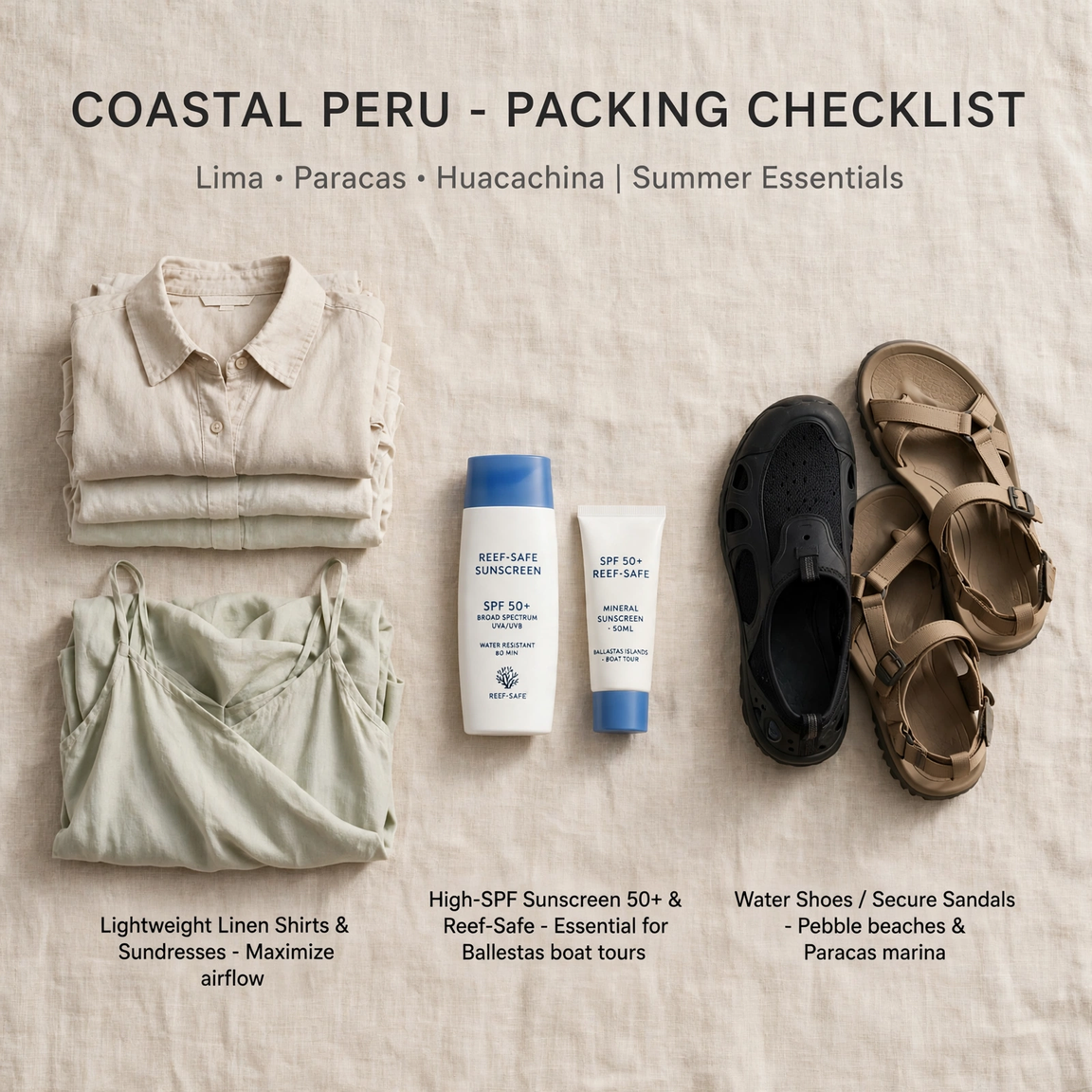
- Lightweight Linen Shirts & Sundresses: Maximize airflow during warm, humid coastal summer days.
- High-SPF Sunscreen (50+) & Reef-Safe Protection: Essential for boat tours to Ballestas Islands where sun exposure is direct.
- Water Shoes / Secure Sandals: Great for walking on pebble beaches or boarding speedboats at Paracas marina.
What to Add for the Winter / Foggy Season (May – Nov)
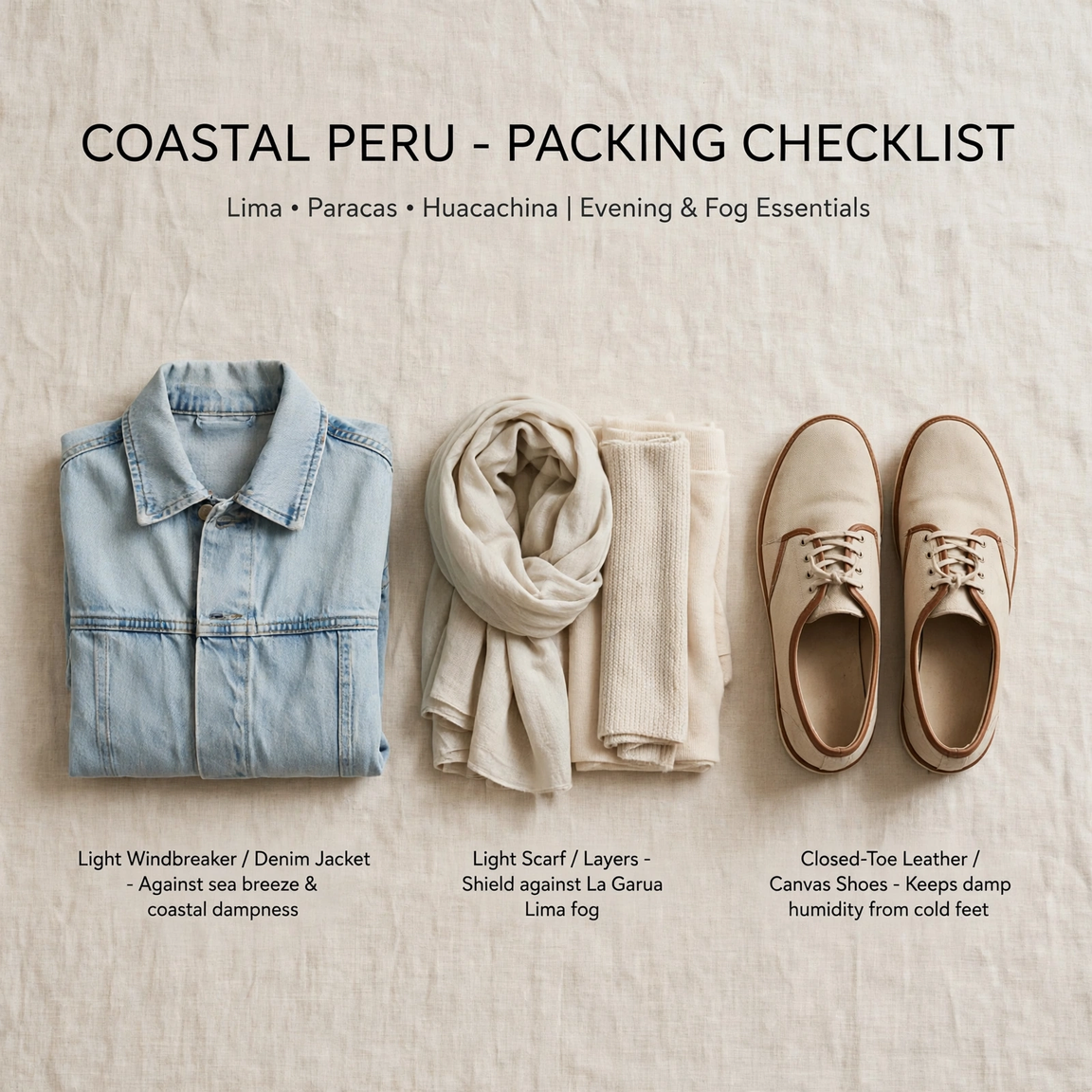
- Light Windbreaker or Denim Jacket: Protects against the chilly sea breeze and coastal dampness.
- Light Scarf / Layers: Helps shield against “La Garúa” (Lima’s persistent cool, humid fog).
- Closed-Toe Leather or Canvas Shoes: Keeps damp coastal humidity from making your feet feel cold while walking the city.
Essentials
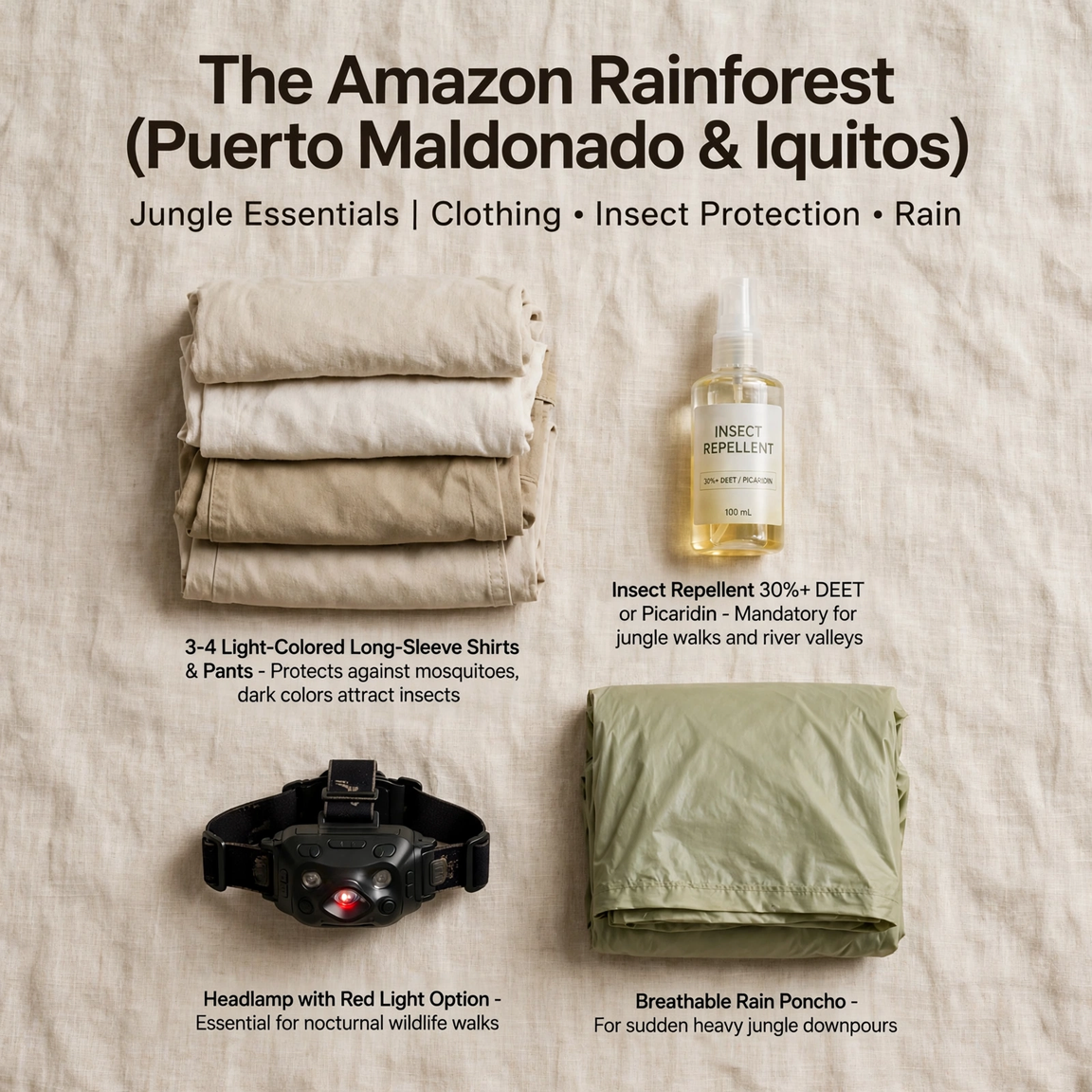
- 3–4 Light-Colored Long-Sleeve Shirts & Pants: Protects against mosquitoes; dark colors attract biting insects.
- 1 Insect Repellent (30%+ DEET or Picaridin): Mandatory for jungle walks and river valleys.
- 1 Headlamp with Red Light Option: Essential for nocturnal wildlife walks.
- 1 Breathable Rain Poncho: For sudden heavy jungle downpours.
Equipment & Electronics
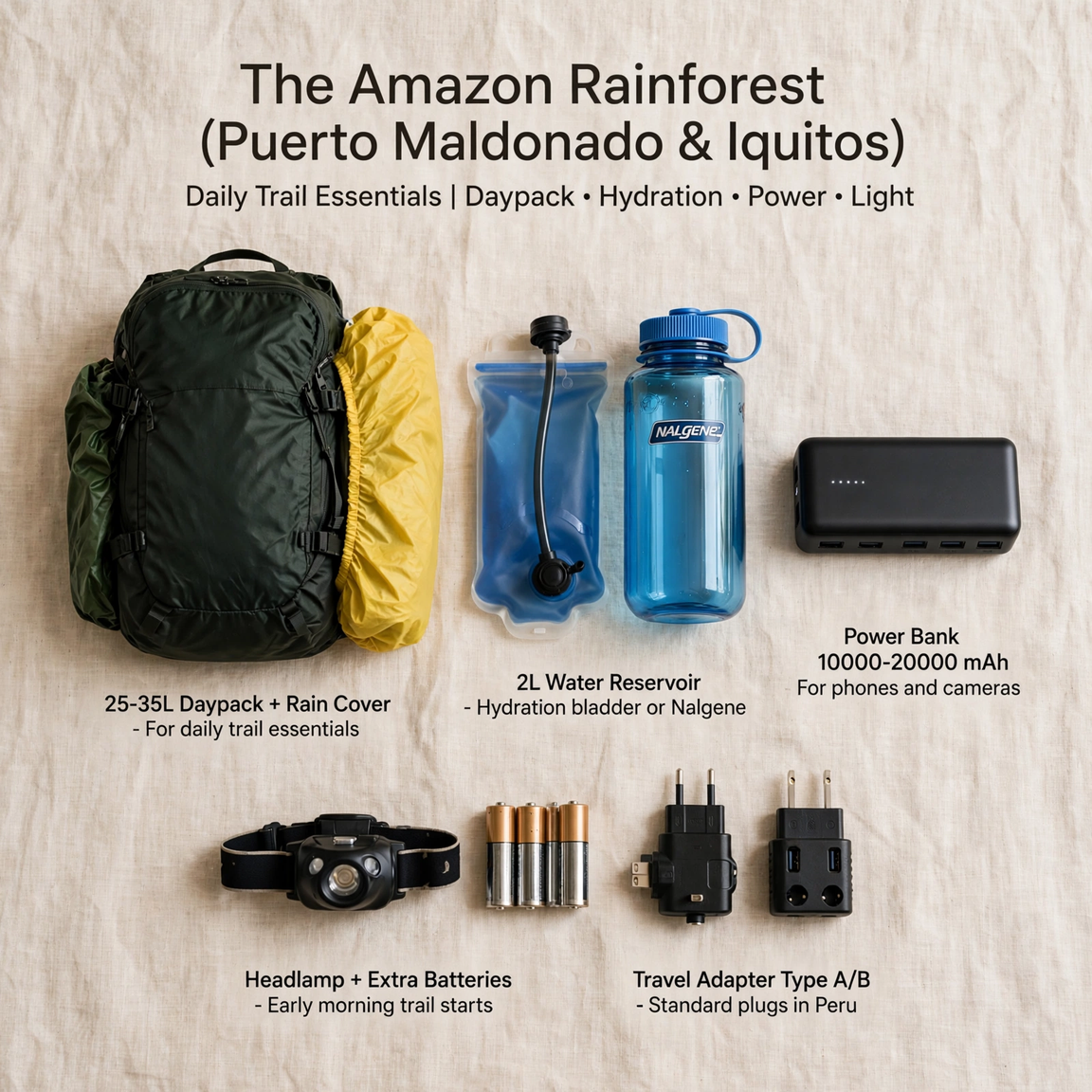
- 1 25–35L Daypack + Rain Cover: For carrying daily trail essentials.
- 1 2L Water Reservoir: Hydration bladder or nalgene bottle.
- 1 Power Bank (10,000–20,000 mAh): For charging phones and cameras.
- 1 Headlamp + Extra Batteries: Essential for early morning trail starts.
- 1 Travel Adapter: Type a/b standard plugs used in peru.
Health & Hygiene
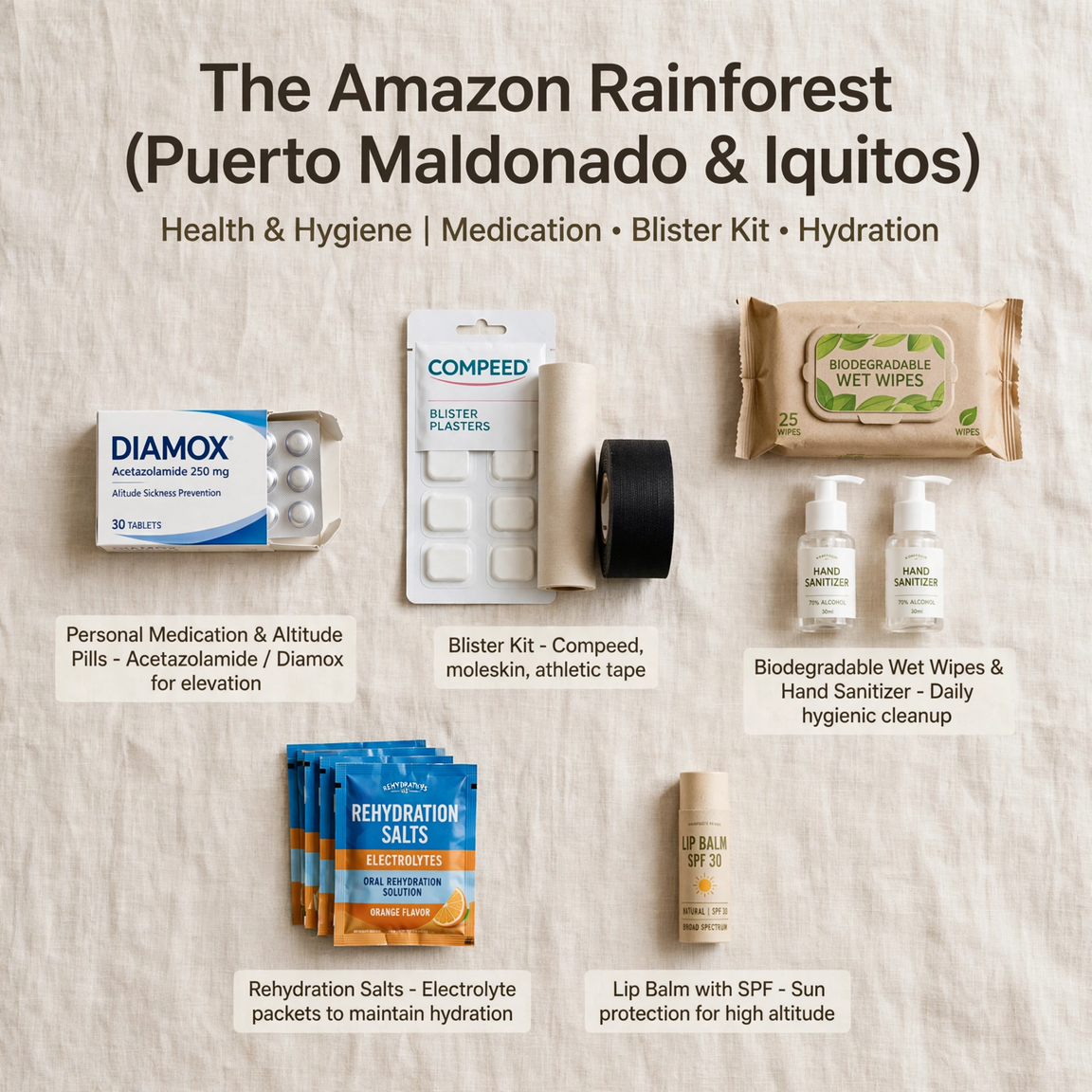
- 1 Personal Medication & Altitude Pills: Acetazolamide or diamox for elevation.
- 1 Blister Kit: Compeed, moleskin, and athletic tape.
- 1 Biodegradable Wet Wipes & Hand Sanitizer: Daily hygienic cleanup on the trail.
- 1 Rehydration Salts: Electrolyte packets to maintain hydration.
- 1 Lip Balm with SPF: Sun protection for high altitude.